

Höre diesen Podcast kostenlos in der App: Kostenlos im App Store laden
radio.at
Sleeptimer
Sender speichern
Silicon Valley Astronomy Lectures
Silicon Valley Astronomy Lectures
Neueste Episode
60 Episoden
Why Do We Exist: The Nine Realms of the Universe that Make You Possible
27.05.2026 | 1 Std. 20 Min.May 20, 2026
Dr, Hakeem Oluseyi (CEO, Astronomical Society of the Pacific)
n his new book, Why Do We Exist, Dr. Oluseyi suggests that the story of our existence can be told as a passage through nine interwoven realms—each revealing a new layer of cosmic information. In this public talk, he introduces each of the realms, but then focuses on cosmic connections to the Middle Realm, where we humans live, and to the Realm of Life, where organisms flourish across the vastness of space. He explores these realms with humor and honesty, weaving in stories from his early life in Mississippi and his career in science.The NASA Psyche mission: First Journey to an Unknown World
15.04.2026 | 1 Std. 16 Min.Dr. Lindy Elkins-Tanton, Space Sciences Laboratory at the University of California, Berkeley,
Apr. 8, 2026.
The NASA Psyche mission is on its way to orbit a small but immensely ancient world in our asteroid belt: A metallic object, the first humans will ever have visited. When our solar system was in its infancy, thousands of planetesimals (tiny planet-like objects) formed in less than a million years. Many planetesimals later melted, allowing metal cores to form inside rocky mantles. One of these metal cores may be revealed in the asteroid (16) Psyche. Dr. Elkins-Tanton, the Mission Lead, takes us behind the scenes in planning and carrying out this remarkable mission of exploration, which launched in 2023, and updates us of where we are over two years post-launch.Pictures of Distant Worlds
15.03.2026 | 1 Std. 2 Min.A nontechnical talk by Dr. Bruce Macintosh (University of California Observatories)
Mar. 11, 2026
In the past three decades, more than 6000 planets have been discovered orbiting other stars. Advances in technology have allowed a handful of giant planets around other stars to be imaged directly. Dr. Macintosh tells us about the first-ever images of other solar systems — and the technology that has allowed us to discover them, such as the Gemini Planet Imager — as well as the future planet-hunting space telescopes. The ultimate goal is detection of a second ‘pale blue dot’ — an Earth twin where we could even see the biosignatures of extrasolar life. (He also talks a bit about the wind damage to the Lick Observatory and what is being done to repair the historic dome.)
Bruce Macintosh is the Director of the University of California Observatories in California and Hawaii. He co-led the team that imaged the first extrasolar planets, and was the Principal Investigator of the Gemini Planet Imager, an advanced planet-finder for the Gemini South telescope.Dark Energy in the Universe and the Largest Telescope Ever
04.02.2026 | 1 Std. 11 Min.A nontechnical talk by Dr. Robert Kirshner, Jan 28, 2026.
One hundred years ago, Edwin Hubble showed that the universe is expanding. In the 1990s, astronomers found that the expansion is not slowing down, as expected, but speeding up. This led to a Nobel Prize in Physics (for our speaker's students) and a consensus that we live in a universe that is made up of invisible dark matter, mysterious dark energy, and only a pinch of the atoms we, and everything we can see in the Universe, are made of. Dr. Kirshner explains this history in everyday language and reviews recent observations indicate that even this picture may be too simple to account for all the evidence. He also discusses the status of building the largest telescopes ever planned in Earth's Northern and Southern hemispheres.
Robert Kirshner is Emeritus Professor of astronomy at Harvard and Research Professor at the California Institute of Technology. He was the Head of Science at the Gordon and Betty Moore Foundation, and now serves as the Executive Director of the Thirty-Meter Telescope International Observatory.The Search for Life on Saturn’s Intriguing Moon Enceladus
01.12.2025 | 1 Std. 14 Min.Dr. Alfonso Davila (NASA Ames Research Center)
Nov. 24, 2025
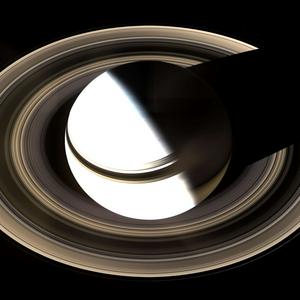
In 2005, NASA's Cassini spacecraft made a groundbreaking discovery—it found massive plumes of ice and gas erupting from the south pole of Enceladus, a small but geologically-active moon of Saturn. These plumes are now believed to originate from a subsurface ocean of liquid water beneath the moon’s icy crust, with conditions compatible with life, as we know it. The talk focuses on our current understanding of Enceladus' plume and subsurface ocean, and on past and future strategies to search in them for possible evidence of life.
Alfonso Davila is a Research Scientist in the Exobiology branch at NASA Ames Research Center, where he helps develop strategies to search for evidence of life beyond Earth.
Weitere Astronomie Podcasts
 Ready for Liftoff! Der Raumfahrt-PodcastAstronomie, Technologie, Wissenschaft
 Das UniversumAstronomie, Gesellschaft und Kultur, Nachrichten, Wissenschaft
 Schlafreise durchs UniversumAstronomie, Technologie, Wissenschaft
 Cosmic LatteAstronomie, Physik, Wissenschaft
 AstroGeo - Geschichten aus Astronomie und GeologieAstronomie, Geowissenschaften, Naturwissenschaften, Physik, Wissenschaft
Trending Astronomie Podcasts
Über Silicon Valley Astronomy Lectures
Listen to exciting, non-technical talks on some of the most interesting developments in astronomy and space science. Founded in 1999, the Silicon Valley Astronomy Lectures are presented on six Wednesday evenings during each school year at Foothill College, in the heart of California's Silicon Valley. Speakers include a wide range of noted scientists, explaining astronomical developments in everyday language. The series is organized and moderated by Foothill's astronomy instructor emeritus Andrew Fraknoi and jointly sponsored by the Foothill College Physical Science, Math, and Engineering Division, the SETI Institute, the Astronomical Society of the Pacific, and the University of California Observatories (including the Lick Observatory.)
Podcast-WebsiteHöre Silicon Valley Astronomy Lectures, Ready for Liftoff! Der Raumfahrt-Podcast und viele andere Podcasts aus aller Welt mit der radio.at-App
Hol dir die kostenlose radio.at App
- Sender und Podcasts favorisieren
- Streamen via Wifi oder Bluetooth
- Unterstützt Carplay & Android Auto
- viele weitere App Funktionen
Hol dir die kostenlose radio.at App
- Sender und Podcasts favorisieren
- Streamen via Wifi oder Bluetooth
- Unterstützt Carplay & Android Auto
- viele weitere App Funktionen
Silicon Valley Astronomy Lectures
Code scannen,
App laden,
loshören.
App laden,
loshören.
 Österreich