
Höre diesen Podcast kostenlos in der App: Kostenlos im App Store laden
radio.at
Sleeptimer
Sender speichern
30 Episoden

Hope (2026) - An Action Movie from Art House Film Director, Na Hong-jin
08.10.2026 | 40 Min.We went in bracing for a horror movie and got an art house director's monster epic, one we place in the DMZ in the 1990s, and we spend the episode working out how far our expectations were from what Na Hong-jin made.
EPISODE SUMMARY
Hope (2026) is Na Hong-jin's first film since The Wailing in 2016, starring Hwang Jung-min, Alicia Vikander, and Michael Fassbender. On The Arc (thearc.fm), we talk about going in expecting a horror movie and finding a long, mostly-chase monster film that adds new movies near the end. Jaclynn calls it three movies stitched together, Robby disavows the horror label, and we land on the idea that our expectations were off, because Na Hong-jin comes from art house films.
WHERE TO WATCH
Streaming availability starts Tuesday 10/13!
New To The Show?
New episodes of The Arc arrive roughly once a month, but they are ephemeral beings that sometimes take longer. You're encouraged to start from the beginning with Episode 01: The Princess Bride.
RSS
A Long Summary
Hope is Na Hong-jin's first film since The Wailing in 2016: a 156-minute South Korean film that premiered in competition at Cannes in May 2026 and opened in the US that September. It's reportedly the most expensive Korean film ever made, shot by Hong Kyung-pyo. A village police chief and his rookie deputy defend their town from a mysterious creature, and the creatures turn out to be aliens. From the director of The Chaser and The Yellow Sea, that premise caught us off guard. We showed up expecting horror, and Robby spends a good part of the episode disavowing that label, at one point in a full Southern accent, which detours us into British and Southern accents and some fun at Cole's scones.
Most of our conversation is the three of us working out what the plot was. Jaclynn's take is the sharpest: it's long, mostly a chase, and introduces two new movies near the end, so it feels like three movies stitched together. Her metaphor for the film is a highlight, so we'll let you find it: it involves a three-year-old half-sibling, a crayon, and an art thesis you have to present as if the monsters were always the plan. From there we debate whether a mystery counts as a plot, whether the alien chasing the child is its mother or a servant, why the sun seems to sit at noon, and whether a cat a driver swerves to avoid was real. One of us felt for the alien during a shot of it in obvious pain. Jaclynn also tells us about living in Asia and visiting the DMZ.
We also hear from Na Hong-jin, in translated Q&As (recorded in Los Angeles and Seoul). In the first, he describes a film that grew and grew, and talks about how Korea's small surface area shaped where this story could be set. A second clip, in the chapter "on the real story," comes later in the episode.
The turn comes when we talk about who made it. Knowing Na Hong-jin's art house background made us reconsider what we'd watched, and it leads to a question we keep circling: what's the contract with a movie like this? In the end, we expected a horror movie and got an art house director's monster epic. You don't need to have seen Hope to follow along. Dad will explain linear.
WHAT WE DISCUSS
00:34 - THE MANY (OR FEW?) PLOT(S) OF "HOPE"
Robby is asked to say what he thinks the plot of Hope is without bending to the will of Jaclynn, who sees three movies stitched together around one long chase. We go back and forth on whether a mystery without a clear hero's-journey structure still counts as a plot.
08:36 - THE PLOT OF HOPE (FROM THE ALIENS' PERSPECTIVE)
We try to untangle the alien backstory, including whether the alien chasing the child is its mother or a servant, and we don't fully agree. We compare the way the story spirals outward to a Sam Spade movie.
10:20 - WHEN WERE EACH OF US IN OR OUT
We each name the moment we felt pulled into or pushed out of the film. One of us nearly walked out when the third movie began, and we talk about whether viewers should be warned that the film keeps restarting with new movies.
11:13 - WHAT YOU SHOULD KNOW GOING TO "HOPE (2026)"
Some context before you go in: this is Na Hong-jin's first film in about ten years, it's reportedly the most expensive Korean film ever made, and we wonder whether he set out to make a blockbuster. We also marvel that the production built its sets on top of a real town.
16:02 - THE #1 THING WE WANT TO SAY ABOUT "HOPE (2026)"
We each give a short take on Hope, including a comparison to a jigsaw puzzle you assemble before noticing pieces are missing. Then we talk through how we'd critique it if a student had turned it in, and agree we'd put it more gently to a real student.
18:01 - JACLYNN'S AMAZING ANALOGY FOR "HOPE (2026)"
Jaclynn explains her mixed feelings with an extended analogy: a three-year-old half-sibling draws crayon monsters all over your art thesis, and you present it as if they were intentional. We then discuss what the contract is with a movie like this, and what viewers are owed.
22:53 - ON "FOCUS" IN STORYTELLING (EXPLAINED BY THE QUESTION 'HOW DO YOU EAT A SALAD?')
A conversation about focus in storytelling, explained through the question of how you eat a salad, and about how a story earns the audience's acceptance of its characters and plot. That leads into what we would ask the director.
37:23 - THE OVERALL FEELING OF "HOPE (2026)"
We poke fun at the chase's internal logic, from the time of day jumping around to the gas tank that never runs out, and we debate whether the cat a driver swerves to avoid was real and what that says about which lives are worth saving.
CHAPTERS / TIMESTAMPS
0:00 - COLD OPEN AND VERY SHORT TRAILER BECAUSE "HOPE" IS A KOREAN LANGUAGE ACTION FILM
0:34 - THE MANY (OR FEW?) PLOT(S) OF "HOPE"
3:21 - JACLYNN ON LIVING IN ASIA & VISITING THE DMZ BETWEEN North Korea and South Korea
4:58 - SET DESIGN
5:59 - SKETCH - CEO INTRODUCES THE DIRECTOR
7:22 - THE DIRECTOR SPEAKS
8:36 - THE PLOT OF HOPE (FROM THE ALIENS' PERSPECTIVE)
10:20 - WHEN WERE EACH OF US IN OR OUT
11:13 - WHAT YOU SHOULD KNOW GOING TO "HOPE (2026)"
12:12 - STORIES OF WALKING INTO FILM SETS ACCIDENTALLY
16:02 - THE #1 THING WE WANT TO SAY ABOUT "HOPE (2026)"
18:01 - JACLYNN'S AMAZING ANALOGY FOR "HOPE (2026)"
21:47 - THE DIRECTOR OF "HOPE (2026)" ON THE REAL STORY
22:53 - ON "FOCUS" IN STORYTELLING (EXPLAINED BY THE QUESTION 'HOW DO YOU EAT A SALAD?')
23:59 - WHAT WOULD WE SAY TO THE DIRECTOR OF "HOPE (2026)" IN AN INTERVIEW?
26:37 - MAKING FUN OF COLE'S SCONES
27:38 - WHEN DID EACH OF US CRY DURING "HOPE (2026)"
30:14 - THINGS JACLYNN LOVES IN VISUALS
34:14 - BEHIND THE SCENES THOUGHTS (ESPECIALLY THE CAR)
37:23 - THE OVERALL FEELING OF "HOPE (2026)"
RECOMMENDATIONS
If you want to keep going on this one, a couple of other stops are worth your time. The InSession Film Podcast devoted an episode to Hope, a good companion listen if you want more voices on the film: InSession Film Podcast: Review - Hope.
The Certified Forgotten podcast also dedicated an episode to the film, for another take on it: Certified Forgotten: 'Hope' Gets Uncertified.
RELATED ARC EPISODES
Or consider starting from the beginning: Episode 01: The Princess Bride is where we became friends.
SOUND DESIGN ATTRIBUTION
Sound design via Freesound.org and Envato.
Downloaded on October 8th, 2026
S: Medium Crowd Clapping 5 by jentlemen | License: Creative Commons 0
S: Light, slow uncomfortable clapping by TurboFool | License: Creative Commons 0
S: Room Tone: McFarlin Auditorium by lakewoodsound | License: Creative Commons 0
S: CRWDApls_Unenthusiastic...Field of Dreams - Making Grown Men Cry Since 1989
18.09.2026 | 47 Min.We argue that Field of Dreams isn't really about baseball or fathers so much as the elaborate lengths men will go to instead of just going to therapy, and it all starts with Robby who has cried through it on his birthday every year for more than thirty years.
EPISODE SUMMARY
We believe Field of Dreams isn't really about baseball, or farming, or even fathers and sons in the way you'd expect. It's about what men will do to avoid going to therapy. Robby has watched it on or near his birthday for more than thirty years and still cries every time. Jaclynn only saw it as a baby, so it's effectively new to her, and she didn't even know the famous line right. Our guests are Joe Connor (Mr. Sports Travel) and Patrick Fleming, and this one gets more emotional than a group of people talking about a cornfield has any right to. Patrick's late father, Mike Fleming, was a Triple-A umpire everyone expected to make the majors until he went home to Iowa at 23 to run the family printing company. That is Archie "Moonlight" Graham's story all over again: two men at the edge of the big leagues who gave it up for someone else.
WHERE TO WATCH
Streaming availability as of 2026-09-18.
Netflix (streaming with subscription)
Prime Video (rent or buy)
Apple TV (rent or buy)
Fandango At Home (rent or buy)
New To The Show?
New episodes of The Arc arrive roughly once a week, but they are ephemeral beings that sometimes take longer; you're encouraged to start from the beginning with Episode 01: The Princess Bride.
RSS
A Long Summary
Field of Dreams is the 1989 movie where Kevin Costner hears a voice in his Iowa cornfield, plows under his crop to build a baseball diamond, and watches the ghosts of banned White Sox players walk out to play, including Shoeless Joe Jackson, and eventually his own late father, young again and asking for a catch. It is, on paper, a movie about baseball. It is also a movie about farming, and about kidnapping a reclusive author, and about a small-town doctor who gave up his one shot at the majors. None of that is what it's actually about, which is the thing Robby has known since he was 20 or 21 and cried, unexpectedly, the first time he saw it with a college friend who shared his birthday. He's watched it on or near his birthday almost every year since, more than thirty of them now, and he brought it here, which makes this his birthday movie and, fairly, makes him the star of it.
What we found is that Field of Dreams makes men cry, and it makes them cry at their keyboards: when we went looking for baseball experts to explain why the game matters, we got back dozens of very macho men writing in, choked up, needing to talk about this film. Two of them are here. Joe Connor has seen live sports in 176 countries and finished all 30 major-league parks the year his father died, in his memory. And Patrick Fleming, an Iowan and an indie musician, wrote Cole an email, read aloud in full, about his father Mike, a Triple-A umpire whose school booklet said "Mike will go all the way." Mike didn't. His own father died, and at 23 he went home to run the family printing company while every one of his umpire-school friends made the majors. Archie "Moonlight" Graham, in the movie, is that exact story: one at-bat away, then a small-town doctor for the rest of his life. Mike Fleming and Moonlight Graham lived the same life, and now the Little League fields Patrick grew up on are named Mike Fleming Field, his family's little field of dreams.
One of the hosts argues that the movie melts people because it lets a man have closure with a dead parent, and that closure only exists in fiction, which is what fiction is for. Another host pushes back that you don't even need the closure; you just need to watch someone you loved live out their happiest moment and get to stand in it with them. Somewhere in there we argue, at genuine length and without resolution, over whether James Earl Jones's character walks into the corn to die or to become a ghost or just to go look around and come back and write about it; one of us is very sure he's fine. We also take a hard look at what the movie asks of Costner's wife, at how much a very handsome man gets away with, at whether following your dream at all costs is exactly how we got where we are, and at the fact that the cars flooding in at the end were real Iowans answering a call on the radio, flicking their brights on and off so it would look like more of them. You do not have to have seen the film to follow any of it. But by about five minutes in, you'll want to have a catch.
WHAT WE DISCUSS
01:23 - WHO BROUGHT "FIELD OF DREAMS" AND WHY?
Robby brought this one, because it's his birthday movie. He has watched it on or near his birthday almost every year since he was 20 or 21. It started in college, watching with a friend named Mark, when Robby cried without warning at the "want to have a catch" moment. He was shocked by his own reaction. So he watched it again the next year, and the year after that.
07:55 - PATRICK'S EMAIL ABOUT HIS FATHER
Patrick Fleming reads us the email he sent Cole before the taping. His father, Mike, was a professional umpire everyone thought would go all the way to the majors. Then Mike's own father died suddenly, and at 23 he went home to Iowa to run the family printing company. Patrick draws the line straight to Moonlight Graham: two men at the edge of the big leagues who gave it up for someone else. Today, the Little League fields Patrick grew up on carry his dad's name.
20:57 - ROBBY READ LITERALLY ALL OF HIS NOTES ON FIELD OF DREAMS
Robby has seen this movie more than 40 times, and he brought notes. We let him read them, scene by scene: the three times Ray hears the voice, Ray's fear of turning into his own father, the PTA meeting over the Terence Mann book. It's not a review. It's a man showing us how much he loves a movie.
23:50 - ROBBY CRIES
And then Robby cries, right in the middle of the moment Ray's father shows up and the catch begins. We talk about what got to him, and about realizing your parents are their own people, which brings us right back to Patrick's dad.
28:41 - SONS MATCHING FATHERS
Patrick tells us his father never got a traditional retirement, because he worked until he died. But he got a version of the dream in his 20s, traveling to games with his umpire friends, and Patrick compares that to his own years touring as a musician at 30. Then we turn to the ending and that sudden line of cars headed for the ballfield. It doesn't quite make sense. It works anyway, because the movie tells us it will happen and asks us to go along.
33:48 - TERRENCE MANN IS A GHOST
We talk about how the film makes small, deliberate choices, including a long cross-country drive that bonds Ray and Terence Mann without showing us most of what they say. Then we get lost in a real argument: when Terence Mann walks into the cornfield, does he die, become a ghost, or just look around and come back? One of us is very sure he's fine. The rest of us aren't buying it.
41:06 - THIS MOVIE IS SO MIDWESTERN
Everyone in this movie meets the impossible with calm, polite understatement, and we decide that makes it very Midwestern. One of us shares a story about saying a blandly cheerful "oh, cool" to someone whose job was scooping eyeballs out of corpses, which proves the point. We wonder what else makes it feel so Midwestern, and land on its father and son heart.
43:23 - ARCHIE MOONLIGHT GRAHAM'S STORY WRAPS UP WITH PATRICK'S DAD
We come back around to Patrick's dad. His umpiring career was cut short, and a Little League field back home was renamed Mike Fleming Field in his honor. It's the other half of Moonlight Graham's story, and it leads us back to Ray and the catch he and his own father never had.
CHAPTERS / TIMESTAMPS
0:00 - COLD OPEN
1:23 - WHO BROUGHT "FIELD OF DREAMS" AND WHY?
2:27 - WHAT'S THE NUMBER ONE THING WE WANT TO SAY ABOUT "FIELD OF DREAMS"
5:17 - WHAT SHOULD YOU KNOW GOING INTO "FIELD OF DREAMS"
6:35 - A VERY FUNNY INTRODUCTION OF PATRICK
7:55 - PATRICK'S EMAIL ABOUT HIS FATHER
10:14 - WHEN WERE WE IN AND OUT OF "FIELD OF DREAMS"
13:42 - JOE HAS VISITED EVERY BASEBALL STADIUM IN THE US
20:57 - ROBBY READ LITERALLY ALL OF HIS NOTES ON FIELD OF DREAMS
23:50 - ROBBY CRIES
28:41 - SONS MATCHING FATHERS
30:42 - HOW THEY GOT THE TRAFFIC JAM IN "FIELD OF DREAMS" BEFORE CGI
33:48 - TERRENCE MANN IS A GHOST
41:06 - THIS MOVIE IS SO MIDWESTERN
43:23 - ARCHIE MOONLIGHT GRAHAM'S STORY WRAPS UP WITH PATRICK'S DAD
FUN FACTS / PRODUCTION TRIVIA
The corn grew almost too well, so when Costner first hears "If you build it, he will come," he had to walk onto a foot-high platform.Fast & Furious Presents: Hobbs & Shaw - Fighting the Sun with an Actual Astronomer
03.09.2026 | 1 Std. 4 Min.Hobbs & Shaw has a climactic dawn battle that goes from pitch black to full daylight in about two minutes of screen time. Can the sun really rise that fast? We brought in actual scientist for an answer and a masterclass in using science for storytelling.
As always, we're more than a film review podcast, and this is the proof: a years-long movie argument between Cole and Jaclynn gets settled by an actual astronomer.
The Setup
Jaclynn has been saying for years that the sunrise in this scene is impossible, a jump cut from midnight to noon. Cole has spent just as long insisting she's wrong, and this episode is him finally bringing in reinforcements. As Cole puts it going in, "I don't think it's about the sunrise." It's Virgo season, and this is what a Virgo does with a grudge: proves it with data.
Meet the Astronomer
Zoe Learner Ponterio manages the Spacecraft Planetary Image Facility at Cornell, the Ivy League school where Carl Sagan spent 25 years as a professor of astronomy and which still runs a Carl Sagan Institute today. She got there after years on NASA's Mars Exploration Rovers science team, working the Spirit and Opportunity missions. She almost went to Harvard instead. Her reasoning: "I at one point just looked at the Harvard dean and said, do you have a Mars rover? He was like, no. I was like, well, I guess it's a no."
The Verdict
Zoe does the actual math: the fastest a sunrise can physically happen is at the equator on an equinox, and it clocks in around 128 seconds. At the poles, a sunrise can effectively last forever. Hobbs & Shaw is shot near the equator in Samoa, which gives the filmmakers real cover for a fast sunrise, just not one that stretches into full midday light the way the scene eventually does.
The closest thing to a ruling: Jaclynn walks the scene beat by beat, cut by cut, and catches herself mid-sentence, she'd been misreading one key shot for years, mentally borrowing the framing from an old TV show. Cole, smelling blood, sums her own argument back to her until she has to say the quiet part out loud. He gets his line for the record too, repeated three times for emphasis: "You were not wrong."
The Real Takeaway
Zoe uses science the same way the hosts use cameras and editing, as a tool for telling a story people care about. Her closing bit ties it back to the episode's own cold open: imagining what an alien visiting Earth would find remarkable about something we take for granted, in her case, the size and closeness of our moon. Her line lands the episode: "Every single film shoot should have an astronomer."
Around the Table
Jaclynn goes in trying to prove Cole right instead of herself, and ends up seeing the sunrise shot differently for the first time in years.
Robby never noticed the sped-up sunrise at all until Jaclynn pointed it out, and defends it from a pure craft angle: once the sun is up, the sun gets to be up.
Cole sits on his own sunrise-shooting story from filming in the Galapagos until the very end of the debate, then finally uses it as backup.
Zoe walks in to referee a movie argument and walks out making the case for why scientists and storytellers are sometimes doing the same job.
Subscribe If You Like The Format
This is the first in an occasional series bringing in people from outside film, people who aren't filmmakers or critics, to look at a scene through their expertise.
Chapters
0:00 Cold Open
1:31 Introducing the Astronomer
4:05 The Problem With the Sunrise
5:14 Why the Astronomer Chose Cornell Over Harvard
8:04 Personal Nitpicks About Film Continuity
12:31 When Were We In or Out
16:01 What You Need to Know Going In
20:09 The Astronomer's Problem With the Moon in Movies
20:50 Sketch: All-Hands Stand-Up Moon Meeting
22:18 How to Tell if the Moon Is Right
25:25 The Shortest and Longest Sunrise, a Thought Experiment
29:50 The Number One Thing About the Climax
33:20 Filming Sunrise and Sunset at the Equator
37:06 Science in Film
41:30 What Is Science Fiction (Because Star Wars Isn't)
46:19 What Did We Learn
49:38 Going Beat by Beat Through the Sunrise
1:01:30 The Astronomer on Storytelling
More Hobbs & Shaw
This isn't our first brawl in this particular light. Back when we just talked about the movie like normal people, before a Cornell scientist got involved, we did an episode called: Hobbes & Shaw - Virgo Season Continues with a Story Told Almost Entirely in VisualsAmores Perros - A Maximalist Masterpiece That Does Not Mean "Love Dogs"
09.07.2026 | 1 Std. 4 Min.Did you know people HATE Alejandro González Iñárritu's films, walked out of Amores Perros during its Premiere, and stopped being friends with Cole because of it? And on that note: we dig into why a movie this technically towering is so hard to actually love.
EPISODE SUMMARY
Amores Perros (2000), starring Gael García Bernal and directed by Alejandro González Iñárritu, is Cole's birthday pick this season on The Arc (thearc.fm), and it does not go the way birthday picks are supposed to go. The film is a landmark of Mexican cinema, told in three interlocking stories connected by a single car crash — but we spend most of the episode arguing about whether its dog-as-metaphor structure is a stroke of genius or almost embarrassingly literal. Robby gets attached to the wrong story and never recovers, Jaclynn spends two years thinking the title meant "I Love Dogs," and Cole realizes live, on mic, that the film is basically about his parents.
WHERE TO WATCH
Streaming availability as of 2026-07-08 (GOOD LUCK//SORRY)
Apple TV (rent or buy)
Amazon Prime Video (rent or buy)
Fandango at Home (rent or buy)
Tubi (free streaming)
New To The Show?
New episodes of The Arc arrive roughly once a week, but they are ephemeral beings that sometimes take longer — you're encouraged to start from the beginning with Episode 01: The Princess Bride.
RSS
A Long Summary
Amores Perros is Alejandro González Iñárritu's 2000 debut, three interlocking Mexico City stories bolted together by a single car crash — a dog-fighting kid trying to run away with his brother's wife, a supermodel whose lapdog vanishes under the floorboards of her new apartment, and El Chivo, an ex-guerrilla turned assassin with a pack of strays and a daughter he abandoned. It's the film that put Iñárritu, screenwriter Guillermo Arriaga, and cinematographer Rodrigo Prieto on the map, and, as Cole puts it, nearly every "raw, visceral, authentic" film made since has been speaking its language whether it knows it or not. You cannot legally stream or even buy it in the United States, which is how Cole ended up getting a library card specifically to check out a DVD, and how one very kind librarian stopped talking to him the moment she saw what he'd put on hold.
This is a birthday-film episode — each of us picks an all-time favorite to revisit, and this one is Cole's, which turns out to be the whole show. Robby found it electric and beautifully shot and was fully in until the story handed off to the second couple, at which point he got genuinely angry, a reaction he almost never has to movies. Jaclynn, who spent two years believing the title meant "I Love Dogs" because she's half Mexican and coasting on overconfidence, was out at the DVD menu and had to switch off her empathy to get through the dog violence at all. And then, somewhere in the third act — the dead father breaking into his daughter's apartment to frame a photo of himself over her bed, the assassin's whole arc — it stops being a movie about a movie and becomes Cole visibly split open, recognizing his own parents in the supermodel and the man who ruined himself caring for her. Watching a friend realize in real time that his favorite film is a diagnosis is not comfortable, and we don't pretend it is.
What we actually argue about is whether the dog-as-metaphor is too on the nose (each animal an externalized organ of its owner's suffering), whether it's just a less pop-culture-poisoned Pulp Fiction or something genuinely its own, and why nearly every shot sits at a strange, low, claustrophobic angle — Jaclynn's theory being that we're often at dog height, Cole's being that a frame taken from the eyeline of an average-height man has added nothing to anything, ever. There's a clip of Iñárritu himself in here talking about the banned bleach-bypass process that gave the film its milky, over-contrasted blue, and a running, affectionate grudge about how Cole's own best camerawork is quietly haunted by this movie's final shot. It ends where it began: Jaclynn asking Cole if he's okay. He isn't, and he'd like a good cry and a full night's sleep. We'd recommend the film, and we'd recommend not watching it alone.
WHAT WE DISCUSS
02:12 — Who Brought Amores Perros, and How Do You Describe Amores Perros?
We describe Amores Perros as a maximalist film that mirrors its director's personality, then joke about our shared "killjoy" horoscope sign before comparing how graphically each of our two birthday-film picks handles a dog's death — Robby's film only implies it happens offscreen while Cole's shows the animal's visible suffering in bloody, sound-designed detail — with Cole noting he can tell a long story about what he already knew about the film going in.
04:33 — Robby Actually Reviews The Film!
Robby explains that he watched Amores Perros for the first time because it's Cole's favorite movie, praises how watchable, energetic, and visually striking it is (especially its portrayal of Mexico City), admits the dog violence shocked him but argues it works as a meaningful metaphor for how the characters treat each other, and then Jaclynn teases Cole for being visibly moved before comparing the experience of rewatching a beloved film as an adult to realizing it exposes uncomfortable truths about the person who loves it.
08:46 — How Jaclynn Found Out The Film Showed Dog Fighting
Jaclynn tells a long personal story about how, based on a matching-hat gift from Cole and her mistaken belief that "Amores Perros" translates simply to "I Love Dogs," she spent two years thinking his favorite film was a sweet movie about dog ownership until a friend's horrified reaction clued her in that it actually involves extensive dogfighting and animal death, which leads the group into a discussion of why on-screen animal harm disturbs audiences more than human violence and how convincingly the film's dog-death scenes were faked.
23:19 — When Were You In or Out for Amores Perros?
Jaclynn explains she was "out" on Amores Perros before even watching it (after hearing about the animal deaths and half-jokingly citing writing "the DVD menu" in our shared notes doc as her breakout point), listing the elements she normally likes in a film that this one still didn't win her over with, while the others push back and single out the movie's closing shot as a standout, with one host arguing it visibly influenced Cole's own cinematography (comparing it to a shot he later used), which Cole first denies and then half-admits.
27:19 — Audiences Walked Out of the Film
We rib Cole for picking such an on-the-nose, stylistically maximalist favorite, then play a clip of Iñárritu describing how audiences actually walked out during screenings at Cannes and the New York Film Festival, before comparing our own entry points into his filmography (mostly starting with Birdman, which we disagree about) and debate whether Amores Perros is a weaker, more stylistically derivative cousin of Pulp Fiction.
29:06 — The Original Instagram Filter?
We (joined by a clip of director Alejandro González Iñárritu) discuss how the film's bleach-bypass color processing gave it a high-contrast, blue-tinted look we associate with early Instagram filters, then pivot into analyzing how tightly framed, claustrophobic shots (including ones apparently filmed from a dog's-eye perspective) reinforce the characters' trapped circumstances, before riffing into a personal tangent about hating photographs shot from generic average-adult-eye-level height.
41:03 — The Dogs Are a Metaphor.
We debate whether Amores Perros' dogs function as heavy-handed but effective metaphors for their owners' suffering (using the scorpion-and-frog fable to explain the "rehabilitated killer" dog), then Robby admits he lost investment when the film jumped between its three interlocking stories, while Jaclynn describes being annoyed by the film's self-conscious stylistic flourishes before deciding that "announcing itself" as a film can still be valid craft, and we praise the movie's gritty, lived-in production detail before Cole starts to argue, through tears he can't fully explain, that the film invented the modern raw, visceral style so many later films have chased.
58:06 — The Craziest Thing About The Story
We marvel incredulously at the film's Daniel storyline, arguing it makes no sense that a character would let a dog starve under his floorboards for days rather than immediately tearing them up to save it, one host suggests this is a deliberate Tell-Tale Heart-style literary allusion rather than a plot hole, and we then play a clip of Iñárritu explaining that the dog-under-the-floor detail was drawn from a real story a friend told him about an abandoned family whose floor had to be broken open after their dog died and started to smell.
CHAPTERS / TIMESTAMPS
0:00 - Can a Movie Ruin a Friendship? (natural: 0:23)
2:12 - Who Brought Amores Perros, and How Do You Describe Amores...Airplane! - The Greatest Comedy of All Time is Not a Mel Brooks Movie
02.07.2026 | 54 Min.This episode argues that Airplane isn't a joke machine bolted onto a plot but a plot that never once stops being played straight — the "clothing line" every single joke hangs from — and that's precisely why deadpan dramatic actors, not comedians, were the only people who could have made it work.
EPISODE SUMMARY
Is Airplane! (1980) actually the funniest movie ever made — and does it hold up? In this episode, three hosts break down the disaster-parody classic joke by joke, arguing that its real genius isn't the gags (though by their count there's a new one every 20 seconds) but the fact that it plays a completely straight, lifted-from-a-real-drama plot dead serious underneath all of them. They also dig into which of its dated jokes still land and which ones don't. You don't need to have seen the film to follow along — though you'll probably want to watch it after.
WHERE TO WATCH
Streaming availability as of 2026-07-04.
Paramount+ (subscription)
MGM+ (subscription)
Peacock (Premium tiers)
Kanopy (free with library card)
Tubi (free with ads)
Pluto TV / fuboTV (free with ads)
Rent or buy: Amazon Prime Video, Apple TV, Fandango at Home, Google Play
This one's not hiding from you — it's on basically every platform, free tier, paid tier, and rental storefront simultaneously, which feels appropriate for a movie built on the philosophy of throwing every joke technique at the wall at once. If you don't already have a library card for Kanopy, honestly, that's the real crime here — free is free, Shirley.
CTA
New episodes of The Arc arrive roughly once a week, but they are ephemeral beings that sometimes take longer — you're encouraged to start from the beginning because you do not have to have seen the film we're talking about to enjoy the episode — heck, sometimes some of us haven't even watched the film we're talking about.
Spotify (link needed)
Pocket Casts (link needed)
RSS
Start from Episode 01: The Princess Bride
EDITORIAL OPENER
Airplane! is the 1980 disaster-movie parody where a traumatized war pilot has to land a passenger jet after everyone in the cockpit gets food poisoning — and where, roughly every twenty seconds for eighty-eight minutes, someone tells a joke. It's the one with "Surely you can't be serious" / "I am serious, and don't call me Shirley." It's the one where the whole ridiculous machine works because the actors — Leslie Nielsen, Robert Stack, Lloyd Bridges, men who'd spent decades playing things dead straight — play it dead straight here too. The dramatic plot is real, and it never wobbles; the film just hangs joke after joke off it like a clothing line. Nearly every comedy that came after it, from Naked Gun to the Farrelly brothers to Family Guy, is standing on this movie's shoulders whether it knows it or not.
We watched it three in a room, laughing harder than usual, and did not fully agree about it — which turned out to be the point. Robby grew up quoting it off a friend's Betamax; it's a foundational text for him. Jaclynn thinks it's a genuine comedy masterclass and also didn't especially like it, because she wants a movie to take her somewhere darker than "here is a joke, here is another joke." Cole spent the entire episode confidently insisting it was a 1976 Mel Brooks film and a sequel to Blazing Saddles, which it is none of — a bit he committed to so thoroughly that when his own landlord (an MIT-and-Wharton-educated woman) correctly told him three guys from Wisconsin actually wrote it, he decided she must be wrong.
So somewhere between counting the jokes (a minimum of 264, we did the math), arguing about whether the film's uglier gags are punching at something or just punching, and Robby quoting himself quoting Seth Rogen on why comedy has to live a little outside of proper society, we ended up talking less about whether Airplane! is funny — it is — and more about what it actually takes to make something look this easy. Turns out it takes a lot, and turns out you can spend two hours finding that out and still keep looking at Dad for approval afterward.
WHAT WE DISCUSS
04:47 — Robby Actually Reviews The Film!
Robby, Cole, and Jaclynn drift from talk about how Robby's friend and his tough Michigan girlfriend will react to the podcast into a long tangent about Jaclynn's road trip through Detroit and the Upper Peninsula, then troubleshoot mic/recording noise issues with jokes about head-mounted mic gear, before circling back to note that Robby (with his friend Sean) grew up watching and quoting this movie constantly.
13:34 — DID JACLYNN NOT LIKE AIRPLANE???
Cole, Robby, and Jaclynn get sidetracked joking about casting Allison Williams in a hypothetical remake before untangling a mixed-up back-and-forth over who's supposed to answer the question of what they knew going into Airplane, eventually landing on Robby's take that the film works because its jokes grow directly out of a genuinely earnest story (which is what influenced comedians like Seth MacFarlane and Adam McKay), while Jaclynn admits she thought she'd seen the movie before but realizes she'd only ever caught its most famous clips.
17:24 — Airplane! is a remake? A parody? No?!?!
Jaclynn and Cole compare Airplane!'s serious plot to a "clothing line" that jokes hang on, estimate the film has at least 250 jokes (maybe closer to 480), and Jaclynn recalls specific gags she already knew before seeing the movie—like the inflatable autopilot and "don't call me Shirley"—which leads her into a tangent about how the nun/boy reading joke reminded her of the Australian comedy show Danger 5.
19:36 — It's a Dramatic Movie!
Cole and Robby recommend other spoof comedies like Danger 5 and Inspector Ike as similar in style, then Jaclynn brings up how Airplane's influence shows up in later memes, describing the recurring gif of a woman being repeatedly slapped harder each year as a joke about escalating chaos.
23:30 — Kareem Abdul-Jabbar Also Makes Fun of Cole
Robby, Cole, and Jaclynn go back and forth on their differing reactions to Airplane, with Jaclynn admitting she prefers darker, more emotionally complex stories over pure comedy while Robby and Cole push back and needle each other about it, before the three debate whether the film's uncomfortable jokes—especially a running pedophilia gag and moments of misogyny and racial humor—work as self-aware satire or just haven't aged well.
34:29 — Problematic? Not Sooo Much
Cole tells a story about his highly educated landlord insisting Airplane was written by three people from her Wisconsin hometown, which Cole wrongly took as confirmation of his mistaken belief that it's a Mel Brooks movie, and Robby and Jaclynn tease him for not questioning his own error and for dismissing her correct expertise, while also comparing the film's influence to later comedies like Hot Shots and The Naked Gun.
43:11 — Dad Explains Post-Modernism Bit
The three hosts riff on a shared bit of dialogue with lots of overlapping repetition, then veer into a tangent about Alex Jones and InfoWars being bought by The Onion, before settling into a discussion of whether each of them stayed awake through Airplane and how they personally rate it as a comedy versus a drama with jokes layered on top.
53:17 — The Meanest Joke Ever?
Cole, Robby, and Jaclynn go back and forth on whether a joke in the film still lands today, joking about the characters' Jewish identity, and Jaclynn says her real complaint about the "Air Israel beard" joke isn't that it's offensive but that it was shot too cheaply to do the joke justice, a point Cole then repeats back word for word.
CHAPTERS / TIMESTAMPS
0:00 - Can a Movie Ruin a Friendship? (natural: 0:23)
4:47 - Robby Actually Reviews The Film!
9:30 - FUNNIEST MOVIE EVER MADE
11:05 - WHAT JACLYNN KNEW GOING IN
13:34 - DID JACLYNN NOT LIKE AIRPLANE???
17:24 - Airplane! is a remake? A parody? No?!?!
19:36 - It's a Dramatic Movie!
20:46 - Unhinged Mel Brooks Bit
23:30 - Kareem Abdul-Jabbar Also Makes Fun of Cole
29:00 - Why Robby Loved The Film This Time Around
30:52 - When Was Cole In or Out?
34:29 - Problematic? Not Sooo Much
43:11 - Dad Explains Post-Modernism Bit
53:17 - The Meanest Joke Ever?
53:58 - Jaclynn Flies a Plane
CREATIVES
Directors (co-directed, also co-writers) — "ZAZ":
- David Zucker — also known for co-creating The Naked Gun franchise, and directing The Kentucky Fried Movie (1977), Ruthless People (1986), and BASEketball (1998).
- Jerry Zucker — went on to direct Ghost (1990) and First Knight (1995).
- Jim Abrahams — later co-created Top Secret! and the Naked Gun series with the Zuckers.
Screenwriters: Jim Abrahams, David Zucker, and Jerry Zucker, adapting Zero Hour! (1957), credited to Hall Bartlett and John C. Champion.
Producers:
- Jon Davison (Producer) — also RoboCop (1987), Starship Troopers (1997), The 6th Day (2000).
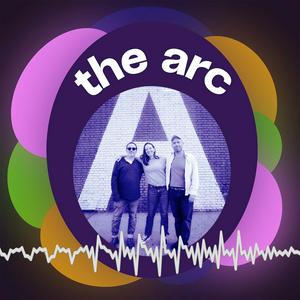
- Howard W. Koch (Executive...Weitere Comedy PodcastsTrending Comedy PodcastsÜber the arc.fmJoin three very different storytellers with three very different personalities, as we bring each other stories to break apart and celebrate. In every episode, we're having the best time exploring what makes a story work, why it moves us, and why we can't stop talking about it. It's not analysis. It's not review. And it's something more than just a conversation about one of the things that makes life worth living... stories.Podcast-WebsiteHöre the arc.fm, Kaulitz Hills - Senf aus Hollywood und viele andere Podcasts aus aller Welt mit der radio.at-App
Hol dir die kostenlose radio.at App
- Sender und Podcasts favorisieren
- Streamen via Wifi oder Bluetooth
- Unterstützt Carplay & Android Auto
- viele weitere App Funktionen
Hol dir die kostenlose radio.at App
- Sender und Podcasts favorisieren
- Streamen via Wifi oder Bluetooth
- Unterstützt Carplay & Android Auto
- viele weitere App Funktionen

the arc.fm
Code scannen,
App laden,
loshören.



















Unternehmen
Rechtliches
Service
Apps
 Österreich
v8.25.2 | © 2007-2026 radio.de GmbH
Built: 10/22/2026 - 10:59:25 AM

