
Höre diesen Podcast kostenlos in der App: Kostenlos im App Store laden
radio.at
Sleeptimer
Sender speichern
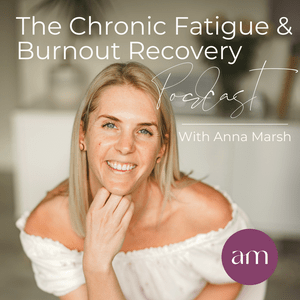
The Chronic Fatigue and Burnout Recovery Podcast
Anna Marsh
Neueste Episode
162 Episoden
Episode 161: Could Light Exposure Influence Symptoms in ME/CFS? What a New Study Suggests
16.10.2026 | 32 Min.In this episode, Anna explores a newly published study investigating the relationship between light exposure patterns and symptom severity in people living with ME/CFS.
Rather than focusing on light as a treatment, the research highlights the potential role of circadian rhythm and how consistent daytime light, alongside reduced evening light exposure, may be associated with better sleep, lower fatigue and improved quality of life.
Anna explains why light is much more than something that helps us see—it acts as one of the body's most important biological signals, helping to regulate sleep, hormones, nervous system function and energy metabolism. She also discusses the limitations of the research, why these findings should be interpreted with caution, and how they fit within a whole-person, systems biology approach to ME/CFS.
If you've ever wondered whether your environment can influence your physiology, this episode offers a balanced, science-led discussion of what this emerging research may—and may not—tell us.
In this episode you'll learn:
Why light plays a vital role in regulating circadian rhythm and overall physiology.
What this new ME/CFS study investigated and what the researchers found.
Why the timing and consistency of light exposure may matter more than simply spending more time outdoors.
The limitations of the current evidence and why association does not equal causation.
Anna's clinical perspective on supporting circadian health as one part of a comprehensive, individualised approach to ME/CFS recovery.
Useful Links
Research Article: https://pubmed.ncbi.nlm.nih.gov/42399727/
Take the Chronic Fatigue Quiz: https://app.annamarsh.co.uk/quiz-page
Instagram: https://www.instagram.com/anna__marsh_
Work with me: https://annamarsh.co.uk/work-together/
Website: https://annamarsh.co.uk/Episode 160: Motherhood, Recovery & Learning to Live in Balance
02.10.2026 | 57 Min.What does recovery look like when life doesn’t stop around you?
In this episode, Anna is joined by Charlotte Wightman for an honest conversation about chronic illness, motherhood, recovery and what it means to build a life that feels sustainable — rather than constantly trying to do recovery “perfectly.”
Charlotte shares what it was like navigating her own health while also being a mum, including the inevitable tension between what she felt she should be doing for her recovery and what family life actually allowed.
They also explore some of the different pieces that became important along the way. Charlotte talks about discovering sleep apnoea, the work she did with Anna on her digestive health which allowed her to come off her adrenal support she had for a long time been dependent on.
They also talk about yoga beyond the physical practice: how its wider philosophy has influenced Charlotte’s relationship with illness, motherhood and recovery, and ultimately inspired the creation of The Held Collective.
In this episode, they explore:
The reality of supporting your own recovery while parenting
Letting go of the pressure to do recovery “perfectly”
The unexpected ways illness can change the way we live and parent
Charlotte’s experience of discovering sleep apnoea
Why symptoms can sometimes have multiple contributing factors
What functional testing added to Charlotte’s understanding of her health
Why progress rarely comes down to one single intervention
Yoga as a philosophy rather than simply a physical practice
Creating movement and wellbeing practices that fit around real life
How Charlotte’s experiences shaped The Held Collective
What “recovery” means to Charlotte now
The importance of balance, flexibility and building a meaningful life alongside health
This is a thoughtful conversation about moving away from rigid ideas of what recovery should look like and towards something much more individual, flexible and sustainable.
This podcast is for educational purposes only and isn’t a substitute for individual medical advice. If you have concerns about symptoms such as persistent fatigue or possible sleep apnoea, please speak with an appropriately qualified healthcare professional.
Useful Links
Charlotte’s Website: https://www.gentleyogawithcharlotte.com/
Take the Chronic Fatigue Quiz: https://app.annamarsh.co.uk/quiz-page
Instagram: https://www.instagram.com/anna__marsh_
Work with me: https://annamarsh.co.uk/work-together/
Website: https://annamarsh.co.uk/Episode 159: Can Hyperbaric Oxygen Therapy (HBOT) Improve Capacity in ME/CFS?
18.09.2026 | 32 Min.A recently published study investigating Hyperbaric Oxygen Therapy (HBOT) in people living with ME/CFS has generated considerable interest within the chronic illness community.
But what did the research actually find?
In this episode, Anna takes a balanced look at the study, exploring both the encouraging findings and the important limitations. Whilst the results suggest that HBOT may improve physical functioning, fatigue, pain and cognitive performance in a subset of people with ME/CFS, the study was observational and should be interpreted with appropriate caution.
Perhaps the most fascinating aspect of the research wasn't the treatment itself, but what it revealed about the brain.
Using MRI technology, researchers observed changes in communication involving the thalamus—a key brain region involved in filtering sensory information and coordinating communication between different brain networks. These findings add to a growing body of evidence suggesting that ME/CFS is associated with measurable physiological changes across multiple interconnected systems.
In this episode, Anna explores what these findings may mean, why they matter, and how they fit into the bigger picture of our evolving understanding of ME/CFS and Long COVID.
In this episode, we discuss:
What Hyperbaric Oxygen Therapy (HBOT) is and why researchers are interested in it
The design of the recent ME/CFS study and its key findings
Improvements observed in fatigue, pain, cognitive performance and physical function
Why the brain imaging findings were particularly interesting
Why this research does not prove that HBOT is an effective treatment for ME/CFS
Important study limitations and why they matter
My clinical perspective on who HBOT may (and may not) be appropriate for
Final Thoughts
As always, my goal isn't to chase headlines or promote individual interventions, but to help you better understand the emerging science behind ME/CFS and Long COVID.
Every well-conducted study adds another piece to the puzzle. Whilst we still have many unanswered questions, research like this continues to deepen our understanding of the complex interactions between the nervous system, immune system, energy metabolism and brain function.
If you found this episode helpful, I'd be so grateful if you could subscribe, leave a review, or share it with someone who may benefit from a more balanced interpretation of the latest research.
Useful Links
Research Article: https://pubmed.ncbi.nlm.nih.gov/42249466/
Take the Chronic Fatigue Quiz: https://app.annamarsh.co.uk/quiz-page
Instagram: https://www.instagram.com/anna__marsh_
Work with me: https://annamarsh.co.uk/work-together/
Website: https://annamarsh.co.uk/Episode 158: What Happened After My Longest Hike Since Illness
04.09.2026 | 42 Min.In this episode, Anna shares the experience of completing her longest hike since chronic illness — a 21km hike lasting almost 6 hours — and reflects on what the following 72 hours revealed about recovery, capacity, and nervous system regulation.
This is not an episode about pushing harder.
It’s a conversation about what late-stage recovery often really involves:
understanding load distribution
preparing the body appropriately
supporting recovery intentionally
and learning how to take on bigger physical challenges without overwhelming the system.
Anna explores:
training and pacing considerations
planning around wider life stress and menstrual cycle timing
fuelling and post-exertion recovery
sleep and nervous system support
active recovery tools such as restorative movement, heat, cold and body work.
Blending personal reflection with clinical insight, this episode offers a realistic and grounded look at what rebuilding capacity can look like in the later stages of recovery.
Useful Links
Take the Chronic Fatigue Quiz: https://app.annamarsh.co.uk/quiz-page
Instagram: https://www.instagram.com/anna__marsh_
Work with me: https://annamarsh.co.uk/work-together/
Website: https://annamarsh.co.uk/Episode 157: Could Creatine Support Energy and Cognitive Function in Long Covid?
21.08.2026 | 29 Min.Creatine is often associated with the fitness industry and sports performance — but emerging research is now exploring whether it may have relevance far beyond the gym.
In this episode, Anna explores the current evidence surrounding creatine supplementation in Long Covid and fatigue-related conditions, including its potential role in energy metabolism, muscle function, cognitive symptoms, nervous system health, and recovery capacity.
This conversation also looks at:
Why creatine is being investigated in Long Covid
The link between ATP production and fatigue
Potential neuroprotective and antioxidant mechanisms
Brain fog and cognitive symptoms
Muscle weakness, PEM, and pacing considerations
Why individual responses to supplements can vary
Considerations around dosage, safety, and supplement sensitivity
Creatine and the menstrual cycle
Importantly, this episode takes a balanced and non-dogmatic approach. While early research is promising, creatine is not presented as a “magic bullet” or standalone solution for Long Covid.
As always, recovery is complex, individual, and multifactorial.
This episode is intended for educational purposes only and should not replace personalised medical advice.
Useful Links
Take the Chronic Fatigue Quiz: https://app.annamarsh.co.uk/quiz-page
Instagram: https://www.instagram.com/anna__marsh_
Work with me: https://annamarsh.co.uk/work-together/
Website: https://annamarsh.co.uk/
Referenced Articles
Effects of six-month creatine supplementation on patient- and clinician-reported outcomes, and tissue creatine levels in patients with post-COVID-19 fatigue syndrome
Reduced tissue creatine levels in patients with long COVID-19: A cross-sectional study
Creatine Supplementation in Women’s Health: A Lifespan Perspective
Creatine Supplementation and Brain Health
Diagnostic and Pharmacological Potency of Creatine in Post-Viral Fatigue Syndrome
Role of Creatine Supplementation in Conditions Involving Mitochondrial Dysfunction: A Narrative Review
Weitere Alternative Therapien Podcasts



Trending Alternative Therapien Podcasts

Über The Chronic Fatigue and Burnout Recovery Podcast
Recovering from Chronic Fatigue, Burnout and other Energy Related Illnesses Through Somatics, Science and Neural Reprogramming.
A Functional Medicine Approach To Recovery
Podcast-WebsiteHöre The Chronic Fatigue and Burnout Recovery Podcast, The Vitality Pharmacist by Dr. Nayan Patel und viele andere Podcasts aus aller Welt mit der radio.at-App
Hol dir die kostenlose radio.at App
- Sender und Podcasts favorisieren
- Streamen via Wifi oder Bluetooth
- Unterstützt Carplay & Android Auto
- viele weitere App Funktionen
Hol dir die kostenlose radio.at App
- Sender und Podcasts favorisieren
- Streamen via Wifi oder Bluetooth
- Unterstützt Carplay & Android Auto
- viele weitere App Funktionen

The Chronic Fatigue and Burnout Recovery Podcast
Code scannen,
App laden,
loshören.
App laden,
loshören.
The Chronic Fatigue and Burnout Recovery Podcast: Zugehörige Podcasts
 Österreich

