
Höre diesen Podcast kostenlos in der App: Kostenlos im App Store laden
radio.at
Sleeptimer
Sender speichern
245 Episoden
Revisited: The Power of Doing One Thing Exceptionally Well with Gymshark Founder and CEO Ben Francis
20.10.2026 | 1 Std.Hello from Team Simon! Brand-new episodes of A Bit of Optimism are back next Tuesday, October 27. Before then, we're revisiting one last favorite: the company Simon names whenever someone asks which business actually lives the ideas he writes about. It's Gymshark, and its founder, Ben Francis.
Maybe you know the pull: the bigger something gets, the more it feels like it should do more. More products, more markets, more people to please. It looks like growth. But it can quietly water down the very thing that made you special.
Gymshark didn't start with a vision. It started with a website, a list of drop-shipped supplements, and months of waiting for anyone to buy anything. Then Ben spotted his nan's sewing machine on the dining room table and started making gym clothes for himself and his friends. Years later, with the business booming, Gymshark did what growing companies do and expanded into swimwear, hiking, and sportswear. The brand started to blur. So Ben pulled it all back to three words: We Do Gym.
Ben is the founder and CEO of Gymshark, the gymwear brand he launched in 2012 while still working shifts at Pizza Hut. Today it's a billion-dollar global brand with a devoted community, a flagship store on London's Regent Street, and one ambition that shapes every decision Ben makes: to build a 100-year brand.
I sat down with Ben at Gymshark HQ in the West Midlands, where the company values are painted on the walls in refreshingly blunt language. And I push him on the irony at the heart of the brand: how does a company built on humility make clothes designed for showing off?
In this episode you'll learn:
➡️ Why the best businesses often start with ridiculously low ambitions
➡️ The "small menu" rule: why selling fewer things builds a better business
➡️ Why Ben stepped aside as CEO, and how it made him ready to take the job back
➡️ How a 100-year mindset changes who you hire (+ why "have they done it before?" is the wrong question)
➡️ His granddad's one-question test for a good year
➡️ Why even the most successful founders admit they're "just winging it"
➡️ Why the only competition worth winning is against yourself
Ben's lesson is a freeing one: you don't have to be everything to everyone. Pick the thing you love, serve the people who love it too, and keep getting better at it. That's how you build something that lasts.
This… is A Bit of Optimism.
+ + +
Want to check out Gymshark? Head over to: https://www.gymshark.com/
+ + +
Chapters
Chapters
00:00:00 Why Building a 100-Year Brand Changes Everything
00:01:55 The Accidental Birth of Gymshark: From Supplements to Sewing Machines
00:07:38 Setting the Bar Low: Why Small Ambitions Lead to Big Success
00:10:34 The Temptation to Expand: When Gymshark Lost Its Way
00:11:23 The Restaurant Menu Philosophy: Why Less Product Means Better Business
00:13:48 Stepping Down as CEO: The Hardest Decision That Saved the Company
00:20:43 What Cool Dads Build: The Personal Drive Behind a 100-Year Vision
00:24:27 The American Mistake: When Freedom Killed the Brand
00:27:45 The Onyx Launch: Selling to 1 Percent of Your Audience
00:34:46 Did You Make Any Money This Year: Lessons from Granddad
00:37:06 Give a Sh**: The Honest Values Written on the Walls
00:44:14 Winging It With Purpose: What Simon Learned in Fiji
00:47:56 Two Types of Winging It: Foundation vs Quicksand
00:53:21 The Head Nod Philosophy: Competition That Lifts Everyone Up
00:57:13 Family First: When Your Kid's Hug Beats Every Business Win
+ + +
Simon is an unshakable optimist. He believes in a bright future and our ability to build it together.
Described as “a visionary thinker with a rare intellect,” Simon has devoted his professional life to help advance a vision of the world that does not yet exist; a world in which the vast majority of people wake up every single morning inspired, feel safe wherever they are and end the day fulfilled by the work that they do.
Simon is the author of multiple best-selling books including Start With Why, Leaders Eat Last, Together is Better, and The Infinite Game.
+ + +
Website: http://simonsinek.com
Leaderful: https://simonsinek.com/leaderful
Podcast: http://apple.co/simonsinek
Instagram: https://instagram.com/simonsinek
Linkedin: https://linkedin.com/in/simonsinek
Twitter: https://twitter.com/simonsinek
Facebook: https://www.facebook.com/simonsinekRevisited: Why Relationships Are the Secret to a Long, Happy Life with Psychotherapist Esther Perel
13.10.2026 | 1 Std. 2 Min.Hello from Team Simon! We’re taking a few weeks off and will be back with brand-new episodes of A Bit of Optimism on Tuesday, October 27.
Until then, we’re revisiting some of our favorite conversations, including this one with a longtime friend of Simon’s: Esther Perel.
For most of history, we stayed in marriages and jobs because we had to. Happiness was a nice bonus. Today we get to choose who we love and where we work, so happiness has become the glue that holds it all together.
Few people have watched that shift as closely as Esther Perel. For four decades, she’s seen how love, family and work have been reshaped by no-fault divorce, the internet, and now AI. Her conclusion hasn’t changed: the quality of our relationships determines the quality of our lives. It’s a line she first said out loud years ago, in a WHY Discovery session with Simon.
Esther is a psychotherapist, the bestselling author of Mating in Captivity and The State of Affairs, and the host of the podcast Where Should We Begin? Her card game “Where Should We Begin? At Work,” is built to spark real conversations between colleagues.
In this conversation, Esther and Simon talk about why one partner can’t be our whole village, what kids lose when they stop playing in the street, and why an entry-level job may be the last great playground. Simon also shares a personal update: how he made peace with the question, "Why haven’t you been married?"
In this episode you'll learn:
➡️ Why happiness went from a perk to the glue, in love and at work
➡️ The “relationship CV” everyone brings to work (+ how it shapes the way you handle conflict and authority)
➡️ Why we’re asking one person to give us what a whole village used to
➡️ How frictionless apps are changing what we expect from each other
➡️ Why entry-level jobs are the best place to scrape your knees
➡️ The number one relationship skill Gen Z should master before their first job
➡️ Why play is just risk that feels fun, and how it builds trust
And remember, every relationship you treasure started as a conversation with a stranger.
This… is A Bit of Optimism.
+ + +
To learn more about Esther's work, visit: https://www.estherperel.com/
And check out "Where Should We Begin? At Work" here: https://game.estherperel.com/products/where-should-we-begin-at-work
+ + +
Chapters
Chapters
00:00:00 Why the Quality of Our Relationships Determines the Quality of Our Lives
00:03:43 The Dual Revolution: How Work and Romance Transformed Together
00:09:40 From Duty to Desire: When Happiness Became the Glue
00:17:11 The Death of the Playground: Where We Lost Our Social Skills
00:19:24 Why Lion Cubs Fight: The Mammal Lesson We're Ignoring
00:25:46 The Harvard Study Secret: Relationships Are #1 Predictor of Happiness
00:28:10 The Kindergarten Separation: A Cultural Moment That Reveals Everything
00:30:17 The Two CVs: Your Work Resume and Your Relationship History
00:31:04 The Predictive Technology Problem: Why Apps Are Ruining Human Connection
00:38:56 The Three Models of Relationships: Romance, Scaffolding, and Friendship Networks
00:42:49 Belonging vs Fitting In: Why Forcing Relationships Fails
00:44:23 The Workplace Revolution: When Psychology Entered Business
00:45:26 Where Should We Begin at Work: Using Storytelling to Build Connection
00:46:20 The Entry-Level Crisis: Why Young Workers Are Most at Risk
00:49:39 Remote Work Reality: Flexibility Without Dogma
00:50:40 The Transactional Trap: Why We Skip the Coffee and Go Straight to Business
00:56:20 Talk to Strangers: The Number One Skill Gen Z Needs
00:57:48 The Discomfort Doctrine: Why Comfort Has Become Too Central to Life
00:58:45 The Third Space: Finding Five Minutes Away From All Responsibility
01:00:22 The Voice Matters: Why We Misinterpret Text and Need to Hear Each Other
01:01:15 The Trojan Horses: Teaching Human Skills Through Work and Romance
+ + +
Simon is an unshakable optimist. He believes in a bright future and our ability to build it together.
Described as “a visionary thinker with a rare intellect,” Simon has devoted his professional life to help advance a vision of the world that does not yet exist; a world in which the vast majority of people wake up every single morning inspired, feel safe wherever they are and end the day fulfilled by the work that they do.
Simon is the author of multiple best-selling books including Start With Why, Leaders Eat Last, Together is Better, and The Infinite Game.
+ + +
Website: http://simonsinek.com/
Leaderful: https://simonsinek.com/leaderful
Podcast: http://apple.co/simonsinek
Instagram: https://instagram.com/simonsinek/
Linkedin: https://linkedin.com/in/simonsinek/
Twitter: https://twitter.com/simonsinek
Facebook: https://www.facebook.com/simonsinekRevisited: Your Instincts Know What You Want with Happiness Expert Arthur Brooks
06.10.2026 | 55 Min.Team Simon here! A Bit of Optimism is on a short break, and brand-new episodes return October 27. Until then, we're revisiting a few conversations we keep coming back to.
This week it's Arthur Brooks, a longtime friend of Simon's and one of his favorite people to talk to.
Have you ever felt like you're falling behind? Everyone else seems to have a plan, a timeline and the next rung on the ladder lined up. Any detour, like a gap year, a pivot or a job that isn't quite right, feels like losing ground.
Arthur Brooks thinks you're running the wrong race. Chasing a finish line is one of the surest ways to end up unhappy. He argues that happiness lives in the process, not the outcome.
Arthur is a bestselling author and teaches one of the most popular classes at Harvard Business School: a whole course on happiness. He lives what he teaches, too. He played French horn professionally from 19 to 31 and then reinvented himself as a behavioral scientist. After that, he became president of a Washington think tank without ever having raised a dollar. When he left that job with no idea what came next, he walked the Camino de Santiago to find out.
In this conversation, Arthur explains how to know when to trust your gut, why reinvention starts with curiosity rather than skills, and why meaning has collapsed for people under 35. Simon pushes on something that worries him: if AI takes away the struggle, what happens to the wisdom that struggle builds?
In this episode you'll learn:
➡️ The 80/20/0 rule for knowing a big decision is the right one
➡️ Why reapplying your skills isn't the same as reinventing yourself
➡️ Why your career is a spiral, not a staircase
➡️ The "arrival fallacy," and why so many Olympic gold medalists struggle after they win
➡️ Why life's most unwelcome changes usually look like gifts in hindsight
➡️ The three parts of happiness
➡️ Why feelings are the evidence of happiness, not the thing itself
➡️ Why Arthur calls AI a "dark triad," and what that means if you're using it as a therapist
➡️ What to do when you're between things: take a walk
Arthur's argument is a freeing one. Happiness lives in the doing, so you can be fully alive right now. You don't have to arrive first.
This… is A Bit of Optimism.
+ + +
If you want to see more of Arthur’s work, check out: https://www.arthurbrooks.com/
+ + +
Chapters
Chapters
00:00:00 Why Meaning Has Cratered in Modern Life
00:02:00 Career Reinvention: The Spiral Path
00:06:05 The Decision Formula: 80% Excitement, 20% Fear
00:09:27 Moving "Backwards" to Move Forward
00:14:12 The Arrival Fallacy & Why Progress Matters
00:18:18 Navigating "Lifequakes" and Liminal Space
00:22:26 The Metaphor of the Pilgrimage
00:25:13 Intention Without Attachment
00:27:16 How Fast Technology & AI Threaten Human Wisdom
00:33:38 Lessons from Prisoners of War: Embracing Process Over Deadlines
00:39:48 The Danger of Using AI for Human Connection
00:41:45 The 3 True Elements of Happiness (Enjoyment, Satisfaction, Meaning)
00:45:20 Cultivating Curiosity & Rethinking Education
00:48:40 Superpowers in Neurodivergence
00:52:25 Translating Ancient Wisdom: Be Alive Now
+ + +
Simon is an unshakable optimist. He believes in a bright future and our ability to build it together.
Described as “a visionary thinker with a rare intellect,” Simon has devoted his professional life to help advance a vision of the world that does not yet exist; a world in which the vast majority of people wake up every single morning inspired, feel safe wherever they are and end the day fulfilled by the work that they do.
Simon is the author of multiple best-selling books including Start With Why, Leaders Eat Last, Together is Better, and The Infinite Game.
+ + +
Website: http://simonsinek.com/
Leaderful: https://simonsinek.com/leaderful
Podcast: http://apple.co/simonsinek
Instagram: https://instagram.com/simonsinek/
Linkedin: https://linkedin.com/in/simonsinek/
Twitter: https://twitter.com/simonsinek
Facebook: https://www.facebook.com/simonsinekRevisited: The Power of Saying "Screw It" with Rob Lowe
29.09.2026 | 1 Std. 2 Min.Hello from Team Simon! We're taking a few weeks off and will be back with brand-new episodes of A Bit of Optimism on Tuesday, October 27. Until then, we're revisiting some of our favorite conversations, starting with one of the most fun we've ever had: Rob Lowe.
Maybe you know the feeling: you've got an idea, a joke, a risk you want to take… and you talk yourself out of it before anyone else gets the chance. Rob Lowe has spent four decades doing the opposite. He calls it a healthy case of the "screw-its."
It's how he survived an industry famous for chewing people up. He went from movies to The West Wing when movie stars didn't do TV, and from TV to hosting a game show when that was supposed to be career death. His secret isn't avoiding failure. It's never letting failure decide what he tries next.
Rob is an actor, producer, and bestselling author whose career runs from The Outsiders and St. Elmo's Fire to The West Wing and Parks and Recreation. He hosts FOX's The Floor and the podcast Literally! with Rob Lowe, and stars alongside his son John Owen Lowe in Netflix's Unstable.
In this conversation, Rob tells the story of his infamous Oscars song-and-dance number (and the open letter from Hollywood legends that followed it). He also shares the Letterman appearance that taught him to trust his instincts for good, and explains why authenticity has become the only currency that matters. And I push him on the question under all of it: can the rest of us learn to take a punch the way he does?
In this episode you'll learn:
➡️ Why a healthy case of the "screw-its" is a career strategy, not a character flaw
➡️ What the world's top tennis players can teach us about bouncing back
➡️ The one practical rule for being more authentic: stop self-editing
➡️ Why the thing you least want to talk about is the thing that makes you relatable
➡️ Why "availability" might be a better word than "vulnerability"
➡️ How to spot performative authenticity (+ Rob's three red-carpet poses)
➡️ Why you can meet your heroes, but shouldn't get to know them
➡️ How humor makes even the hardest subjects easier to talk about
Rob's lesson is a freeing one: take the work seriously, laugh at the absurd parts, and trust your gut on the next big swing. Worst case, you get a great story.
This… is A Bit of Optimism.
+ + +
If you want to listen to Rob’s podcast, Literally! with Rob Lowe, head to: https://teamcoco.com/podcasts/literally-with-rob-lowe
Find out where you can watch Rob as host of GSN’s The Floor, weekends at 8pm ET: https://www.gameshownetwork.com/the-floor
+ + +
Chapters
Chapters
00:00:00 The Oscars Disaster: When Rob Lowe Bombed on Stage
00:01:59 From Teen Beat Cover Boy to Career Crisis at 17
00:03:33 The Fame Freeze: Why Celebrities Stop Growing
00:05:29 The Secret to Staying Relevant for Decades
00:06:55 Breaking the Rules: From Movies to TV When No One Did
00:12:45 The Comedy Central Roast and the Price of Humiliation
00:14:39 Learning to Trust Your Instincts After Letterman
00:21:05 What Authenticity Actually Means in Hollywood
00:31:30 The Art of Self-Deprecation Without Losing Respect
00:38:00 Red Carpet Secrets: Man of the People, Blue Steel, and Iconic
00:51:29 Don't Meet Your Heroes - Or At Least Don't Get to Know Them
00:53:26 Finding Humor in the Darkest Moments
00:57:01 Why Game Shows Are Actually the Hardest Thing He's Done
01:01:18 Live in Gratitude and Manage Your Expectations
+ + +
Simon is an unshakable optimist. He believes in a bright future and our ability to build it together.
Described as “a visionary thinker with a rare intellect,” Simon has devoted his professional life to help advance a vision of the world that does not yet exist; a world in which the vast majority of people wake up every single morning inspired, feel safe wherever they are and end the day fulfilled by the work that they do.
Simon is the author of multiple best-selling books including Start With Why, Leaders Eat Last, Together is Better, and The Infinite Game.
+ + +
Website: http://simonsinek.com/
Leaderful: https://simonsinek.com/leaderful
Podcast: http://apple.co/simonsinek
Instagram: https://instagram.com/simonsinek/
Linkedin: https://linkedin.com/in/simonsinek/
Twitter: https://twitter.com/simonsinek
Facebook: https://www.facebook.com/simonsinekWhat Mentally Strong People Do on Their Worst Days with Psychotherapist Amy Morin
22.09.2026 | 1 Std. 1 Min.Be honest: you've taken a mental health day that made you feel worse. You stayed in bed, you avoided the thing, and by evening it was still waiting for you—with less of the day left to face it.
Amy Morin thinks the problem starts with the word. We treat mental health as something you either have or you don't… and framed that way, there's nothing to actually do on a bad day. Her work runs on the opposite premise: mental strength is a practice, and you build it like you'd build anything else.
Amy is a psychotherapist, a clinical social worker, and the author of the bestseller 13 Things Mentally Strong People Don't Do and the new The Mental Strength Playbook. She became a therapist at 22 and lost her mother at 23. Three years later—to the day—her husband died, and the mental health agency where she worked gave her three days of bereavement leave. She built the practices that became her book in real time, from there.
In this conversation, Amy walks through exactly what she did to get mentally fit. Not as theory, but as the small, unglamorous things that got her out of bed. And I press her on the question nobody in her field says out loud: whether an industry built to help us has any incentive to finish the job.
In this episode you'll learn:
➡️ Why the mental health day you take to feel better isn’t helping
➡️ How to tell whether to solve the problem or solve the feeling (most of us pick wrong)
➡️ The 15-minute daily exercise Amy's clients say lifts the weight of the world
➡️ Why "I am anxious" and "I have anxiety sometimes" build two different lives
➡️ How to compromise with yourself on a bad day instead of going all-or-nothing
➡️ Why "I'm just staying busy" is avoidance we've learned to compliment
➡️ What playing the victim actually gives you (+ why it's so hard to give up)
➡️ Simon's rule for hard days: no crying alone
Amy's argument is a hopeful one: the feeling follows the action. Do one small, ordinary thing today, and you've already started.
This… is A Bit of Optimism.
+ + +
This episode is brought to you by SAP. Bring it with SAP GROW. The AI Cloud ERP for any size business. Learn more at https://SAP.com/GROW
+ + +
If you’d like to buy Amy’s new book, The Mental Strength Playbook, head to: https://amymorinlcsw.com/books/
+ + +
Chapters
+ + +
Simon is an unshakable optimist. He believes in a bright future and our ability to build it together.
Described as “a visionary thinker with a rare intellect,” Simon has devoted his professional life to help advance a vision of the world that does not yet exist; a world in which the vast majority of people wake up every single morning inspired, feel safe wherever they are and end the day fulfilled by the work that they do.
Simon is the author of multiple best-selling books including Start With Why, Leaders Eat Last, Together is Better, and The Infinite Game.
+ + +
Website: http://simonsinek.com/
Leaderful: https://simonsinek.com/leaderful
Podcast: http://apple.co/simonsinek
Instagram: https://instagram.com/simonsinek/
Linkedin: https://linkedin.com/in/simonsinek/
Twitter: https://twitter.com/simonsinek
Facebook: https://www.facebook.com/simonsinek
Weitere Bildung Podcasts









Trending Bildung Podcasts

























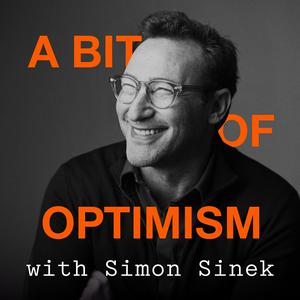
Über A Bit of Optimism
My career is an accident. It started when I set out to rediscover my passion and reignite a spark I’d lost — and that journey led me to the work I do now.
If you know me from my books or my speaking, you know I’m fascinated by why people do what they do. What makes someone find joy and meaning in their life, or pursue something far greater than themselves?
I started A Bit of Optimism to explore those ideas and expand my own perspective. This podcast is a trove of honest conversations, with people who challenge me, teach me, or simply help me see things in a different way. Some guests are household names, and others you may be meeting for the first time. But each one of them has something to share that can help all of us grow.
So if you’re looking for a spark — some insight, inspiration, or just a reminder that good things are possible — join me on A Bit of Optimism!
Let’s grow together.
Podcast-WebsiteHöre A Bit of Optimism, Hopf & Kettner und viele andere Podcasts aus aller Welt mit der radio.at-App
Hol dir die kostenlose radio.at App
- Sender und Podcasts favorisieren
- Streamen via Wifi oder Bluetooth
- Unterstützt Carplay & Android Auto
- viele weitere App Funktionen
Hol dir die kostenlose radio.at App
- Sender und Podcasts favorisieren
- Streamen via Wifi oder Bluetooth
- Unterstützt Carplay & Android Auto
- viele weitere App Funktionen

A Bit of Optimism
Code scannen,
App laden,
loshören.
App laden,
loshören.
A Bit of Optimism: Zugehörige Podcasts
 Österreich