
Höre diesen Podcast kostenlos in der App: Kostenlos im App Store laden
radio.at
Sleeptimer
Sender speichern
341 Episoden
S2E365: Is AI Good for Classrooms? 6 Learning Science Principles It Can Help Deliver (A Former Teacher Explains)
06.11.2026 | 46 Min.Is AI going to help students learn better, or is it the worst thing we could put in a classroom? It’s one of the biggest debates in education right now, and Mackenzie makes the case that decades of learning science research point to practices a single teacher in front of a classroom simply can’t deliver at scale.
To dig into it, Mackenzie sits down with Sam DePalo, a former traditional teacher and Alpha guide with over 10 years of classroom experience. A Fulbright scholar with degrees in linguistics, literature, and mathematics, plus a postgraduate focus on neurodiversity and executive function, Sam taught high school math through Teach For America in a Title I public school (with a class of 47 students), then worked in private schools with much smaller class sizes. She saw the same limits in both.
In this conversation, Sam explains six learning science principles and why she believes an AI tutor (not a chatbot) can help deliver them, while freeing teachers to focus on motivating and connecting with kids.
In this episode, we discuss:
Why the Traditional Model Falls Short: How the industrial-era classroom was built to educate the masses, and why Sam saw the same limits in a 47-student Title I class and in small private-school classrooms.
One-to-One Instruction: Why individualized learning is the most powerful principle, and how an AI tutor can assess what a student knows and meet them at the right pace and level.
Mastery-Based Learning: Why moving on before a student has mastered a concept leaves gaps, what a 90% mastery bar looks like, and how grade inflation and the bell curve blur what an “A” really means.
Spaced Repetition and Retrieval Practice: How constantly revisiting past material, and being quizzed on it, beats cramming, and why a teacher with 25+ students can’t realistically build this in for every kid.
The Zone of Proximal Development: How kids shut down when work is too hard or too easy, and why productive struggle (not gamified, easy learning) is the goal.
Cognitive Load Theory: Sam’s “working memory whiteboard” explanation of why shaky math facts get in the way of learning algebra.
The Teacher’s Role: What changes when AI takes on grading, data analysis, and differentiation, so adults can focus on motivation and connection.
Episode Timestamps:
00:00 - The great debate: Is AI good for classrooms or the worst thing for them?
01:37 - Sam’s background: from Fulbright scholar to Teach For America
04:16 - Why learning science doesn’t support the one-teacher model, even in small private schools
07:54 - Learning Science Principle 1: One-to-one instruction
09:08 - How an AI tutor (not a chatbot) makes individualized learning possible
12:36 - Learning Science Principle 2: Mastery-based learning
13:30 - Why Alpha sets the mastery bar at 90%
16:31 - Grade inflation, the bell curve, and the paper that got a 95% without being read
19:06 - Learning Science Principle 3: Spaced repetition and distributed practice
22:49 - Why cramming fails: the accounting class story
24:18 - Learning Science Principle 4: Retrieval practice
28:03 - Standardized assessments as feedback, not high-stakes judgment
30:00 - Hole-filling in action: how a student went from a 720 to a 790 on SAT math
32:12 - Learning Science Principle 5: The zone of proximal development
36:02 - Productive struggle vs. gamified learning
37:21 - Learning Science Principle 6: Cognitive load theory
41:19 - Why a motivated student matters most
43:13 - What AI frees teachers to do
Watch the Future of Education on YouTube: www.youtube.com/@future_of_education
Read MacKenzie’s Substack: www.futureofeducation.substack.com
Learn more about our schools: www.2hourlearning.com/schools
Learn more about Alpha School: www.alpha.schoolS2E364: Are You Coddling Your Kid? Signs and Fixes From a Veteran Educator
30.10.2026 | 23 Min.Overprotectiveness often stems from good intentions, but it can unintentionally strip children of the confidence, problem-solving skills, and resilience they need to thrive. In this episode of The Future of Education, Mackenzie speaks with Eric Salgado—an educator with over two decades of experience as a teacher, principal, school-system director, and Alpha School guide—about how to spot overprotection and replace it with high-support frameworks.
Eric details the subtle classroom signs of overparenting, explains how to implement the "1% better every day" mindset at home, and breaks down why holding firm boundaries with natural consequences builds genuine independence.
Key Topics Covered
Spotting Coddling in Real Time: Telltale behavioral signs of overprotection in school.
High Standards, High Support: Balancing firm boundaries with empathetic mentorship.
The "1% Better Every Day" Mindset: Helping children replace perfectionism with positive micro-habits.
Tactical Routines for Independence: Practical strategies for fixing stressful morning wake-ups, handling forgotten sports gear, and using pre-departure checklists.
Building Teacher-Parent Partnerships: How parents and educators can collaborate as a unified team to mentor the whole child.
Episode Timestamps
00:00 - Defining Coddling: Overprotection & Telltale Signs
01:56 - Helicopter Parenting & Classroom Behavioral Cues
04:27 - High Standards + High Support: The Mentor Model
06:38 - Outsourcing High Standards & Partnering with Educators
08:39 - The "1% Better Every Day" Mindset Explained
11:21 - Case Study: How Small Wins Unlocked a Struggling Student
16:26 - Setting Boundaries: Morning Routines & No Empty Threats
19:20 - Building Daily Independence in Young Children
21:07 - The Forgotten Sports Gear Test: Letting Kids Face Consequences
22:33 - Building a Unified Parent-Teacher Partnership
Watch the Future of Education on YouTube: www.youtube.com/@future_of_education
Read MacKenzie's Substack: www.futureofeducation.substack.com
Learn more about our schools: www.2hourlearning.com/schools
Learn more about Alpha School: www.alpha.schoolS2E363: How to Be a Mentor to Your Kid (Not Just a Parent)
23.10.2026 | 38 Min.Many parents worry about whether their kids are developing the character, resilience, and adaptability needed for a fast-changing world. In this episode, Mackenzie sits down with Chauncey—a former Teach for America core member, NYC Department of Education leader, Goldman Sachs talent executive, and current Alpha School guide. Chauncey shares how combining high standards with high support creates the ultimate mentor mindset, and how parents can bring these exact frameworks into their homes.
Chauncey breaks down why most life lessons are "caught, not taught," how to decouple age from learning stage so kids master concepts without shame, and practical ways parents can step into their child’s world to unlock quiet or anxious kids.
Episode Timestamps
03:28 - Chauncey’s Journey: Teach for America, Penn, Dept of Ed & Goldman Sachs
08:08 - Why AI Education Is 90% Human Mentorship, 10% Technology
09:02 - The "Big Game" vs. "Little Games": Raising Kids with Character
11:57 - Transitioning from Traditional Teaching to the Mentor Model
13:59 - Lessons Are Caught, Not Taught: The Mirror Loop for Parents
15:33 - The "Glows, Grows & Everyone Should Know" Daily Framework
18:31 - How Taking Immediate Ownership Neutralizes Conflict
20:04 - "Love of School Is Love of Life": Making Daily Routines Joyful
22:50 - High Standards + High Support: Why Kids Crave Real Challenges
26:18 - Decoupling Age and Stage: Eliminating Academic Shame in Kids
31:20 - How to Step Into the World of a Quiet or Anxious Child
34:09 - Bringing World-Class Educational Innovation to a Billion Kids
Watch the Future of Education on YouTube: www.youtube.com/@future_of_education
Read MacKenzie's Substack: www.futureofeducation.substack.com
Learn more about our schools: www.2hourlearning.com/schools
Learn more about Alpha School: www.alpha.schoolS2E362: Is Your Kid's School Teaching Reading Wrong? 5 Non-Negotiables from a Curriculum Expert
16.10.2026 | 44 Min.National reading scores are plummeting, yet many schools are still using reading programs that completely ignore basic learning science. In this episode, Mackenzie sits down with curriculum expert and learning scientist Karen Vaites to unpack the national literacy crisis and expose what most schools get wrong about teaching kids to read.
Karen unveils the 5 non-negotiables every parent must evaluate their child’s elementary reading curriculum for. She exposes why traditional classrooms are failing young readers and gives parents an actionable 5-step checklist—covering phonics, progress screening, knowledge-building, reading volume, and writing—to ensure their child gets the reading education they deserve.
Episode Timestamps:
00:00 - The National Literacy Crisis & Guest Introduction
01:12 - Why Early Reading Is the Tailwind for All Academic Success
02:51 - What’s Driving the Reading Decline? Screens & School Distractions
05:23 - Science of Reading vs. Faddish Classroom Methods
08:08 - The Cricket Passage Test: Why Background Knowledge Drives Comprehension
12:38 - The "Southern Surge": How Mississippi & Louisiana Turned Scores Around
15:37 - Phonics vs. Whole Language: How Kids Actually Learn the English Code
22:44 - Non-Negotiable 1: Phonics (What to Look For)
25:43 - Non-Negotiable 2: Third-Party Screening
27:38 - K–2 Milestones: When Should Parents Actually Worry?
30:14 - Non-Negotiable 3: Knowledge-Building Curricula
33:21 - Non-Negotiable 4: High Volume of Reading Full Books
34:00 - Non-Negotiable 5: Integrated Daily Writing
34:30 - What Parents Can Do at Home to Safeguard Literacy
37:08 - Next-Gen Tools: Alpha Phonics & Science-Backed Learning
38:34 - Decoding Irregular Words
41:39 - Debunking the Biggest Literacy Myth in American Education
Resources & Links Mentioned
UFLY (University of Florida Literacy Institute): www.ufli.education.ufl.edu/
Teach Your Child to Read in 100 Easy Lessons: https://a.co/d/0j64tHNY
The Knowledge Matters Campaign: https://knowledgematters.org/
Watch the Future of Education on YouTube: www.youtube.com/@future_of_education
Read MacKenzie's Substack: www.futureofeducation.substack.com
Learn more about our schools: www.2hourlearning.com/schoolsS2E361: The Harvard Business Approach to Raising Critical Thinkers
09.10.2026 | 43 Min.Many kids today are struggling to think independently, handle high-pressure moments, and make strategic choices on their own. Terrence McMullen—a Harvard MBA graduate and Dean of Parents at Alpha—is on a mission to fix that. Having spent 15 years teaching advanced business acumen and negotiation to K-12 students, Terrence has built programs alongside Goldman Sachs and partnered with over 20 top independent schools across New York.
In this conversation, Terrence shares how adapting the Harvard Business School case method equips parents to build deep critical thinking, refine real-world communication, and raise adaptable children who know how to analyze complex situations on the fly.
In this episode, we discuss:
The Harvard Business School Case Method: How Socratic questioning and real-world business scenarios encourage kids to think on their feet and question their own assumptions.
Teaching Strategy Through Scenarios: An inside look at how a Steve Jobs iPhone launch case teaches 10-year-olds pricing, positioning, and market trade-offs.
Real-World Application: How student-led projects give kids direct experience.
Practical At-Home Exercises: Simple strategies parents can use during daily routines.
Recognizing Critical Thinking Gaps: Behavioral signs that indicate a child needs practice in evaluating alternatives.
Strategic Communication & Empathy: How teaching kids to read non-verbal cues improves social competence and negotiation skills.
Episode Timestamps:
01:28 - The Socratic case method at Harvard Business School
02:37 - Adapting business challenges for young students
04:13 - Example: Using the Steve Jobs iPhone launch to teach marketing and pricing
07:16 - Real-world simulations: Student-run operations and financial accountability
08:58 - The limitations of test-focused traditional classrooms
11:32 - Why business topics serve as an engaging medium for critical thinking
12:50 - Step-by-step guide for parents to run case discussions at home
19:49 - Behavioral indicators that a child lacks problem-solving flexibility
22:26 - Resist the "easy button": Supporting children without solving every issue
27:50 - Using post-mortem discussions to reflect on decisions without judgment
33:20 - Developing strategic communication, empathy, and active listening
38:52 - How parental mindfulness and reflection support child development
Watch the Future of Education on YouTube: www.youtube.com/@future_of_education
Read MacKenzie's Substack: www.futureofeducation.substack.com
Learn more about our schools: www.2hourlearning.com/schools
Learn more about Alpha School: www.alpha.school
Weitere Bildung Podcasts








Trending Bildung Podcasts



















Über Future of Education Podcast
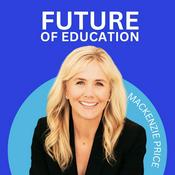
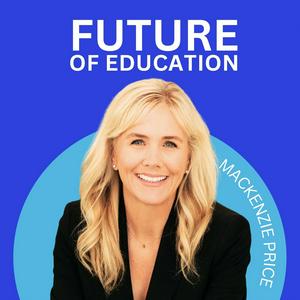
The Future of Education Podcast is the place to find out what's happening in schools. Our guests are wide and varied, from educators, entrepreneurs, athletes, celebrities, influencers and most importantly-our students! They all have one thing in common- they are passionate about reinventing education to make it relevant and efficient. Our host, MacKenzie Price, is the Co-Founder of 2hr Learning (2hourlearning.com) and some of the top-performing schools in the country. 2 Hour Learning is a groundbreaking school model that is reshaping the landscape of K-12 education. It's powered by AI technology, enabling schools to provide personalized curriculum to students. Our K-12 schools perform in the top 2% nationwide by leveraging this personalize model to help students love school, learn twice as much, and build life skills. MacKenzie is at the forefront of educational transformation, striving for a balanced and enriching learning experience for every child. She graduated with a BA in Psychology from Stanford University and resides in Austin, Texas, with her husband and two daughters. The Future of Education podcast is produced by 7 Lyons Media (7LyonsMedia.com). Please send press inquiries to mkp@2hourlearning.com.
Podcast-WebsiteHöre Future of Education Podcast, Meditation zum Einschlafen und viele andere Podcasts aus aller Welt mit der radio.at-App
Hol dir die kostenlose radio.at App
- Sender und Podcasts favorisieren
- Streamen via Wifi oder Bluetooth
- Unterstützt Carplay & Android Auto
- viele weitere App Funktionen
Hol dir die kostenlose radio.at App
- Sender und Podcasts favorisieren
- Streamen via Wifi oder Bluetooth
- Unterstützt Carplay & Android Auto
- viele weitere App Funktionen

Future of Education Podcast
Code scannen,
App laden,
loshören.
App laden,
loshören.
Future of Education Podcast: Zugehörige Podcasts
 Österreich

