

Höre diesen Podcast kostenlos in der App: Kostenlos im App Store laden
radio.at
Sleeptimer
Sender speichern
211 Episoden
207: Christian Alternatives to Halloween for Families
06.10.2026 | 16 Min.Fall can be full of cozy traditions — and it can also be a chance to point our families toward Jesus instead of fear. In this episode we share simple, Christ-centered ideas you can use at home or in your homeschool as meaningful Christian alternatives to halloween.
You’ll hear practical activities — everything from Reformation Day celebrations to service opportunities for your kids — and one “ready-to-use” idea to try this month.
✅ Family Praise Night (dessert + songs + testimonies)
✅ Night bags or luminaries with Bible verses to line your walkways
✅ Heroes of the Faith costume idea and mini-presentations for kids
✅ Harvest (Thanks) Tree, scripture scavenger hunts, and Service Night ideas
✅ How we host a Reformation Day party and a ready-made Reformation unit study
Grab the Reformation Day Unit Study mentioned in the podcast.
Use coupon code REF26 for the limited-time discount.
Show Notes:
Christian Alternatives to Halloween: Faith-Filled Fall Traditions for Your Family
Hey everyone, Kerry Beck here with Homeschool Coffee Break, where we help you stop the overwhelm so you could take a coffee break. We need a coffee break every once in a while.
It is fall time. I got my fall background up here. I love fall. This morning, I went for a walk. I probably could have even put a jacket on, and I live in Texas, and it's still September. I am so excited. So, I don't know what your weather is like, but it has been getting cooler here as well.
Today, what I want to do is talk to you about a time in the fall season that Christians often struggle with, and that is Halloween. What are we doing? I want to talk to you about some alternatives to Halloween.
We are releasing this, and this Wednesday, we are going to have a Facebook party that will dive more into fall alternatives to Halloween. So I hope you will join me. It is in Facebook. There'll be some freebies in there, but there'll be some great resources as well.
Halloween Doesn't Have to Be About Darkness or Fear
Today, what I want to share with you are some Christ-centered and some family-friendly alternatives that you can use in your family, in your home, and in your home school as well. And let's talk about fall traditions.
If you are listening to this and there is a place to put a comment, leave a comment and let me know what's one of your fall traditions. We all have Christmas traditions, or Thanksgiving traditions. What are some traditions during the fall time?
You know, I love the cooler weather. We did decorate pumpkins, and we still decorate pumpkins. My kids carved a pumpkin when they were younger. I remember one time I bought these big jewel stickers and bought one of those small little pumpkins for my two oldest granddaughters. They were probably like 2 and 4, 3 and 5, and they could just put those stickers all over wherever they wanted, and they had their own little decorated pumpkin, their jeweled pumpkin, we could say.
What fall traditions do you want your kids to remember? When we lived in Idaho, we went apple picking, and then we would make apple cider right there. Some of y'all might go through those corn mazes. I've done that, not with my kids, but I've done it with Steve and with some adults as well. And then some of you might go to just a pumpkin patch. I know in Dallas, they have a beautiful arboretum completely decorated with all the fall stuff there is.
So, what are some family traditions you might have for fall?
Christ-Centered Alternatives to Halloween
Now let's move on to Christ-centered alternatives to Halloween. You know, the world, it seems like, has hijacked all Hallows' Eve. But we can take it back for holiness and for light.
It is a dark holiday now, let's be honest, but we stand for the light, the light of Jesus Christ. And so, let's talk about some alternative things you might do during October, during the last week of October, and how you could really focus on the light of the world.
Family Praise Night: Maybe just have some families over and have a family praise night, where everyone brings a dessert, and y'all sing some songs and share testimonies of God's work in your family.
Light Bags: Maybe you could do like the light bags, and everyone in your neighborhood just gets the little sandwich bags, and they can decorate it, maybe even cut holes if you want, and put a candle, or if you don't want to do a candle, you could put those little electric candles in there. Then line them up on your sidewalk, or line them up across the front of your house as well. You might decorate them with Bible verses if you want.
Heroes of the Faith Costume: Maybe everyone chooses a Bible character and dresses up as a Bible character, and you come ready to tell at least one little fact each child does about the person that they have dressed up. So, they're going to be learning, and they get to dress up as well.
Harvest of Blessings Night: I have done this, and I do not have a picture of it. We took a big piece of brown paper wrap paper, and I just drew a tree with branches, but no leaves. Then we cut out leaves out of orange, yellow, brown, those colors, and each leaf, you would write a blessing that you have. You could start it in October and continue it into November during Thanksgiving as well. Be our blessings tree, or our thanks tree. Add to it all season long. And then, at Thanksgiving, be able to sit down and read through some of the blessings that you've had in the past two months.
Scripture Scavenger Hunt: You could do a scripture scavenger hunt, where you hide verses around the house, or around the yard, and maybe tied to a little prize or a little treat. But each verse is connected to some themes, the theme of light, the theme of courage, or the theme of God's protection.
Service Night: I love this idea, it's called Service Night. Be a light in your community. Maybe you bake some cookies, and you are the light to maybe our first responders that are around there. You could put little verses tied onto some little Ziplocs, like you could put some cookies in there, and put some verses in there that go along with Jesus being the light. So, this teaches our kids the joy of giving instead of always getting.
Celebrating Reformation Day: Our Family Tradition
I want to share a story of something that we did personally, and that was Reformation Day. We did, I guess most of the ones we did were lunches. We did it at lunchtime, and we celebrated Reformation Day, October 31st, All Hallows' Eve. It's the eve of All Hallows Day on November 1st.
And where did this all come about? Now, let me just say, whether you are Catholic, or Protestant, I don't really care. You still need to know what history has to say. I am... we grew up... we lean... we are Protestant, and we taught our kids the Protestant faith. But they still learned the Catholic faith. They learned about it. I wanted them to be able to think through any of those situations, anything like that. So, regardless of what your perspective and your theology is, I think it's important that we share this with our kids.
The Story of Martin Luther and the 95 Theses
We begin with Martin Luther, because on October 31st in the 1500s, he was a German monk and a teacher. He loved God, and he wanted everyone to understand the Bible. But the church at that time was asking people to pay for their forgiveness, like, give money. They are called indulgences. And many people were very confused about it, and actually some were upset. The poor people felt like they got wrangled around.
And so, Martin Luther wrote these statements, 95 statements, and we call them 95 Theses. And explain what he thought the church should fix, and how it should work, and how we needed to rethink some of the things that the church was doing. I'm going to read a few of these. These are not complaints, they are just questions and ideas.
Salvation is a gift from God, not bought with money. Repentance means changing your heart, not just giving money. The Pope cannot forgive sins with money. Christ followers should focus on faith and good works, not paying for forgiveness. Preachers should teach God's Word. Money cannot cleanse the soul, only God can. The church should help the poor, not profit from their guilt. Christians should study the Bible for themselves.
That was a new concept. We have Bibles everywhere. And yet, they didn't even have it in their own language. That was William Tyndale, was one of the first people that starts translating the Latin Bible, the Vulgate, into English. Eventually, they started translating from the Greek and the Hebrew. He was on the run and ended up dying, but he was one of the first men trying to translate the actual Bible into the English language. The authority of the Bible is higher than the authority of the Pope.
On October 31st, 1517, he took this paper and he went and nailed it to the door of the Wittenberg church. The church door, in that time, acted like a bulletin board. So when there were any announcements or notices, people could just go nail them up there, and that's what Martin Luther did. And people began to read these theses, and they shared them widely. This started a movement called the Reformation.
Why Reformation Day Matters Today
Now, there's a lot more that goes over. That is just a simple view. You can teach it to your kids at different levels, but I think it's important. Why is this important? Because we need to sometimes question our church leaders, even today. You should always go back to the Bible and use the Bible. I mean, if they're doing something that goes against the Bible, then that is something you need to consider. Maybe that's not the place that you need to be attending church.
This also eventually helped people read and understand the Bible for themselves in their own language, and it changed church history forever. No matter where you are, and I sort of see the church in Roman Catholicism, Greek Orthodox, and then the Protestant movement. I want to say it was protesting, and that's how we get the word Protestant, protesting Catholics and Roman Catholics, if I remember correctly.
You see, the big picture is God used this reformation to bring truth, encourage and revival to that society. It actually makes me think a little bit about today. God is using something evil to bring about truth and courage and revival here in the United States. And hopefully around the world.
I mentioned that last week, but you know, you could go and look. There are martyrs that died for their faith. You could go through and study some of them. I think I have the book here. There is Book of Martyrs, but this is a kid's version of Trial and Triumph, and this is stories from church history. This would be a great place for you to get started in sharing stories, and some of them are martyrs, and some of them are people that were just strong and courageous in their faith, and so that would be something that could tie in. That would be an alternative to Halloween, if you want to dive deep into this.
How to Host Your Own Reformation Day Party
Another thing, and this is what we did, we studied this time period, and then we had a Reformation Day party. We invited families, every family was responsible for bringing one food dish and hosting a booth. That booth could be a game, it could be a craft.
We had some stairs up at the front of my house, and so, one of them had them, like, climbing, because at that time in the cathedral, they had to crawl up these stairs when they would go to Rome. We had people making candles at that time, because you needed candles for life. There are all different things you could do. We would always sing some songs, we might even act out a play based on one of our reformers, depending on who we were choosing, whether I think we... I know we did Martin Luther, John Calvin, Martin Bucer, any of those, and then we would always fellowship over a meal.
And so that's really cool. How about you weave Reformation history into your home school, even with just one activity? You know, I think it's really important. You could host a party. It's not that hard. You don't have to do all of it. Spread the love and let other people come and bring activities for your kids. Our first one, my kids even dressed up. They made costumes, and they dressed up like a woman back in that time period, or a man.
So, enjoy your family fall traditions that creates memories, look for alternatives to Halloween that point your family to Christ, and then celebrate Reformation Day to root your kids in church history. And I would encourage you to plan right now, this week, first week of October, what is one thing that you will do in October that's an alternative to Halloween, if that's something you want to do?
Ready-to-Go Reformation Day Resources
If you'd like something that's a ready-to-go activities, I have something called a Reformation Day unit study. I pulled it together. You're going to get a book list, you're going to get stories about it, you get a slide presentation on different reformers. We have videos as well. There are recipes in there, and you know, a unit study takes the topic, and then we provide all the different subjects, history, and science, and art, and cooking, and Bible, and character, and literature. You get a little bit of all of that, and then you can pick and choose what it is you want for your family.
If you happen to be listening to this, the week that this episode is published, this unit study is on sale, and so you can use the link below to be able to save some money on that Reformation Unit Study. You can get it at any time. People have bought it at all times of the year. But, right now, if you'd like to save a little money, just use the link in the coupon code CODE REF26, and you'll be able to save a little bit money as well.
Hey, if you have a comment or question, reach out to me, you know, email me, DM me. If you have gotten just one little tip out of here, would you please share this with another Christian mom or another homeschool mom to help them, that would mean the world to me. Or, leave a 5-star review, because that means we can get this out to more and more people. Moms don't have the time to pull all this together, and they just need some creative ideas.
Hey, thanks for spending time with me. I am Kerry Beck with Homeschool Coffee Break. We'll talk to you next time.206: Stop the Chaos With Homeschool Preschool Activities
29.09.2026 | 10 Min.Your 3rd grader is finally focused. Your toddler has just dumped dry beans on the floor, found a permanent marker, and is wearing a colander as a hat.
You're not failing. You're just in a specific season — and homeschool preschool activities are about to make it so much more manageable.
This episode gives you 4 practical strategies to keep your little ones engaged while you actually teach your older kids:
✅The special work box trick that creates instant focus in toddlers without buying expensive gear
✅Why Montessori-style real tasks work better than any busy work for preschoolers
✅Simple outdoor missions that burn energy and buy you 15 uninterrupted minutes
✅How to use novelty to keep little ones engaged during high-focus subjects
✅Why this season is shorter than it feels
✅How to stop letting today derail your whole day
Click the link below to grab the free resource with 25 homeschool preschool activities to use right now.
Resources for You
Free resource: 25 Activities to Keep Your Preschooler Engaged While You Homeschool Older Siblings205: 5 Family Discipleship Shifts Busy Homeschoolers Need
21.09.2026 | 10 Min.Does your homeschool day feel scattered despite buying every new curriculum and printable? Adding more programs to a chaotic schedule fails when your foundation needs work. You can transform your home right now by anchoring your existing daily routines around Christ.
Discover how to stop adding extra chores while building strong character and leadership qualities in your kids. These simple shifts will turn everyday micro-moments into powerful teaching opportunities that keep everyone connected.
✅Easy 5-minute pre-meal reset that lowers stress instantly
✅1 simple word convo tweak that forces your kids to think and take ownership
✅Why adding new programs fails to fix a disjointed homeschool schedule
✅Simple ways to turn everyday micro-moments into spiritual growth opportunities
Grab the resource mentioned in the podcast by clicking the link below.
Resources for You
Free Masterclass - 3 Tips to Lead Your Family with Peace & Confidence (From Schedule Manager to Spiritual Mentor)
Show Notes:
Your Homeschool Isn't Struggling Because You're Lacking Materials
You're lying in bed on a Sunday night, looking at your planner, and you have that familiar feeling in your stomach. You bought the new Bible curriculum. You downloaded the morning basket printables. You reorganized your school room. And your day still feels scattered and disjointed. You wonder why your kids don't even care during devotions, or why you feel like you're pulling teeth just to get through daily habits.
Here's the reality. Your homeschool isn't struggling because you're lacking materials. You have plenty of materials and plenty of resources. It feels scattered because it's missing a central anchor.
Adding New Programs to a Chaotic Day Doesn't Work
When our homeschool feels off, our immediate reaction is to add something new. A new curriculum, a new Bible study, a new chart, a new rule. But adding new programs to a chaotic day is like building a third story on a house that doesn't have a good foundation.
The goal is not to create more work for your already busy schedule. It is to tighten up the things you are already doing so that every part of your routine points back to Jesus and builds leadership qualities within your children.
Stop trying to invent or add new blocks to your schedule. Use the micro moments you already own — car rides, doing the dishes together, bath times for littles. Those are the micro moments that make a difference. They take a little time, a little purpose, and a little intention. But that is what you need.
Katharine Luther and the Power of Mealtime
Throughout history, mothers who raised strong, self-directed leaders didn't have complex schedules. They were purposeful and intentional and had a tight, unshakable anchor.
Katharine Luther was the wife of Martin Luther. She managed a bustling household with borders, refugees escaping the law, and intense pressure. She did not add elaborate academic requirements to her day. She anchored her home in one daily simple habit — mealtime dialogue.
Their mealtime discussions were such an important part of that household that Martin Luther wrote a book called Table Talk — all about the discussions they had at the table. Katharine Luther's home became the training ground for many European leaders.
Hopefully, you are already eating some meals together. You just need to tighten up your daily meal routines and make them rich biblical discussions and character building. That is family discipleship happening at the table — not in a separate program, not in an extra curriculum block, but in the time you already have.
Two Simple Things to Do Starting Today
Number one — the five-minute preset. When it's time to eat dinner, call a five-minute pause. Everyone in the family stops what they're doing five minutes before mealtime. Stop the schoolwork. Put the screens away. Help with the final prep — set the table, get the dishes out. This simple five-minute shift can mentally clear the room, lower the stress, and transition your kids from school mode into heart-connecting time.
You are not adding anything new. You are already eating a meal together. You just need to tighten it up from chaos to intention.
And modeling matters more than most of us realize. I still remember coming downstairs as a child — maybe 50 or 60 years ago — and my mom would be doing one of three things if I got up before breakfast: reading her Bible, praying, or exercising. I can still see her prayer notebook next to her chair where she would keep notes about what she was praying. That had a huge influence on me to this day. That is how I start my day. What do your kids see you doing?
Teach your children to listen to God. We do this with our grandkids — setting aside a minute of silence once or twice a week to just be still and listen. That is family discipleship in its simplest form.
Number two — turn one daily order into a question. Take one command you give repeatedly — put your shoes away, clean your plate — and turn it into a question. Instead of saying go set the table right now, say dinner is at 6:00, what needs to happen so our family is ready to eat together? They have to think, then they have to act. They have to think about people outside of themselves. About their family.
You take an existing habit, tighten it up, and teach your kids thinking skills, action skills, and leadership — without raising your voice or adding a new chore chart.
A Monthly Rhythm Is All You Need
A monthly rhythm like this anchors your home. You don't need to sift through endless online ideas or Pinterest boards to find ways to add Bible and leadership to your routine. Take one Bible-based theme and work on it for a month. Look at ways you can implement it in the things you're already doing.
That is how we move from chaos to deep roots — deep relationship roots with our children. That is what I loved most about homeschooling.
I'm hosting a free masterclass where I'll be sharing some very simple anchors you can have in your family — not just to teach the Bible, but to show your kids how to live biblical truths. I'd love for you to join me. The link is in the show notes or the description. You're going to learn how to move your kids from knowledge to action so they are actually growing in God and growing in their family relationships.204: Why Your Homeschool Support Group Adds More Overwhelm
15.09.2026 | 14 Min.You joined the Facebook group & went to the meet-up hoping for real answers. You left with 15 curriculum recommendations, 5 co-ops to research, and more overwhelm than you started with.
A noisy homeschool support group isn't what you need. Purposeful, Bible-based community is.
This episode shows you how to filter out the noise and find the kind of support that actually builds your homeschool from the inside out — with 3 practical steps you can take starting today:
✅Why most homeschool support groups create analysis paralysis instead of peace
✅How to audit your current sources of advice and cut what's draining you
✅The power of ONE monthly Bible-based focus, instead of constantly switching direction
✅Why a simple, daily routine matters more than a packed schedule or a perfect curriculum
✅2 questions to ask any homeschool mom that instantly deepen the conversation
Click the link below to join the Insider FastPass and get the targeted, Bible-based support your homeschool actually needs.
Resources for You
Insider FastPass (free live workshop, exclusive bonuses, dinnertime conversation starters)
Free Masterclass - 3 Tips to Lead Your Family with Peace & Confidence (From Schedule Manager to Spiritual Mentor)
Show Notes:
Why You Leave Feeling More Overwhelmed Than When You Walked In
You join a local Facebook group or head to a park meetup hoping to find encouragement, connection, and real answers for your homeschool. But within ten minutes you're sitting in a circle listening to complaints. Or worse — you leave with a list of 15 new curricula to check out, five co-ops to consider, and 10 blogs you must read. You drive home feeling overwhelmed, exhausted, and more isolated than before you even walked in.
The truth is most traditional homeschool support groups give you noisy advice — venting sessions instead of targeted, biblical direction.
A Room Full of Opinions Is Not the Same as Real Support
A room full of opinions does not equal a community of support. Support groups that focus on venting about kids or sharing endless online ideas create analysis paralysis instead of peace. And all you're really looking for is peace — peace within yourself so you'll know what direction to go, peace in your home, peace in your family.
You don't have extra hours to sift through Pinterest or wander through internet forums and Facebook groups to find simple, battle-tested ways to add the Bible to your routine and bring purpose and intention to your homeschool. If you're getting real support, you would not leave feeling guilty. You would find ways to simplify your day and focus your kids' hearts on Jesus.
What Abigail Adams Did Instead
During the Revolutionary War, Abigail Adams was homeschooling her kids on a farm in Quincy — surrounded by chaos and war. John Adams wrote to her: the education of our children is never out of my mind. He told her to train them in virtue, habituate them in industry, activity, and spirit.
She didn't look for a bunch of social groups to get to with all her kids. She didn't need to vent. Instead, she intentionally built a network of targeted correspondents — women who wrote letters to one another and focused their conversations on virtue, on biblical duty, and on practical family and home management. They sharpened each other so they could raise their kids up to be leaders.
Abigail's son, John Quincy Adams, eventually became president — just like his father. She was very purposeful in who she spent time with. And I think that's something you really need to consider. Where are you getting your support and who are you spending your time with?
Sarah Edwards and the Power of Intentional Community
Sarah Edwards was the wife of Jonathan Edwards and raised 11 kids who all became influential in the community. Visitors from around the colonies would come to her home just to watch what she was doing and learn from her methods of teaching her children.
She replaced chaotic advice with clear, peaceful routines in her house. She met regularly with other moms for direct, Bible-focused encouragement. And her intentional mentorship produced lasting results.
Someone did a study on the Jonathan Edwards family around 1900 — about 200 years after they lived. Here's what that family produced: 13 college presidents, 65 professors, 100 lawyers, a dean of a law school, 30 judges, 80 holders of public office, three US senators, mayors of three large cities, governors of three states, a vice president of the United States, and members of their family wrote 135 books, edited 18 journals and periodicals, and sent out 100 missionaries overseas.
That is what intentional, faith-focused family leadership looks like across generations.
Filter Your Input — A Quick Audit
You cannot add extra hours to your day. So you need to look honestly at where you're spending your time and getting your ideas. Take inventory. Where are you getting your homeschool community and advice right now? If those sources are making you feel like you aren't doing enough — cut them off. If they leave you feeling drained and overwhelmed — mute them. That is not where you need to get support.
Replace the endless scrolling with one Bible-based focus for the month. We're not adding anything. Most of you probably eat a meal together anyway — so just be more intentional and purposeful around that time. That's a very simple place to start.
Real growth happens when you focus on executing one thing each month. Not adding a bunch of busy work. Not adding more curriculum. One focused action with one or two people who can support you and give you ideas. That is how real growth happens.
Two Questions to Ask Instead
The next time you connect with a fellow homeschool mom or even talk to your spouse, skip the generic how is school going. Ask these two questions instead.
What is one small area of character that God is helping your family work on this week? Maybe it's work ethic. Maybe it's kindness. Maybe it's telling the truth. Just one small area.
And what is one thing you can simplify or completely take off your plate today? When you do these two things — focus on character and remove one thing — it shifts your environment from all the overwhelming noise to targeted, peaceful action.
You don't need another 50 blogs or podcasts to follow. You need someone who can walk alongside you with proven, simple steps. Someone just a little further along than you — like my friend Susan, who was one stage ahead of me with her kids. I watched what she was doing in high school, in college, as they got married, as a grandma. That's what you need.
Imagine starting each month with a clear Bible-based teaching, a simple guide to grasp onto, and monthly office hours where you can ask your exact questions face to face. That's how you stop feeling isolated and start building roots into your kids.
I'm launching something new and I'd love to invite you to our FastPass Insider Circle. Members will get a free live workshop with me where you can ask your questions about being purposeful, intentional, and character-building in your homeschool. You'll also get exclusive bonuses, including dinnertime conversation starters for your kids. I'm also hosting a free masterclass next week where we'll talk about getting the Bible into your children — not just teaching it, but showing them how to live it. Links are in the show notes.203: Family Connection Happens in the Moments Not the Schedule
08.09.2026 | 18 Min.You're checking every box, adding every curriculum, and running every errand — but something still feels missing. Real family connection doesn't come from doing more. It comes from being more intentional with what you're already doing every single day.
This episode gives you 3 practical shifts to build deeper family connection without adding a single thing to your schedule:
✅Why your kids will remember the atmosphere of your home far more than any worksheet
✅How to turn meal prep, car rides, and bedtime into powerful discipleship opportunities
✅Why one monthly family theme simplifies your home and deepens your roots
✅The dinner question method that builds family connection in 10 to 15 minutes
✅How to shift from manager mom to environment director and STOP burning yourself out
Click the link below to grab the Insider FastPass and get the step-by-step support to make this happen in your home.
Resources for You
Insider FastPass (opening mid-September - get exclusive bonuses)
Gratitude Prompts for dinnertime discussion (Bonus for Insider FastPass members, so sign up for the Insider FastPass)
Show Notes:
You Don't Need to Add One More Thing to Your Schedule
It's a typical Tuesday morning. The kitchen table is buried with open math workbooks, scattered craft supplies, and half-eaten snacks. You're running on empty trying to teach fractions while mentally thinking about what to fix for dinner. And then you ask yourself the question every dedicated homeschool mom asks — am I doing enough? Do I need a new curriculum? A new Bible study? A new chore chart?
Here's the hard truth. You don't need to add a single thing to your packed schedule. You need to shift your mindset.
Moving from daily chaos to deep family connection isn't about adding more. It's about shifting your focus to one intentional rhythm at a time.
The Lie Homeschool Moms Believe
Homeschool moms are bombarded with a lie that a peaceful, purposeful home comes from doing more subjects, more co-ops, more structured programs. We constantly add tasks to our day and end up acting like managers running an event schedule rather than moms discipling hearts in their home.
The reality is your kids are not going to remember 50 worksheets that you checked off. They don't really care about them. And to be honest, I don't think worksheets really educate children that much. They remember the culture and the atmosphere of your home.
I was sitting at our kitchen table a while ago — the same table we've had since the early 90s — and my kids still remember having breakfast together and me going over a little flip chart devotional. Do they remember their spelling list? No. Do they remember their math workbook? No. But they do remember the connections we made at mealtime, after mealtime, and throughout the day.
Stop asking yourself what else do I need to do to make this homeschool successful. Start asking — how can I tighten up what I'm already doing and bring purpose to every single day?
Use What You Already Have
You already have built-in daily touch points — breakfast, lunch, and dinner. Morning wakeup routines. Morning school routines. Car rides to and from activities. Bedtimes. Every single one of these is a touch point where you can build deep family connection with your kids.
Discipleship doesn't require an extra 45-minute block of time on your schedule. It happens in micro moments. My son Hunter couldn't get a word in edgewise at the dinner table because he had two older sisters. But if it was just Hunter and me in the car, he could talk a storm. Car rides are golden. I learned to close my mouth and listen to whatever he had to say — and I started to learn what was inside his heart and what was going on in his life.
Take walks with your kids. I just got back from a few weeks with one of our families and I took those kids on a walk three or four mornings a week. You learn a lot when you're walking together.
Chores Are Not Interruptions — They Are Your Homeschool
Stop viewing meal prep, cleanup, and errands as interruptions. They are not interruptions to your homeschooling. They are your homeschooling.
When you invite a child into the kitchen or hand off a complete responsibility, you are training them in leadership and ownership skills without opening a single book or adding another lesson plan. One of our moms, Tasha, shared that her eight-year-old made practically the whole spaghetti dinner on his own — he wanted to, he asked her, he cooked the meat, fixed the bread, put together the sauce. She helped with the boiling water. That's an eight-year-old.
When Gentry was seven or eight, she asked if she could make chocolate chip cookies and she did it on her own. Don't be a helicopter mom. Let your kids participate. When they do, they take ownership, they take leadership, they learn life skills — and those things can't be taught by a book or a worksheet.
Move From Manager Mom to Environment Director
A management mom is focused on checking off boxes — usually someone else's boxes. An environment director mom focuses on the spiritual and emotional climate of their home. She uses ordinary routines to cultivate character, self-direction, heart connections, leadership skills, and life skills.
Thomas Edison was basically kicked out of school because they said he was too dull to learn. His mother Nancy didn't panic. She didn't buy ten different textbooks. She shifted her home to focus on one core rhythm — relentless curiosity and practical exploration right in their basement. She didn't add overwhelming academic hours. She allowed Thomas Edison to explore and sharpen his skills. And she built a deep relationship with him that anchored him his entire life. He invented the light bulb after what he called 10,000 ways to not make a light bulb.
George Washington's mother, Mary Ball Washington, lost her husband and didn't have money for elite private tutoring. She anchored her home in daily practical life skills, strong discipline, and copying simple moral principles. She narrowed her focus to character and practical teamwork. She raised a young man capable of leading a new nation.
One Monthly Family Theme
Pick one thing to work on for 30 days. That is your family theme for the month. When the whole household focuses on one biblical concept for 30 days, you're not adding more curriculum. You're adding purpose and intention in one direction.
In our Homeschool Encouragement Circle this month, we're working on family dinners and building deep roots. Last month we worked on our family is a team. It wasn't adding more — it was being purposeful and intentional from a biblical perspective. Everyone from your preschooler to your teenager can participate.
Stop trying to overhaul every room, every schedule, every book, and every habit all at once. Pick one. Work on it for 30 days. Anchor your entire month on that one simple faith-based goal — and everyone in the house knows about it.
Turn Dinner Into a Heart-Connecting Moment
You don't need two hours to build family connection. You need 10 or 15 minutes a day, and dinner time is one of the best places.
Turn the phones off, sit around a simple meal — leftovers and sandwiches are just fine — and ask an open-ended question. Try the High-Low-Buffalo. High — what was the best part of your day? Low — what was the hardest part? Buffalo — what was something unexpected? Let everyone go around. You immediately turn a standard family dinner into a heart-connecting leadership moment without adding a single minute to your calendar.
And even outside dinner, instead of telling your kids go clean your room, ask — look around, what needs to happen before we walk out the door? I was doing this with our five and seven-year-olds last week. It turns mundane chores into thinking moments.
You don't need another massive parenting book or a new course. What changes a home is simple monthly themes, a clear guide to follow, a community walking the same path, and continuous encouragement. You're going to have highs, lows, and some buffaloes of your own too.
If you're looking for step-by-step support, month after month, we have an Insider Fast Pass opening in mid-September. Sign up at the link in the show notes. If you get on the Fast Pass, you'll get a special workshop with strategies you can implement right away, plus our gratitude prompts to encourage dinnertime discussion as a bonus.
Your kids aren't going to remember those 50 worksheets. They will remember the time you spent together.
Weitere Anleitungen Podcasts
 Utopia – Dein Podcast für NachhaltigkeitAnleitungen, Bildung, Gesundheit und Fitness, Nachrichten
 Direktor's Cut - der Podcast für SchulleitungenAnleitungen, Bildung, Regierung
 machen oder lassen – der Podcast mit Verbraucherexperte Ron PerdussAnleitungen, Bildung, Geldanlage, Gesundheit und Fitness, Wirtschaft
 Souverän! Der Podcast für Rhetorik, Wirkung & ÜberzeugungskraftAnleitungen, Bildung, Karriere, Marketing, Wirtschaft
 Фінансова терапіяAnleitungen, Bildung
 Mission Liebe! Der Single-Podcast mit Nina DeisslerAnleitungen, Beziehungen, Bildung, Gesellschaft und Kultur, Gesundheit und Fitness, Mentale Gesundheit, Selbstverwirklichung
 Führung to GO - Schulpsychologie für SchulleitungAnleitungen, Bildung
 Auswandern Thailand PodcastAnleitungen, Bildung, Gesellschaft und Kultur, Karriere, Reisen und Orte, Wirtschaft
Trending Anleitungen Podcasts
- Führung to GO - Schulpsychologie für SchulleitungAnleitungen, Bildung
- Souverän! Der Podcast für Rhetorik, Wirkung & ÜberzeugungskraftAnleitungen, Bildung, Karriere, Marketing, Wirtschaft
 Krempel & Klartext - Ein Ordnungswelt PodcastAnleitungen, Bildung, Freizeit, Heim und Garten, Kurse
 Die ZeitplanerinAnleitungen, Bildung, Karriere, Wirtschaft
 BESSER SCHLAFEN PODCAST mit den Freund:innen der NachtAnleitungen, Bildung, Gesundheit und Fitness, Mentale Gesundheit, Wissenschaft
- Direktor's Cut - der Podcast für SchulleitungenAnleitungen, Bildung, Regierung
 How to Legal TechAnleitungen, Bildung
 Der Finanzfuchs TalkAnleitungen, Bildung, Selbstverwirklichung
 Tinte & CourageAnleitungen, Bildung, Gesundheit und Fitness, Mentale Gesundheit
 Ride On with Julie GoodnightAnleitungen, Bildung, Freizeit, Hobbys
 Zelda Botw Action und WissenAnleitungen, Bildung
Über Homeschool Coffee Break
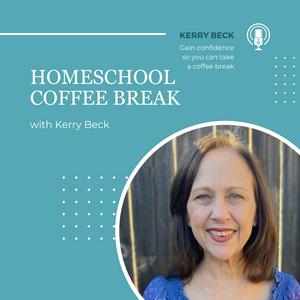
Homeschool Coffee Break helps you stop overwhelm and gain confidence so you know you're doing enough with your kids' education. Our top-notch interviews, practical tips & tricks, and real solutions will give you confidence in your homeschool.
Podcast-WebsiteHöre Homeschool Coffee Break, Utopia – Dein Podcast für Nachhaltigkeit und viele andere Podcasts aus aller Welt mit der radio.at-App
Hol dir die kostenlose radio.at App
- Sender und Podcasts favorisieren
- Streamen via Wifi oder Bluetooth
- Unterstützt Carplay & Android Auto
- viele weitere App Funktionen
Hol dir die kostenlose radio.at App
- Sender und Podcasts favorisieren
- Streamen via Wifi oder Bluetooth
- Unterstützt Carplay & Android Auto
- viele weitere App Funktionen

Homeschool Coffee Break
Code scannen,
App laden,
loshören.
App laden,
loshören.
Homeschool Coffee Break: Zugehörige Podcasts
 Österreich