
Höre diesen Podcast kostenlos in der App: Kostenlos im App Store laden
radio.at
Sleeptimer
Sender speichern
137 Episoden
Can Bonds Still Do Their Job?
23.10.2026 | 20 Min.Liz Ann Sonders and Collin Martin examine the sharp swings in Treasury yields, what stubborn inflation could mean for Fed policy, and why bonds can still provide income and diversification even as rates remain elevated. They also dig beneath the surface of earnings season, where concerns about AI spending and debt-financed investment are putting a premium on profitability, balance-sheet strength, and quality.
Finally, Collin and Liz Ann look ahead to next week's upcoming macroeconomic indicators and key data releases.
On Investing is an original podcast from Charles Schwab. For more on the show, visit schwab.com/OnInvesting.
Important Disclosures
This material is intended for general informational and educational purposes only. This should not be considered an individualized recommendation or personalized investment advice. The securities, investment products and investment strategies mentioned are not suitable for everyone. Each investor needs to review an investment strategy for his or her own particular situation before making any investment decisions.
All expressions of opinion are subject to change without notice in reaction to shifting market, economic or political conditions. Data contained herein from third party providers is obtained from what are considered reliable sources. However, its accuracy, completeness or reliability cannot be guaranteed.
Past performance is no guarantee of future results.
Investing involves risk, including loss of principal.
Performance may be affected by risks associated with non-diversification, including investments in specific countries or sectors. Additional risks may also include, but are not limited to, investments in foreign securities, especially emerging markets, real estate investment trusts (REITs), fixed income, municipal securities including state specific municipal securities, small capitalization securities and commodities. Each individual investor should consider these risks carefully before investing in a particular security or strategy.
Fixed income securities are subject to increased loss of principal during periods of rising interest rates. Fixed income investments are subject to various other risks including changes in credit quality, market valuations, liquidity, prepayments, early redemption, corporate events, tax ramifications, and other factors.
High-yield securities and unrated securities of similar credit quality junk bonds) are subject to greater levels of credit and liquidity risks and may be more volatile than higher-rated securities. High-yield securities are considered predominately speculative with respect to the issuer’s continuing ability to make principal and interest payments.
All names and market data shown are for illustrative purposes only and are not a recommendation, offer to sell, or a solicitation of an offer to buy any security.
Forecasts contained herein are for illustrative purposes only, may be based upon proprietary research and are developed through analysis of historical public data.
The policy analysis provided by Charles Schwab & Co., Inc., does not constitute and should not be interpreted as an endorsement of any political party.
Indexes are unmanaged, do not incur management fees, costs, and expenses and cannot be invested in directly. For more information on indexes, please see Schwab.com/IndexDefinitions
(1026-MVVE)
Hosted by Simplecast, an AdsWizz company. See pcm.adswizz.com for information about our collection and use of personal data for advertising.Who’s Financing the AI Boom? (With Bryan Whalen)
16.10.2026 | 47 Min.Liz Ann Sonders and Collin Martin open with the latest inflation data, where a hotter-than-expected core CPI reading raises questions about the Federal Reserve’s next moves. They discuss the broadening of inflation pressures, the jump in Treasury yields, and why investors may need to remain focused on quality as higher rates pressure more interest-rate-sensitive companies. Liz Ann also looks ahead to earnings season, with particular attention on whether companies can justify massive AI-related capital spending through productivity and returns.
Collin then speaks with TCW Chief Investment Officer Bryan Whalen about the unprecedented wave of spending on AI infrastructure and data centers. Whalen explains how hyperscalers are increasingly tapping the corporate bond market to finance that buildout, creating potentially attractive opportunities in their unsecured debt but also new risks in complex data-center financing structures. His central concern isn't whether AI will be transformative, but whether investors are being adequately compensated for the possibility that adoption, economics, or the path of the build-out unfolds differently than markets expect.
Finally, Collin and Liz Ann look ahead to next week's upcoming macroeconomic indicators and key data releases.
On Investing is an original podcast from Charles Schwab. For more on the show, visit schwab.com/OnInvesting.
If you enjoy the show, please leave a rating or review on Apple Podcasts.
Important Disclosures
The comments, views, and opinions expressed in the presentation are those of the speakers and do not necessarily represent the views of Charles Schwab.
This material is intended for general informational and educational purposes only. This should not be considered an individualized recommendation or personalized investment advice. The securities, investment products and investment strategies mentioned are not suitable for everyone. Each investor needs to review an investment strategy for his or her own particular situation before making any investment decisions.
All expressions of opinion are subject to change without notice in reaction to shifting market, economic or political conditions. Data contained herein from third party providers is obtained from what are considered reliable sources. However, its accuracy, completeness or reliability cannot be guaranteed.
Past performance is no guarantee of future results.
Investing involves risk, including loss of principal.
Performance may be affected by risks associated with non-diversification, including investments in specific countries or sectors. Additional risks may also include, but are not limited to, investments in foreign securities, especially emerging markets, real estate investment trusts (REITs), fixed income, municipal securities including state specific municipal securities, small capitalization securities and commodities. Each individual investor should consider these risks carefully before investing in a particular security or strategy.
Fixed income securities are subject to increased loss of principal during periods of rising interest rates. Fixed income investments are subject to various other risks including changes in credit quality, market valuations, liquidity, prepayments, early redemption, corporate events, tax ramifications, and other factors.
International investments involve additional risks, which include differences in financial accounting standards, currency fluctuations, geopolitical risk, foreign taxes and regulations, and the potential for illiquid markets.
High-yield securities and unrated securities of similar credit quality junk bonds) are subject to greater levels of credit and liquidity risks and may be more volatile than higher-rated securities. High-yield securities are considered predominately speculative with respect to the issuer’s continuing ability to make principal and interest payments.
Mortgage-backed securities (MBS) may be more sensitive to interest rate changes than other fixed income investments. They are subject to extension risk, where borrowers extend the duration of their mortgages as interest rates rise, and prepayment risk, where borrowers pay off their mortgages earlier as interest rates fall. These risks may reduce returns.
All names and market data shown are for illustrative purposes only and are not a recommendation, offer to sell, or a solicitation of an offer to buy any security.
Forecasts contained herein are for illustrative purposes only, may be based upon proprietary research and are developed through analysis of historical public data.
The policy analysis provided by Charles Schwab & Co., Inc., does not constitute and should not be interpreted as an endorsement of any political party.
Indexes are unmanaged, do not incur management fees, costs, and expenses and cannot be invested in directly. For more information on indexes, please see Schwab.com/IndexDefinitions.
The Bloomberg US High Yield Caa and Above Index measures USD-denominated, fixed-rate, high-yield corporate bonds rated at least Caa3.
The Schwab Center for Financial Research is a division of Charles Schwab & Co., Inc.
A hyperscaler is a large-scale cloud service provider or technology company that operates massive, globally distributed data center infrastructure to deliver computing, storage, and networking services.
(1026-L54E)
Hosted by Simplecast, an AdsWizz company. See pcm.adswizz.com for information about our collection and use of personal data for advertising.What 26 Million Paychecks Reveal About the Economy (With Nela Richardson)
09.10.2026 | 45 Min.This week’s episode connects two of the biggest themes driving markets today: rising bond yields and a rapidly evolving labor market.
Collin Martin and Liz Ann Sonders discuss why higher Treasury yields matter far beyond the bond market. They explain how rising yields affect mortgage rates, borrowing costs, housing affordability, and stock market leadership. While higher rates create challenges for interest-sensitive sectors like real estate and utilities, as well as lower-quality companies with significant debt burdens, they also create attractive opportunities for fixed income investors.
The featured interview is with ADP Research Chief Economist Nela Richardson, who offers a detailed look at the U.S. labor market through ADP's payroll data. Richardson explains why ADP's employment data can differ from government job reports, discusses emerging wage trends, and introduces ADP's new Pay Insights research. She argues that inflation's lasting impact on purchasing power helps explain weak consumer sentiment even as economic growth remains resilient. The discussion also explores manufacturing, labor shortages, overtime trends, job-switching premiums, and how demographic shifts are reshaping workforce dynamics.
The conversation concludes with a deep dive into artificial intelligence and employment. Richardson shares research suggesting that AI may be reducing opportunities for some younger workers in AI-exposed fields while enhancing productivity and employment prospects for more experienced workers. Despite concerns about disruption, she remains optimistic that a combination of technology adoption and skilled workers can drive the next wave of productivity growth, much as previous technological revolutions did.
You can read the ADP National Employment Report that Nela and Liz Ann discuss at http://www.adpemploymentreport.com/.
On Investing is an original podcast from Charles Schwab. For more on the show, visit schwab.com/OnInvesting.
If you enjoy the show, please leave a rating or review on Apple Podcasts.
Important Disclosures
The comments, views, and opinions expressed in the presentation are those of the speakers and do not necessarily represent the views of Charles Schwab.
This material is intended for general informational and educational purposes only. This should not be considered an individualized recommendation or personalized investment advice. The securities, investment products and investment strategies mentioned are not suitable for everyone. Each investor needs to review an investment strategy for his or her own particular situation before making any investment decisions.
All expressions of opinion are subject to change without notice in reaction to shifting market, economic or political conditions. Data contained herein from third party providers is obtained from what are considered reliable sources. However, its accuracy, completeness or reliability cannot be guaranteed.
Past performance is no guarantee of future results.
Investing involves risk, including loss of principal.
Performance may be affected by risks associated with non-diversification, including investments in specific countries or sectors. Additional risks may also include, but are not limited to, investments in foreign securities, especially emerging markets, real estate investment trusts (REITs), fixed income, municipal securities including state specific municipal securities, small capitalization securities and commodities. Each individual investor should consider these risks carefully before investing in a particular security or strategy.
Fixed income securities are subject to increased loss of principal during periods of rising interest rates. Fixed income investments are subject to various other risks including changes in credit quality, market valuations, liquidity, prepayments, early redemption, corporate events, tax ramifications, and other factors.
High-yield securities and unrated securities of similar credit quality junk bonds) are subject to greater levels of credit and liquidity risks and may be more volatile than higher-rated securities. High-yield securities are considered predominately speculative with respect to the issuer's continuing ability to make principal and interest payments.
All names and market data shown are for illustrative purposes only and are not a recommendation, offer to sell, or a solicitation of an offer to buy any security.
Forecasts contained herein are for illustrative purposes only, may be based upon proprietary research and are developed through analysis of historical public data.
The policy analysis provided by Charles Schwab & Co., Inc., does not constitute and should not be interpreted as an endorsement of any political party.
Indexes are unmanaged, do not incur management fees, costs, and expenses and cannot be invested in directly. For more information on indexes, please see Schwab.com/IndexDefinitions
The Schwab Center for Financial Research is a division of Charles Schwab & Co., Inc.
Negative correlation refers to investments that tend to move in opposite directions: when one rises, the other falls.
NERP is the National Employment Report Pulse from ADP: https://adpemploymentreport.com/
(1026-GYB3)
Hosted by Simplecast, an AdsWizz company. See pcm.adswizz.com for information about our collection and use of personal data for advertising.Why Investor Positioning Matters More Than Ever (With Eric Liu)
02.10.2026 | 48 Min.This week’s episode explores the growing tension between resilient economic growth, cooling inflation data, and rising interest rates. Liz Ann Sonders and Collin Martin discuss the recent flattening of the Treasury yield curve, the latest inflation and GDP reports, and what higher yields mean for stocks and bonds. While inflation data showed encouraging signs of moderation, both Collin and Liz Ann note that risks remain, particularly from higher energy costs and the inflationary effects of AI-related investment spending.
The conversation then shifts to an interview with Vanda Research co-founder Eric Liu, who explains how investor positioning and capital flows can provide valuable clues about market direction over short-term horizons. Liu discusses the growing influence of retail investors, quantitative funds, and prediction markets, arguing that traditional ways of analyzing markets have become less useful as market leadership and participant behavior evolve. Despite geopolitical uncertainty and higher bond yields, he sees a supportive backdrop for equities due to neutral positioning, reduced crowding in markets, and the resilience stocks have shown in the face of recent shocks. The discussion also covers retail trading trends, emerging markets, market concentration, and why large-cap technology stocks remain the dominant market leadership group.
Finally, Collin and Liz Ann look ahead to next week’s upcoming macroeconomic indicators and key data releases.
On Investing is an original podcast from Charles Schwab. For more on the show, visit schwab.com/OnInvesting.
If you enjoy the show, please leave a rating or review on Apple Podcasts.
Important Disclosures
Investors in mutual funds and/or ETFs should consider carefully information contained in the prospectus, or if available, the summary prospectus, including investment objectives, risks, charges, and expenses. You can request a prospectus via 800-435-4000. Please read the prospectus carefully before investing.
The comments, views, and opinions expressed in the presentation are those of the speakers and do not necessarily represent the views of Charles Schwab.
This material is intended for general informational and educational purposes only. This should not be considered an individualized recommendation or personalized investment advice. The securities, investment products and investment strategies mentioned are not suitable for everyone. Each investor needs to review an investment strategy for his or her own particular situation before making any investment decisions.
All expressions of opinion are subject to change without notice in reaction to shifting market, economic or political conditions. Data contained herein from third party providers is obtained from what are considered reliable sources. However, its accuracy, completeness or reliability cannot be guaranteed.
Past performance is no guarantee of future results.
Investing involves risk, including loss of principal.
Diversification and asset allocation strategies do not ensure a profit and do not protect against losses in declining markets.
Performance may be affected by risks associated with non-diversification, including investments in specific countries or sectors. Additional risks may also include, but are not limited to, investments in foreign securities, especially emerging markets, real estate investment trusts (REITs), fixed income, municipal securities including state specific municipal securities, small capitalization securities and commodities. Each individual investor should consider these risks carefully before investing in a particular security or strategy.
Fixed income securities are subject to increased loss of principal during periods of rising interest rates. Fixed income investments are subject to various other risks including changes in credit quality, market valuations, liquidity, prepayments, early redemption, corporate events, tax ramifications, and other factors.
Commodity-related products carry a high level of risk and are not suitable for all investors. Commodity-related products may be extremely volatile, may be illiquid, and can be significantly affected by underlying commodity prices, world events, import controls, worldwide competition, government regulations, and economic conditions.
All names and market data shown are for illustrative purposes only and are not a recommendation, offer to sell, or a solicitation of an offer to buy any security.
Forecasts contained herein are for illustrative purposes only, may be based upon proprietary research and are developed through analysis of historical public data.
The policy analysis provided by Charles Schwab & Co., Inc., does not constitute and should not be interpreted as an endorsement of any political party.
The book(s) Superforecasters is not affiliated with, sponsored by, or endorsed by Charles Schwab & Co., Inc. (CS&Co.). Schwab has not reviewed the book and makes no representations about its content.
Indexes are unmanaged, do not incur management fees, costs, and expenses and cannot be invested in directly. For more information on indexes, please see Schwab.com/IndexDefinitions
The Schwab Center for Financial Research is a division of Charles Schwab & Co., Inc.
Inverse correlation refers to investments that tend to move in opposite directions: when one rises, the other falls.
(1026-DX4F)
Hosted by Simplecast, an AdsWizz company. See pcm.adswizz.com for information about our collection and use of personal data for advertising.What Record Highs Might Be Hiding
25.09.2026 | 25 Min.This episode focuses on what rising interest rates are really signaling, why stock market strength may be masking weakness beneath the surface, and how investors should think about bond allocations in a higher-for-longer rate environment.
Liz Ann Sonders argues that the relationship between stocks and bonds has fundamentally changed from the "Great Moderation" era. Rather than rising bond yields reflecting stronger growth and supporting stocks, today's environment looks more like an earlier inflation-driven period where higher yields can put pressure on equity valuations. Despite the S&P 500 sitting near record highs, she notes that market leadership remains highly concentrated in a small group of mega-cap technology stocks. Beneath the surface, market breadth has deteriorated significantly, with relatively few stocks making new highs and many experiencing bear market-like drawdowns. Her takeaway for investors is to avoid becoming overly concentrated, maintaining long-term time horizons, and recognize that headline index performance tells only part of the story.
Collin explains that the recent rise in Treasury yields has been relatively orderly and is not primarily being driven by a surge in the term premium or investor fears about Treasury demand. Instead, yields are reflecting a resilient economy, sticky inflation, and expectations for additional Federal Reserve tightening.
Finally, Collin and Liz Ann look ahead to next week’s upcoming macroeconomic indicators and key data releases.
On Investing is an original podcast from Charles Schwab. For more on the show, visit schwab.com/OnInvesting.
If you enjoy the show, please leave a rating or review on Apple Podcasts.
Important Disclosures
Money market funds are neither insured nor guaranteed by the Federal Deposit Insurance Corporation or any other government agency. Although the fund seeks to preserve the value of an investment at $1.00 per share, it is possible to lose money by investing in the fund.
This material is intended for general informational and educational purposes only. This should not be considered an individualized recommendation or personalized investment advice. The securities, investment products and investment strategies mentioned are not suitable for everyone. Each investor needs to review an investment strategy for his or her own particular situation before making any investment decisions.
All expressions of opinion are subject to change without notice in reaction to shifting market, economic or political conditions. Data contained herein from third party providers is obtained from what are considered reliable sources. However, its accuracy, completeness or reliability cannot be guaranteed.
Past performance is no guarantee of future results.
Investing involves risk, including loss of principal.
Diversification, asset allocation, and rebalancing strategies do not ensure a profit and do not protect against losses in declining markets.
Rebalancing may cause investors to incur transaction costs and, when a non-retirement account is rebalanced, taxable events may be created that may affect your tax liability.
Performance may be affected by risks associated with non-diversification, including investments in specific countries or sectors. Additional risks may also include, but are not limited to, investments in foreign securities, especially emerging markets, real estate investment trusts (REITs), fixed income, municipal securities including state specific municipal securities, small capitalization securities and commodities. Each individual investor should consider these risks carefully before investing in a particular security or strategy.
Fixed income securities are subject to increased loss of principal during periods of rising interest rates. Fixed income investments are subject to various other risks including changes in credit quality, market valuations, liquidity, prepayments, early redemption, corporate events, tax ramifications, and other factors.
All names and market data shown are for illustrative purposes only and are not a recommendation, offer to sell, or a solicitation of an offer to buy any security.
Forecasts contained herein are for illustrative purposes only, may be based upon proprietary research and are developed through analysis of historical public data.
The policy analysis provided by Charles Schwab & Co., Inc., does not constitute and should not be interpreted as an endorsement of any political party.
Indexes are unmanaged, do not incur management fees, costs, and expenses and cannot be invested in directly. For more information on indexes, please see Schwab.com/IndexDefinitions
The Schwab Center for Financial Research is a division of Charles Schwab & Co., Inc.
Negative correlation refers to investments that tend to move in opposite directions: when one rises, the other falls.
(0926-BPLA)
Hosted by Simplecast, an AdsWizz company. See pcm.adswizz.com for information about our collection and use of personal data for advertising.
Weitere Geldanlage Podcasts








Trending Geldanlage Podcasts








Über On Investing
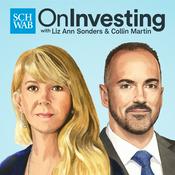
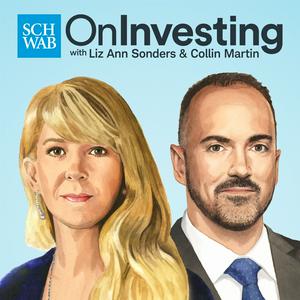
From market moves to the latest economic news, On Investing looks below the surface of the headline data to bring you fresh insights on what's happening and why—and what the implications are for your portfolio. Hosted by Schwab's Chief Investment Strategist Liz Ann Sonders and Collin Martin, Head of Fixed Income Research, On Investing is a weekly update featuring a variety of Schwab experts and special guests sharing their insights on equities, fixed income, macroeconomic issues, and more. Find it at Schwab.com/OnInvesting or wherever you get your podcasts.
Podcasts are for informational purposes only. This channel is not monitored by Charles Schwab. Please visit Schwab.com/ContactUs for contact options. (0326-K136)
Podcast-WebsiteHöre On Investing, Alles auf Aktien – Die täglichen Finanzen-News und viele andere Podcasts aus aller Welt mit der radio.at-App
Hol dir die kostenlose radio.at App
- Sender und Podcasts favorisieren
- Streamen via Wifi oder Bluetooth
- Unterstützt Carplay & Android Auto
- viele weitere App Funktionen
Hol dir die kostenlose radio.at App
- Sender und Podcasts favorisieren
- Streamen via Wifi oder Bluetooth
- Unterstützt Carplay & Android Auto
- viele weitere App Funktionen

On Investing
Code scannen,
App laden,
loshören.
App laden,
loshören.
On Investing: Zugehörige Podcasts
 Österreich