
Höre diesen Podcast kostenlos in der App: Kostenlos im App Store laden
radio.at
Sleeptimer
Sender speichern
352 Episoden
How Music Can Be Medicine, with Dr. Dan Levitin
05.11.2026 | 33 Min.A lot of us reach for music when we’re struggling. Whether we’re going through a breakup or just a rough day, our favorite jams seem to have an almost magical ability to give us relief. But WHY?! What exactly is music doing in the brain that affects how we feel? And how powerful is it? Like, could music actually treat diseases? We dig into these questions with musician, neuroscientist, and professor Dr. Dan Levitin. He wrote a book called “I Heard There Was a Secret Chord: Music as Medicine” all about the incredible neuroscience behind music and how it can help with things like depression, pain and even Alzheimer’s disease.
This episode does mention depression. Here are some crisis hotlines:
United States: US National Suicide Prevention Lifeline Dial 988 (Online chat available); US Crisis Text Line Text “HOME” to 741741
Australia: Lifeline 13 11 14 (Online chat available)
Canada: Call or text 988
United Kingdom: Samaritans 116 123 (UK and ROI)
Full list of international hotlines here
Find our transcript here: https://tinyurl.com/ScienceVsMusicAsMedicine
In this episode, we cover:
(00:00) Intro
(03:04) How music activates the brain
(09:17) The effects of music on mental health and pain
(14:37) The relationship between music and memory
(20:35) Music as medicine for movement disorders
(23:23) Does music really make you smarter?
(27:45) Oddball questions
Credits:
This episode was produced by Wendy Zukerman and Ekedi Fausther-Keeys with help from Meryl Horn, Michelle Dang, and Rose Rimler. We’re edited by Blythe Terrell. Wendy Zukerman is the executive producer. Fact-checking by the Science Vs team. Video editing and sound by Bobby Lord. Music written by Bumi Hidaka, Peter Leonard, Emma Munger and Bobby Lord. Thanks to Michelle Kitchen and Spotify Studios in Los Angeles, as well as Humdinger Studios in Melbourne.
Science Vs is a Spotify Studios Original. Listen for free on Spotify or wherever you get your podcasts. You can also find us on YouTube, TikTok and Instagram.
Learn more about your ad choices. Visit podcastchoices.com/adchoicesSitting: As Bad As Smoking?!
29.10.2026 | 32 Min.Lots of us spend HOURS a day sitting on our bums. And we’re often told that this is terrible for us — even that it could be as bad for our health as smoking. But how bad is it really? And can exercise or standing desks help make up for all those hours on the couch?? We dig into what happens inside our bodies when we sit all day — with sedentary behavior researchers Prof. David Dunstan and Prof. Bethany Barone Gibbs.
Find our transcript here: https://tinyurl.com/ScienceVsSitting
In this episode, we cover:
(01:25) How sitting became so scary
(06:33) What is sitting doing to us?
(16:38) Can standing help?
(22:47) What we can do
This episode was produced by Michelle Dang, with help from Meryl Horn, Ekedi Fausther-Keeys, and Rose Rimler. We’re edited by Blythe Terrell. Wendy Zukerman is our executive producer. Fact checking by Diane Kelly. Video editing & sound by Bobby Lord. Music written by Bobby Lord, Bumi Hidaka, So Wylie, Emma Munger and Peter Leonard. Thanks to the researchers we spoke to for this episode including Dr. Kaitlin Gallagher, as well as Humdinger Studios in Melbourne, and Wolff Island Studios in New York City.
Science Vs is a Spotify Studios Original. Listen for free on Spotify or wherever you get your podcasts. You can also find us on YouTube, TikTok and Instagram.
Learn more about your ad choices. Visit podcastchoices.com/adchoicesTestosterone: Do We All Need a Boost?
22.10.2026 | 39 Min.We’re hearing a ton about the marvels of testosterone from influencers, celebrities, and even government officials. They say we should be thinking about our T levels, topping them off with extra if they’re too low. And we’re told that the benefits of testosterone are HUGE: that we’ll be stronger, sexier, and more energized. So is that true?? And if you do go for a testosterone bump, do you need to worry about possible side effects, like ’roid rage, infertility and other risks? We talk to endocrinologists Prof. Shalender Bhasin and Prof. Richard Auchus as well as social psychologist Dr. Justin Carré to find out.
Find our transcript here: https://tinyurl.com/ScienceVsTestosterone
Find Wendy's chat about Bigorexia here: https://www.youtube.com/watch?v=hsZEfTWuIqg
In this episode, we cover:
(00:00) We’re obsessed with testosterone
(02:59) Will T make you bigger and stronger?
(09:25) ‘Roid rage
(18:04) Will T turn you into a horndog?
(25:48) Will T put pep in your step?
(27:51) The risks of taking T
(31:49) Why are we like this?
This episode was produced by Rose Rimler, with help from Meryl Horn, Ekedi Fausther-Keeys, and Michelle Dang. We're edited by Blythe Terrell. Wendy Zukerman is the executive producer. Fact-checking by Marlowe Starling. Video editing and sound by Bobby Lord.
Music written by Bumi Hidaka, Peter Leonard, Emma Munger, and Bobby Lord. Thanks to the researchers we spoke to for this episode, including Dr. Kathleen Casto, Dr. Carol Hooven, Professor Ruth Wood, Dr. Stephanie Page, Professor Sari van Anders, Dr. Adam Stanaland, and Professor Anthony Hackney. Thanks to Humdinger Studios in Melbourne and Wolf Island Studios in New York City.
Science Vs is a Spotify Studios Original. Listen for free on Spotify or wherever you get your podcasts. Follow us and tap the bell for episode notifications.
Learn more about your ad choices. Visit podcastchoices.com/adchoicesFiber Maxxing and Poo Maxxing, with Dr. Trisha Pasricha
15.10.2026 | 59 Min.Have you been puzzled by your poos or felt down about your dumps?? You’re not alone! So many of us are struggling with gut issues, which is why fiber is having a major moment. But even though we’re secretly guzzling psyllium husk, tons of us are too embarrassed to talk about our poo problems. No more! We’re putting an end to the silence on stool with Dr. Trisha Pasricha. She’s a neurogastroenterologist and author of “You’ve Been Pooping All Wrong.” We find out what poo actually IS and how often you should go — plus, we get the dirt on the surprising connection between your brain and your gut, and how it might be the key to understanding diseases like Parkinson’s.
Find our transcript here: ScienceVs
In this episode, we cover:
Time stamp and titles for each chapter (first chapter must start at 00:00, minimum 3 chapters)
(00:00) Intro
(02:45) What does it mean to reach “poophoria”??
(04:37) Living in a poo-forward household
(05:54) Stomach lie detector
(11:06) That sinking feeling in your stomach
(13:48) The gut-brain connection
(17:05) Parkinson’s and Alzheimer's
(22:05) Fecal transplants
(26:09) Poo 101
(29:46) Fiber-maxxing and how often you should go
(34:52) Why you shouldn’t linger on the toilet
(43:09) Myths around poo
(49:42) Oddball questions
This episode was produced by Ekedi Fausther-Keeys and Wendy Zukerman, with help from Rose Rimler, Meryl Horn, and Michelle Dang. We’re edited by Blythe Terrell. Wendy Zukerman is the executive producer. Fact checking by Erica Akiko Howard. Video editing and sound by Bobby Lord. Music written by Bumi Hidaka, Peter Leonard, Emma Munger and Bobby Lord. Thanks to the researchers we spoke to for this episode including Dr. Jessica Biesiekierski, as well as Humdinger Studios in Melbourne, and WGBH Studios in Boston.
Science Vs is a Spotify Studios Original. Listen for free on Spotify or wherever you get your podcasts. You can also find us on YouTube, TikTok and Instagram.
Learn more about your ad choices. Visit podcastchoices.com/adchoicesCollagen Peptides: Should You Take Them?
08.10.2026 | 35 Min.Collagen peptides!! Can they make you look younger and be healthier? It feels like everyone wants to be bursting with collagen, and apparently the way to do it is by scooping up that white powder of collagen peptides and guzzling it down. Do that, and — according to the wellfluencers — not only will your skin be as bouncy as a baby's bottom, but you'll also be stronger and you'll heal from injuries faster. But of course, not everyone is on the collagen train. There are the collagen haters, who say that eating collagen is a load of baloney. So who's right? To find out, we talk to dietetics Professor Clare Collins, dermatologist Dr. Natalia Spierings, exercise physiologists Professor Luc van Loon and Professor Keith Baar, neutromuscular physiologist Dr. Robert Erskine, as well as sports performance consultant Dr. Dana Lis.
Find our transcript here: https://tinyurl.com/ScienceVsCollagen
In this episode, we cover:
(00:00) Collagen peptides are EVERYWHERE
(02:52) Why is collagen important?
(05:25) What are collagen "peptides"?
(05:54) Do collagen peptides in creams or injections work?
(06:40) Can eating collagen improve your skin?
(12:35) What happens to collagen after you eat it?
(18:45) How to build more collagen
(24:56) Can eating collagen improve sports performance?
(28:31) Should you take collagen supplements?(31:47) What are the risks of collagen peptides?
This episode was produced by Wendy Zukerman, with help from Rose Rimler, Ekedi Fausther-Keeys, Meryl Horn and Michelle Dang. We’re edited by Blythe Terrell. Fact checking by Marlowe Starling. Additional research from Isabel Gil. Video editing and sound mix by Bobby Lord. Music written by Bumi Hidaka, Peter Leonard, Emma Munger and Bobby Lord. Thanks to Humdinger Studios in Melbourne and Wolff Island Studios in New York City. Thanks to the researchers we spoke to for this episode, plus a big thanks to Joseph Lavelle Wilson and the Zukerman family.
Science Vs is a Spotify Studios Original. Listen for free on Spotify or wherever you get your podcasts. You can also find us on YouTube, TikTok and Instagram.
Learn more about your ad choices. Visit podcastchoices.com/adchoices
Weitere Bildung Podcasts






Über Science Vs
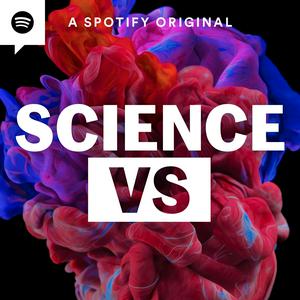
There are a lot of fads, blogs and strong opinions, but then there’s SCIENCE. Science Vs is the show from Spotify Studios that finds out what’s fact, what’s not, and what’s somewhere in between. We do the hard work of sifting through all the science so you don't have to and cover everything from 5G and ADHD, to Fluoride and Fasting Diets.
Podcast-WebsiteHöre Science Vs, Erklär mir die Welt und viele andere Podcasts aus aller Welt mit der radio.at-App
Hol dir die kostenlose radio.at App
- Sender und Podcasts favorisieren
- Streamen via Wifi oder Bluetooth
- Unterstützt Carplay & Android Auto
- viele weitere App Funktionen
Hol dir die kostenlose radio.at App
- Sender und Podcasts favorisieren
- Streamen via Wifi oder Bluetooth
- Unterstützt Carplay & Android Auto
- viele weitere App Funktionen
Science Vs
Code scannen,
App laden,
loshören.
App laden,
loshören.
Science Vs: Zugehörige Podcasts

 Österreich

