

Höre diesen Podcast kostenlos in der App: Kostenlos im App Store laden
radio.at
Sleeptimer
Sender speichern
37 Episoden
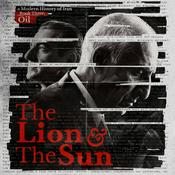
Book Three – Ep.6: Nationalization – Part Two
10.09.2026 | 23 Min.With nationalization signed and Mosaddegh in office, Britain cuts off Iran’s oil exports and moves warships into the Gulf. Secret documents expose decades of political interference, American mediation fails, and Iran finds itself in a standoff it cannot easily win.
Listen to part one of Nationalization here.
Episode sources
Follow us on Instagram, TikTok or X (Twitter).
Support this show on Patreon.
Episode Summary
With nationalization passed, Britain’s response came not at the negotiating table but on the water. Warships moved toward Abadan as London made clear it had no intention of accepting the law as final. Internally, the British pushed the Shah to appoint Sayyed Zia (a familiar face from the 1921 coup) as prime minister, hoping to steer Iran back toward compromise.
In the confirmation hearing, right-wing deputy, Jamal Emami, rose to mock Mosaddegh: “If Mosaddegh thought everyone else was failing, why not run the government himself?” The chamber fell silent. Then, Mosaddegh accepted. Seventy-nine deputies voted for him and afterwards the Majlis unanimously passed his follow-up nationalization legislation, establishing the National Iranian Oil Company and setting terms for auditing Anglo-Iranian’s books.
On May 1st, 1951, the Shah signed it into law.
Britain responded with an embargo. Anglo-Iranian’s general manager ordered tankers to leave Abadan empty rather than submit to Iranian oversight. The refinery ground to a halt.
America offered a mediator instead, Averell Harriman, carrying a letter from Truman himself. He spent ten days shuttling proposals between Tehran and the British. Every formula preserved some foreign role in managing Iranian oil. Mosaddegh rejected them all, warmly and completely.
When Iranian delegations moved into Anglo-Iranian’s offices, they found files being burned in a fireplace … but not quickly enough. What remained revealed decades of quiet interference: deputies bought, ministers managed, newspapers paid to undermine the National Front, a Radio Department official recruited as an asset. Mosaddegh released everything.
In Washington, Truman’s National Security Council heard the warnings plainly. The refinery was shutting down. British warships were already positioned off Abadan. Intelligence suggested an invasion was being considered. The Western alliance and Iran’s future hung in the balance.
The world was now deciding whether to let Iran’s nationalization stand … or crush it.
Music
Roberto Prado – Hidden Thread
Mark Fabian – Super Secret Spy
FableForte – Reminiscence
Christoffer Moe Ditlevsen – Missing Memories
Francesco D Andrea – Tempus Fugit
Cjbeards – Heart of the Wicked
The post Book Three – Ep.6: Nationalization – Part Two appeared first on The Lion and The Sun Podcast.Book Three – Ep.6: Nationalization (2)
08.05.2026 | 23 Min.With nationalization signed and Mosaddegh in office, Britain cuts off Iran’s oil exports and moves warships into the Gulf. Secret documents expose decades of political interference, American mediation fails, and Iran finds itself in a standoff it cannot easily win.
Listen to part one of Nationalization here.
Episode sources
Follow us on Instagram, TikTok or X (Twitter).
Support this show on Patreon.
Episode Summary
With nationalization passed, Britain’s response came not at the negotiating table but on the water. Warships moved toward Abadan as London made clear it had no intention of accepting the law as final. Internally, the British pushed the Shah to appoint Sayyed Zia (a familiar face from the 1921 coup) as prime minister, hoping to steer Iran back toward compromise.
In the confirmation hearing, right-wing deputy, Jamal Emami, rose to mock Mosaddegh: “If Mosaddegh thought everyone else was failing, why not run the government himself?” The chamber fell silent. Then, Mosaddegh accepted. Seventy-nine deputies voted for him and afterwards the Majlis unanimously passed his follow-up nationalization legislation, establishing the National Iranian Oil Company and setting terms for auditing Anglo-Iranian’s books.
On May 1st, 1951, the Shah signed it into law.
Britain responded with an embargo. Anglo-Iranian’s general manager ordered tankers to leave Abadan empty rather than submit to Iranian oversight. The refinery ground to a halt.
America offered a mediator instead, Averell Harriman, carrying a letter from Truman himself. He spent ten days shuttling proposals between Tehran and the British. Every formula preserved some foreign role in managing Iranian oil. Mosaddegh rejected them all, warmly and completely.
When Iranian delegations moved into Anglo-Iranian’s offices, they found files being burned in a fireplace … but not quickly enough. What remained revealed decades of quiet interference: deputies bought, ministers managed, newspapers paid to undermine the National Front, a Radio Department official recruited as an asset. Mosaddegh released everything.
In Washington, Truman’s National Security Council heard the warnings plainly. The refinery was shutting down. British warships were already positioned off Abadan. Intelligence suggested an invasion was being considered. The Western alliance and Iran’s future hung in the balance.
The world was now deciding whether to let Iran’s nationalization stand … or crush it.
Music
Roberto Prado – Hidden Thread
Mark Fabian – Super Secret Spy
FableForte – Reminiscence
Christoffer Moe Ditlevsen – Missing Memories
Francesco D Andrea – Tempus Fugit
Cjbeards – Heart of the Wicked
The post Book Three – Ep.6: Nationalization (2) appeared first on The Lion and The Sun Podcast.Book Three – Ep.6: Nationalization (2)
07.05.2026 | 23 Min.With nationalization signed and Mosaddegh in office, Britain cuts off Iran’s oil exports and moves warships into the Gulf. Secret documents expose decades of political interference, American mediation fails, and Iran finds itself in a standoff it cannot easily win.
Listen to part one of Nationalization here.
Episode sources
Follow us on Instagram, TikTok or X (Twitter).
Support this show on Patreon.
Episode Summary
With nationalization passed, Britain’s response came not at the negotiating table but on the water. Warships moved toward Abadan as London made clear it had no intention of accepting the law as final. Internally, the British pushed the Shah to appoint Sayyed Zia (a familiar face from the 1921 coup) as prime minister, hoping to steer Iran back toward compromise.
In the confirmation hearing, right-wing deputy, Jamal Emami, rose to mock Mosaddegh: “If Mosaddegh thought everyone else was failing, why not run the government himself?” The chamber fell silent. Then, Mosaddegh accepted. Seventy-nine deputies voted for him and afterwards the Majlis unanimously passed his follow-up nationalization legislation, establishing the National Iranian Oil Company and setting terms for auditing Anglo-Iranian’s books.
On May 1st, 1951, the Shah signed it into law.
Britain responded with an embargo. Anglo-Iranian’s general manager ordered tankers to leave Abadan empty rather than submit to Iranian oversight. The refinery ground to a halt.
America offered a mediator instead, Averell Harriman, carrying a letter from Truman himself. He spent ten days shuttling proposals between Tehran and the British. Every formula preserved some foreign role in managing Iranian oil. Mosaddegh rejected them all, warmly and completely.
When Iranian delegations moved into Anglo-Iranian’s offices, they found files being burned in a fireplace … but not quickly enough. What remained revealed decades of quiet interference: deputies bought, ministers managed, newspapers paid to undermine the National Front, a Radio Department official recruited as an asset. Mosaddegh released everything.
In Washington, Truman’s National Security Council heard the warnings plainly. The refinery was shutting down. British warships were already positioned off Abadan. Intelligence suggested an invasion was being considered. The Western alliance and Iran’s future hung in the balance.
The world was now deciding whether to let Iran’s nationalization stand … or crush it.
Music
Roberto Prado – Hidden Thread
Mark Fabian – Super Secret Spy
FableForte – Reminiscence
Christoffer Moe Ditlevsen – Missing Memories
Francesco D Andrea – Tempus Fugit
Cjbeards – Heart of the Wicked
The post Book Three – Ep.6: Nationalization (2) appeared first on The Lion and The Sun Podcast.Book Three – Ep.6: Nationalization (2)
07.05.2026With nationalization signed and Mosaddegh in office, Britain cuts off Iran’s oil exports and moves warships into the Gulf. Secret documents expose decades of political interference, American mediation fails, and Iran finds itself in a standoff it cannot easily win.
Listen to part one of Nationalization here.
Episode sources
Follow us on Instagram, TikTok or X (Twitter).
Support this show on Patreon.
Episode Summary
With nationalization passed, Britain’s response came not at the negotiating table but on the water. Warships moved toward Abadan as London made clear it had no intention of accepting the law as final. Internally, the British pushed the Shah to appoint Sayyed Zia (a familiar face from the 1921 coup) as prime minister, hoping to steer Iran back toward compromise.
In the confirmation hearing, right-wing deputy, Jamal Emami, rose to mock Mosaddegh: “If Mosaddegh thought everyone else was failing, why not run the government himself?” The chamber fell silent. Then, Mosaddegh accepted. Seventy-nine deputies voted for him and afterwards the Majlis unanimously passed his follow-up nationalization legislation, establishing the National Iranian Oil Company and setting terms for auditing Anglo-Iranian’s books.
On May 1st, 1951, the Shah signed it into law.
Britain responded with an embargo. Anglo-Iranian’s general manager ordered tankers to leave Abadan empty rather than submit to Iranian oversight. The refinery ground to a halt.
America offered a mediator instead, Averell Harriman, carrying a letter from Truman himself. He spent ten days shuttling proposals between Tehran and the British. Every formula preserved some foreign role in managing Iranian oil. Mosaddegh rejected them all, warmly and completely.
When Iranian delegations moved into Anglo-Iranian’s offices, they found files being burned in a fireplace … but not quickly enough. What remained revealed decades of quiet interference: deputies bought, ministers managed, newspapers paid to undermine the National Front, a Radio Department official recruited as an asset. Mosaddegh released everything.
In Washington, Truman’s National Security Council heard the warnings plainly. The refinery was shutting down. British warships were already positioned off Abadan. Intelligence suggested an invasion was being considered. The Western alliance and Iran’s future hung in the balance.
The world was now deciding whether to let Iran’s nationalization stand … or crush it.
Music
Roberto Prado – Hidden Thread
Mark Fabian – Super Secret Spy
FableForte – Reminiscence
Christoffer Moe Ditlevsen – Missing Memories
Francesco D Andrea – Tempus Fugit
Cjbeards – Heart of the Wicked
The post Book Three – Ep.6: Nationalization (2) appeared first on The Lion and The Sun Podcast.Book Three – Ep.5: Nationalization (1)
09.04.2026 | 28 Min.Failed negotiations, assassination, and a vote that changed Iran’s history. As pressure builds and compromise collapses, Mohammad Mosaddegh leads a united nation towards oil nationalization.
Follow us on Instagram, TikTok or X (Twitter).
Support this show on Patreon.
Earlier Chapters of The Oil Dispute:
Book One – Episode 8: Anglo-Persian Oil Company
Book Two – Episode 4: Anglo-Iranian Oil Company
Book Three – Episode 4: Paper City
Episode Summary
In the early 1950s, Iran entered a period of rapid political upheaval. After disputed elections, a group of nationalists led by Mohammad Mosaddegh entered parliament, determined to challenge a revised oil agreement with the Anglo-Iranian Oil Company. Though framed as a financial improvement, the agreement left the core structure of foreign control intact. For Mosaddegh and his allies, the issue was not revenue, but sovereignty.
A parliamentary committee formed in 1950 turned the agreement into a national confrontation. While Prime Minister Ali Razmara sought compromise with Britain, proposing transparency and limited reforms, London refused to concede. The deadlock shifted momentum toward rejection, uniting unlikely factions across Iran’s political and religious spectrum.
Among them was Abolqasem Kashani, a cleric with deep anti-British convictions. His alignment with Mosaddegh signalled a broader transformation: oil was no longer just policy, but a national and moral cause.
Public opinion hardened further after news from Saudi Arabia, where a 50–50 oil profit-sharing agreement set a new benchmark. Iranian demands escalated beyond reform toward full control.
By early 1951, mass demonstrations filled the streets, calling for nationalization. Razmara warned of economic and political consequences, but his position collapsed as public anger intensified. On March 7, he was assassinated by a member of a militant religious group, removing the last advocate for compromise and deepening uncertainty around the balance of power.
With Razmara gone, momentum became irreversible. Under Mosaddegh’s leadership, the parliamentary oil committee voted unanimously to recommend nationalization. Days later, both the Majlis and Senate approved it without opposition. Iran’s oil industry was formally nationalized.
Across the country, celebrations followed. Diverse groups, clerics, nationalists, elites, and ordinary citizens, briefly united around a shared vision of independence. For a moment, Iran asserted control over its resources and its future.
But the decision also set the stage for confrontation. What began as a domestic dispute over oil had now become an international crisis.
Music
Cjbeards – Shattered Glass
FableForte – Whodunit
Jay Varton – Inside Light
Rachel Sandy – Impossible Theory
ANBR – Days Pass
Jay Varton – First Second
Adrián Berenguer – Presto
Brianna Tam and Spearfisher – Attacca
The post Book Three – Ep.5: Nationalization (1) appeared first on The Lion and The Sun Podcast.
Weitere Geschichte Podcasts
 Amerika verstehen. Mit Volker DepkatGeschichte
 Der Rest ist GeschichteGeschichte
 Geschichten aus der GeschichteBildung, Geschichte, Gesellschaft und Kultur
 Tatort Geschichte - True Crime meets HistoryGeschichte
 Was bisher geschah - GeschichtspodcastBildung, Geschichte, Gesellschaft und Kultur
 Ö1 Betrifft: GeschichteGeschichte
 Einschlafen mit GeschichteBildung, Geschichte, Gesellschaft und Kultur
 His2Go - Geschichte PodcastBildung, Geschichte, Wissenschaft
 The Rest Is HistoryGeschichte
 Alles Geschichte - Der History-PodcastGeschichte
Trending Geschichte Podcasts
 tak boloBildung, Geschichte, Gesellschaft und Kultur
 Die Geschichte des NahostkonfliktsGeschichte, Nachrichten, Politik, Religion, Religion und Spiritualität
 Wer wir sind und warum das nicht klappte ...Geschichte
 Geschichte der kommenden WeltenBildung, Geschichte, Nachrichten, Politik
 Krone GeschichteGeschichte
 Der GeschichtspodcastGeschichte
 Schlicht & Einfach MittelalterBildung, Geschichte
 Qui si fa l'ItaliaDokumentation, Geschichte, Gesellschaft und Kultur
 This is History: The TudorsGeschichte, Gesellschaft und Kultur
 The Rest Is ClassifiedGeschichte
 ДилетантGeschichte
 SPIEGEL GeschichteGeschichte, Sozialwissenschaften, Wissenschaft
 WissensreisendeGeschichte
 The AncientsGeschichte
 راوکست | RavcastBücher, Geschichte, Gesellschaft und Kultur, Kunst, True Crime
 The Ottonians - Die OttonenBildung, Dokumentation, Geschichte, Gesellschaft und Kultur
 Die GeschichtsgreißlereiGeschichte
Über The Lion and The Sun: A Modern History of Iran
2025 Signal Award Winner: Best History Podcast Iran’s history has been a never-ending struggle for liberty and independence. In this podcast, we tell the story of how Iran ended up where it is now and how religion, monarchy, democracy, and nationalism all played important roles in defining the lives of its people. Book One: The Qajars How the constitutional revolution created Iran’s very first parliament. This season follows the story of the fading Qajar monarchy, as unrest, foreign meddling, and political betrayal set the stage for Reza Khan’s rise to power. Book Two: Reza Shah The rise and fall of Reza Shah, the architect of modern Iran. The meteoric rise of Reza Khan from a simple soldier to the founding Shah of the Pahlavi dynasty, his radical transformation of Iran into a modern state, and his ultimate downfall. Book Three: Oil (January 2026) Listen to new episodes every other Wednesday.
Podcast-WebsiteHöre The Lion and The Sun: A Modern History of Iran, Amerika verstehen. Mit Volker Depkat und viele andere Podcasts aus aller Welt mit der radio.at-App
Hol dir die kostenlose radio.at App
- Sender und Podcasts favorisieren
- Streamen via Wifi oder Bluetooth
- Unterstützt Carplay & Android Auto
- viele weitere App Funktionen
Hol dir die kostenlose radio.at App
- Sender und Podcasts favorisieren
- Streamen via Wifi oder Bluetooth
- Unterstützt Carplay & Android Auto
- viele weitere App Funktionen

The Lion and The Sun: A Modern History of Iran
Code scannen,
App laden,
loshören.
App laden,
loshören.
 Österreich