
Höre diesen Podcast kostenlos in der App: Kostenlos im App Store laden
radio.at
Sleeptimer
Sender speichern
249 Episoden
Episode 206: Historians At The Movies: Battleship with Colin Colbourn and Trent Hone
20.10.2026 | 1 Std. 43 Min.Can you really drift a battleship? Which American admiral would you trust to fight an alien invasion—and which one would get us all killed? Naval historian Trent Hone and military historian Colin Colbourn join Jason Herbert to put Battleship (2012) through a very unserious inspection with some serious U.S. Navy history.
Using the film’s alien showdown as our starting point, we explore the USS Missouri, Iowa-class battleships, and how naval warfare actually works. Could a crew of veterans bring a museum ship back into combat? How do you aim those enormous guns? And why did battleships give way to aircraft carriers and guided-missile destroyers?
We also trace the rise of American sea power, from the Navy’s early struggles to Alfred Thayer Mahan, Theodore Roosevelt’s Great White Fleet, and the Pacific War. Along the way, we discuss Japan’s naval strategy, nighttime combat around Guadalcanal, and the leadership and adaptation that can decide a battle.
Plus: Rihanna’s firepower, Liam Neeson’s burrito diplomacy, Hollywood’s relationship with military recruiting, and why the veteran sailors’ return hits harder than anyone expected. Come for the battleship drift. Stay for the history—and the admiral draft that might determine humanity’s survival.
Follow Reckoning with Jason Herbert for more conversations about history, movies, and the stories that bring them together.Episode 205: Freedom's Ghosts: Ben Vereen & Amethyst Davis on The Grey House and the Meaning of Juneteenth
19.06.2026 | 56 Min.Episode Description
As America prepares to commemorate Juneteenth, Jason Herbert sits down with legendary actor Ben Vereen and breakout star Amethyst Davis for a powerful conversation about The Grey House—the Civil War-era drama that explores freedom, resistance, and the unfinished legacy of slavery. Drawing on their experiences bringing the series to life, Vereen and Davis reflect on portraying Black Americans during Reconstruction, the importance of telling stories that many would rather forget, and why history remains a battleground today.
The conversation moves beyond filmmaking to explore Black liberation, historical memory, women's leadership during the Underground Railroad, and the resilience that carried generations through slavery and beyond. Vereen shares why America still needs "another slave story," while Davis discusses portraying an educated, formerly enslaved Black heroine whose intelligence and courage challenge long-held stereotypes. Together, they reflect on filming in Romania, working with director Roland Joffé, the emotional weight of key scenes, and why Juneteenth should become a day for families to gather and honor their ancestors.
This is more than a conversation about television—it's a discussion about why history matters, why these stories must continue to be told, and how remembering the past offers hope for the future.Episode 204: Water, Power, and the Future of the American West: Deep Time on Mono Lake with Robert Marks
09.06.2026 | 1 Std. 15 Min.What can a salty desert lake in Eastern California teach us about climate change, Indigenous history, migration, and the future of the American West? On this episode of Reckoning with Jason Herbert, historian Bob Marks joins Jason to discuss his new book, Deep Time in the Mono Lake Basin, and the remarkable 10,000-year environmental history of Mono Lake Basin.
From the ancient world of the Northern Paiute and migrating Wilson’s phalaropes to the rise of Los Angeles water politics and the ecological battles that inspired comparisons to Chinatown, this conversation explores how humans transformed one of North America’s most unique ecosystems. Along the way, Jason and Bob discuss deep time, environmental history, Western water wars, Indigenous knowledge, climate resilience, the Great Basin, Mono Lake’s famous alkali flies, and why saline lakes may hold clues to our environmental future.
If you enjoy environmental history, the American West, climate history, Indigenous history, or conversations in the spirit of Dan Flores and Donald Worster, this episode is for you.Episode 203: Pressure with Colin Colbourn and Todd Arrington
04.06.2026 | 1 Std. 3 Min.D-Day is one of the most studied military operations in history. But what if the fate of the Allied invasion hinged not on generals, tanks, or landing craft—but on a weather forecast?
In this episode of Reckoning with Jason Herbert, Jason is joined by historians Todd Arrington and Dr. Colin Colbourn to discuss the new film Pressure, starring Brendan Fraser as General Dwight D. Eisenhower and Andrew Scott as meteorologist James Stagg. Together they explore the extraordinary decisions made in the days before June 6, 1944, when uncertain forecasts, competing personalities, and the weight of history converged on a single choice: whether to launch Operation Overlord.
The conversation examines Eisenhower's leadership under immense strain, the often-overlooked role of meteorology in World War II, the disastrous rehearsal known as Exercise Tiger, and the complex relationships among Allied commanders such as Bernard Montgomery. Along the way, the panel weighs in on the film's historical accuracy, its performances, and why Pressure succeeds by telling a familiar story from an entirely unexpected angle.
If you've ever wondered how close D-Day came to being postponed—or how something as unpredictable as the weather helped shape the course of the twentieth century—this is an episode you won't want to miss.
Topics discussed:
The true story behind the film Pressure
Dwight Eisenhower and the burden of command
James Stagg and the weather forecast that changed history
Exercise Tiger and the hidden costs of preparing for D-Day
Bernard Montgomery, Allied politics, and coalition warfare
The role of weather in World War II operations
Historical accuracy versus cinematic storytelling
Brendan Fraser, Andrew Scott, and Damian Lewis on screenEpisode 202: World War II in Alaska: Alaska Native Resilience, Relocation, and Resistance with Holly Guise
01.06.2026 | 1 Std. 3 Min.World War II reached far beyond the beaches of Normandy and the islands of the Pacific. It also came to Alaska, where Indigenous communities found themselves on the front lines of invasion, military occupation, and forced relocation.
In this episode of Reckoning with Jason Herbert, historian Holly Miowak Guise discusses her groundbreaking book Alaska Native Resilience: Voices from World War II. Drawing on more than 90 oral history interviews with Alaska Native elders, Guise reveals how Alaska Native communities experienced the Aleutian Campaign, wartime relocation camps, segregation, military service, and the ongoing realities of colonialism in America's far north.
Together, we explore the Japanese invasion of the Aleutian Islands, the forced evacuation of Indigenous communities, Alaska Native military service, the power of oral history, and the ways Native peoples resisted, adapted, and rebuilt their communities in the aftermath of war.
This conversation challenges familiar narratives of the "Good War" and offers a powerful reminder that some of the most important stories of World War II remain largely unknown.
Weitere Geschichte Podcasts










Trending Geschichte Podcasts



















Über Reckoning with Jason Herbert
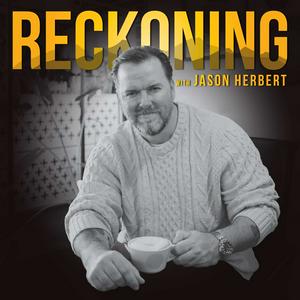
Reckoning with Jason Herbert is a long-form conversation podcast about history, the outdoors, and the stories that shape who we are.Each episode features historians, writers, scientists, and thinkers in wide-ranging conversations about wild places, forgotten pasts, cultural memory, and the forces—human and natural—that continue to shape our lives.This isn’t a news cycle show or a debate podcast. It’s a space for reflection, curiosity, and serious conversation—meant to be listened to slowly.If you’re interested in history beyond textbooks, the outdoors beyond recreation, and stories that linger long after they’re told, this show is for you.
Podcast-WebsiteHöre Reckoning with Jason Herbert, Einschlafen mit Geschichte und viele andere Podcasts aus aller Welt mit der radio.at-App
Hol dir die kostenlose radio.at App
- Sender und Podcasts favorisieren
- Streamen via Wifi oder Bluetooth
- Unterstützt Carplay & Android Auto
- viele weitere App Funktionen
Hol dir die kostenlose radio.at App
- Sender und Podcasts favorisieren
- Streamen via Wifi oder Bluetooth
- Unterstützt Carplay & Android Auto
- viele weitere App Funktionen

Reckoning with Jason Herbert
Code scannen,
App laden,
loshören.
App laden,
loshören.
Reckoning with Jason Herbert: Zugehörige Podcasts
 Österreich