

Höre diesen Podcast kostenlos in der App: Kostenlos im App Store laden
radio.at
Sleeptimer
Sender speichern
77 Episoden
Stephen Long Drops Into 1949 Albania
12.07.2026 | 55 Min.LD077: In June 1949, the CIA and MI6 secretly agreed to overthrow Albania's communist dictator Enver Hoxha. The operation — codenamed BGFiend — would use exiled Albanian dissidents, paramilitary infiltration, propaganda broadcasts from a yacht in the Adriatic, and a network of émigré communities in Rome, Athens, and West Germany. It ran for four years. It failed almost completely. Historian Stephen Long spent seven years in the CIA's declassified archive working through 6,700 pages of operational files — files that also contained British intelligence reports MI6 never intended anyone to see. What he found upends the standard explanation. BGFiend wasn't killed by Kim Philby. It was penetrated from the start by Italian naval intelligence, which had fully mapped the operation's émigré networks before the first agent crossed the border. The Albanian security service — the Sigurimi — was young but learning fast, supported by a ruthless political leadership and an informant network that reached down to the village level. Agents were dropped by parachute with minimal training, often miles from their target locations. They hid by day, moved at night, and were hunted by pursuit brigades, civilian militia, border guards, and regular police simultaneously. When Apple team radio operator Prenzi was captured, he did everything he could to signal that the operation was blown — including transmitting with his left hand after breaking his right arm escaping from prison. The CIA didn't want to believe it. Nine more men went in. Long argues BGFiend wasn't reckless — it was the West's painful apprenticeship in covert action, a template for everything that followed, from Poland to Ukraine to the Bay of Pigs. The lessons were eventually learned. Just not in time to save the men already in the field.
Stephen Long is author of A Rich Harvest of Bitter Fruit: CIA and MI6 Covert Action in Communist Albania at the Dawn of the Cold War (Icon Books, 2026) https://www.iconbooks.com
Further Reading
Rory Cormac, How to Stage a Coup: And Ten Other Lessons from the World of Secret Statecraft (Atlantic Books, 2022)
https://www.atlantic-books.co.uk
Richard J. Aldrich, GCHQ: The Uncensored Story of Britain's Most Secret Intelligence Agency (Harper Press, 2010)
https://www.harpercollins.co.uk
Richard H. Immerman, The Hidden Hand: A Brief History of the CIA (Wiley-Blackwell, 2014)
https://www.wiley.com
Tim Weiner, Legacy of Ashes: The History of the CIA (Doubleday, 2007)
https://www.penguinrandomhouse.com
David Smiley, Albanian Assignment (Chatto & Windus, 1984)
https://www.worldcat.org/title/albanian-assignment
On the Sigurimi and Albania
Blendi Fevziu, Enver Hoxha: The Iron Fist of Albania (I.B. Tauris, 2016)
https://www.bloomsbury.com
Albanian Authority for Access to Information on Ex-Sigurimi Files
https://www.aidssh.gov.al
Hosted on Acast. See acast.com/privacy for more information.Jack Beaumont on Memory and the French DGSE
12.05.2026 | 48 Min.Jack Beaumont, a former DGSE (French external intelligence) operative, focusing on Beaumont's experiences, his writing process, and the themes of his espionage novels. Beaumont explains that his writing began as a therapeutic exercise to cope with PTSD from his intelligence work, initially not intended for publication. He emphasizes the importance of memory and meticulous detail in his novels, a habit developed from years of writing exhaustive mission reports for the DGSE, which required both objective intelligence and subjective, sensory-rich accounts. This attention to detail, including smells and sounds, shapes the immersive quality of his books.
Beaumont discusses the psychological toll of intelligence work, particularly the challenge of maintaining multiple identities and the difficulty of returning to normal family life after missions. He describes how operatives often develop a 'dark side' to manipulate and recruit sources, sometimes leading to moral injury and high rates of divorce and suicide among operatives. He notes that PTSD in intelligence work is not just about trauma from danger, but also from ethical dilemmas and the manipulation or destruction of innocent lives for the sake of national security.
The conversation explores the differences between the DGSE and agencies like the CIA and MI6. Beaumont highlights the French focus on human intelligence (HUMINT), rooted in the legacy of the French Resistance, as opposed to the American emphasis on technical intelligence (SIGINT, COMINT) due to larger budgets and resources. He explains the 'MICE' framework (Money, Ideology, Coercion, Ego) for recruiting sources, and the ethical complexities involved, especially when coercion or blackmail is used as a last resort. France's DGSI data sharing and reliance on Palantir software is a continuing point of debate over information sovereignty.
Beaumont also touches on the use of AI in writing and intelligence. He expresses skepticism about AI's ability to replicate the nuance and authenticity of human memory and creativity, noting that AI-generated translations and narratives often lack the depth and accuracy required for his work. He uses AI only sparingly, mainly for translation assistance, and finds it inadequate for creative writing.
Throughout the interview, Beaumont shares anecdotes about real-life inspirations for his characters, the challenges of translation, and the camaraderie and personal stories of his colleagues. He reflects on the enduring appeal of the Templar Knights among operatives, symbolizing a code of honor and sacrifice. The discussion provides a rare, candid insight into the realities of modern espionage, the personal costs of intelligence work, and the evolving threats and ethical questions facing those in the field today.
The Frenchman, Jack Beaumont
Dark Arena, Jack Beaumont
Belmondo's Le Professionel
markvalley.substack.com
Hosted on Acast. See acast.com/privacy for more information.Shawnna Morris and the Glamorous Cambridge Five
12.11.2025 | 57 Min.In this interview, I had the pleasure of speaking with a Cold War expert--Shawnna Morris--about her fascinating book on the Cambridge Five spy ring. We talked about how her book has been received both in the UK and the US, and she shared some insights into the cultural attitudes around this famous espionage group. Shauna guided me through the recruitment storyline, explaining how Philby, McLean, Burgess, Blunt, and Cairncross became Soviet spies, and the social dynamics that let them operate undetected for so long. We explored the complicated personalities of each member—especially Philby’s evolution from idealist to, uhm, sociopath, and the betrayals that marked their personal lives. We also discussed how the legacy of the Cambridge Five continues to influence not just intelligence services, but also the way the story is told in books, films, and archives over time. Shauna reflected on the moral ambiguity at the heart of their actions and how new information continues to shift the narrative. Finally, she shared her excitement about her next project: a book focusing on extraordinary women in Cold War history.
Websites:
https://coldwarhistoryblog.com/
https://coldwarbookreviews.wordpress.com/
https://shawnnamorris.com/
Here are her socials:
https://www.facebook.com/CambridgeSpyRing/
https://www.facebook.com/coldwarhistoryblog/
https://www.facebook.com/ShawnnaMorrisAuthor/
https://www.instagram.com/thecambridgespyring/
https://www.instagram.com/coldwarhistoryblog/
https://www.instagram.com/shawnnamorrisauthor/
https://x.com/CambridgeSpies
The book is available at Pen and Sword https://www.penandswordbooks.com/9781036108687/the-cambridge-spy-ring/
and all major online retailers like Amazon, Barnes and Noble, etc.
References:
Films about the Cambridge Five across the decades...
Philby, Burgess, and MacLean (1977)
Blunt (1983)
An Englishman Abroad (1987)
A Spy Among Friends (2022)
Hosted on Acast. See acast.com/privacy for more information.James Stejskal: Author, Soldier, Snake-eater, Spy
07.10.2025 | 41 Min.This episode of The Live Drop, I talk with James Stejskal — a former U.S. Army Special Forces operator from Detachment “A” in Cold War Berlin who later worked in intelligence before turning to history and fiction. He’s the author of Special Forces Berlin and the Snake Eater Chronicles, and his latest books — The Ratcatcher and The Berlin Spy Guide — bring that same mix of lived experience and deep research. We dig into The Ratcatcher, a Berlin spy novel that fuses counterintelligence, crime, and military thriller — following the murder of a CI officer and the hunt for a U.S. traitor--the premise of which comes from a real case buried deep in the Stasi files. James talks about class and culture inside Cold War espionage — Ivy League analysts versus scrappy gumshoe operators — and what it really took to recruit sources behind the Wall. We also get into his research adventures in the archives, Berlin’s Cold War landmarks including a McDonalds, and how today’s Russia mirrors old Soviet tactics through imperial nostalgia and opportunism abroad.
James Stejskal
Berlin Spy Guide
Ratcatcher of Berlin
Hosted on Acast. See acast.com/privacy for more information.Thomas Maier Reveals the Invisible Spy
08.04.2025 | 36 Min.Episode 73 – The Invisible Spy: Ernest Cuneo and the Secret Machinations of American Power
This episode visits the untold life of Ernest Cuneo—a professional football player turned journalist, turned presidential fixer, turned invisible architect of wartime espionage. Before the CIA existed, Cuneo was already moving between the White House, British intelligence at Rockefeller Center, and the most powerful media outlets in the country. He leaked, spun, and buried stories. He brokered quiet alliances. He coordinated sabotage, propaganda, and double agents—then slipped back into obscurity.
Thomas Maier returns to The Live Drop to talk about his riveting new biography, The Invisible Spy, and the life of the man who helped shape the American intelligence apparatus from the shadows. We follow Cuneo from gridiron glory to Roosevelt’s secret inner circle, through the propaganda wars of WWII and into the paranoia of the Cold War. Along the way, we explore the cost of silence, the lure of anonymity, and how one man’s life reflected—and manipulated—the American century.
Wall Street Journal Review, Edward Kosner
https://www.youtube.com/watch?v=RAtLXsh4sEg
http://www.thomasmaierbooks.com/
The Invisible Spy: Churchill's Rockefeller Center Spy Ring and America’s First Secret Agent of World War II
My Substack: Propaganda Lessons from WWII, Mark Valley
Hosted on Acast. See acast.com/privacy for more information.
Weitere Geschichte Podcasts
 Geschichten aus der GeschichteBildung, Geschichte, Gesellschaft und Kultur
 Verbrechen der VergangenheitGeschichte, Gesellschaft und Kultur, True Crime
 Alles Geschichte - Der History-PodcastGeschichte
 Eine kurze Geschichte über...Bildung, Geschichte
 Was bisher geschah - GeschichtspodcastBildung, Geschichte, Gesellschaft und Kultur
 Einschlafen mit GeschichteBildung, Geschichte, Gesellschaft und Kultur
 His2Go - Geschichte PodcastBildung, Geschichte, Wissenschaft
 Amerika verstehen. Mit Volker DepkatGeschichte
 Tatort Geschichte - True Crime meets HistoryGeschichte
 The Rest Is HistoryGeschichte
Trending Geschichte Podcasts
 The Hellenistic Age PodcastGeschichte
 Stories of AustriaGeschichte
 Real Survival StoriesAbenteuer Natur, Dokumentation, Geschichte, Gesellschaft und Kultur, Sport
 Krone GeschichteGeschichte
 پادکست راوکدهBildung, Geschichte, Gesellschaft und Kultur
 Instant ClassicsBildung, Design, Geschichte, Kunst
 The History PodcastGeschichte
 Tides of HistoryDokumentation, Geschichte, Gesellschaft und Kultur
 After Dark: Myths, Misdeeds & the ParanormalGeschichte, Gesellschaft und Kultur, True Crime
 Gone MedievalGeschichte
 The History of ByzantiumGeschichte
 CONFLICTEDGeschichte, Religion und Spiritualität
 British ScandalDokumentation, Geschichte, Gesellschaft und Kultur
 F.A.Z. Finanzen & ImmobilienGeldanlage, Geschichte, Nachrichten, Wirtschaft, Wirtschaftsnachrichten
 School of WarBücher, Geschichte, Kunst, Wirtschaft
 Family LoreDokumentation, Geschichte, Gesellschaft und Kultur
 Guerrilla HistoryBildung, Geschichte
 Die RückspultasteDokumentation, Filmgeschichte, Geschichte, Gesellschaft und Kultur, TV und Film
 RevolutionsBildung, Geschichte
 Geschichte EuropasBildung, Geschichte, Gesellschaft und Kultur
 13 Minutes Presents: Artemis IIDokumentation, Geschichte, Gesellschaft und Kultur
 Empire: World HistoryGeschichte
 Himmelfahrtskommando - Mein Vater und das Olympia-AttentatGeschichte
 The AncientsGeschichte
Über The Live Drop
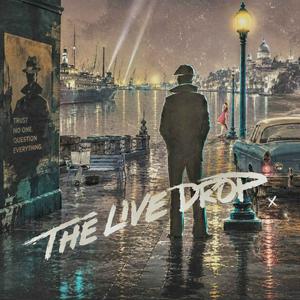
The Live Drop is a HUMINT experiment — long-form conversations with intelligence professionals, diplomats, historians, authors, and analysts from around the world who think seriously about information collection, espionage, geopolitics, and national security. Hosted by former Army officer and actor Mark Valley. Hosted on Acast. See acast.com/privacy for more information.
Podcast-WebsiteHöre The Live Drop, Geschichten aus der Geschichte und viele andere Podcasts aus aller Welt mit der radio.at-App
Hol dir die kostenlose radio.at App
- Sender und Podcasts favorisieren
- Streamen via Wifi oder Bluetooth
- Unterstützt Carplay & Android Auto
- viele weitere App Funktionen
Hol dir die kostenlose radio.at App
- Sender und Podcasts favorisieren
- Streamen via Wifi oder Bluetooth
- Unterstützt Carplay & Android Auto
- viele weitere App Funktionen
The Live Drop
Code scannen,
App laden,
loshören.
App laden,
loshören.
 Österreich