
Höre diesen Podcast kostenlos in der App: Kostenlos im App Store laden
radio.at
Sleeptimer
Sender speichern
342 Episoden
Episode 339 - Stop Chasing New Amazon Customers. Get Your Buyers to Come Back.
20.10.2026 | 20 Min.Andrew, CEO and founder of Swapt, returns to the podcast to discuss their major pivot from review generation to solving one of e-commerce's biggest challenges: post-purchase customer retention on Amazon and TikTok Shop.
Amazon is notoriously opaque, making it incredibly difficult for sellers to capture bottom-of-funnel data and build lasting direct relationships. While sellers can spend unlimited funds at the top of the funnel on ads, driving repeat purchases and increasing Customer Lifetime Value (LTV) usually requires changing customer behavior. This is a massive hurdle when shoppers prefer the convenience of native marketplaces.
Andrew breaks down how Swapt utilizes strategic product inserts and single-use discount codes to capture customer emails and incentivize repurchases directly where the customer wants to buy. He shares insights on increasing Average Order Value (AOV), navigating email life cycles for Amazon-native brands, and leveraging the 4 specific levers needed to achieve product insert QR scan rates up to 35%.
Episode Notes:
00:00 - Intro & The Swapt Pivot
01:56 - The Black Box: Capturing Post-Purchase Data on Amazon
05:18 - Why You Shouldn't Force Shoppers Off-Platform
07:28 - How Single-Use QR Codes Drive Direct Amazon Repurchases
08:19 - Increasing AOV with Cart-Size Specific Discounts
09:16 - Why Amazon Sellers Struggle with Customer Life Cycle Emails
10:34 - TikTok Shop: Retaining Customers on an Entertainment Platform
12:47 - Cross-Channel Purchasing Behaviors (Amazon vs. Shopify vs. TikTok)
14:51 - At What Scale Does a Retention Strategy Make Sense?
16:49 - The Necessity of Product Inserts
17:20 - 4 Levers to Hit a 35% QR Scan Rate
Related Post: Best Amazon Seller MCP Servers for Competitor Research, Seller Data, and AI Analytics
How to Reach Andrew:
Website: swaptqr.com
LinkedIn: linkedin.com/in/andrewsm1th
Scott’s Links:
LinkedIn: linkedin.com/in/scott-needham-a8b39813
X: @itsScottNeedham
Instagram: @smartestseller
YouTube: www.youtube.com/@smartestamazonseller2371
Newsletter: https://www.smartscout.com/newsletter-sign-up
Blog: https://www.smartscout.com/blogEpisode 338 - The TikTok Shop Playbook Amazon Sellers Need to Understand
06.10.2026 | 35 Min.Jordan West, Founder of Social Commerce Club, joins Scott to explore how Amazon brands can unlock explosive growth by embracing TikTok Shop and social commerce.
As traditional performance marketing faces attribution decay and rising ad costs, e-commerce brands are navigating a shifting landscape where TikTok Shop provides a closed-loop affiliate ecosystem and a massive off-platform halo effect.
While entry-level sellers struggle by treating creators like ad networks or expecting instant channel profitability, established brands are leveraging coordinated "blitz" product launches, in-person creator hub days, and authentic founder involvement to drive multi-channel revenue.
To build a defensible brand across Amazon and TikTok Shop, Jordan breaks down why brands must look beyond myopic channel P&Ls, how to structure high-impact creator contests, and the necessity of unscalable, human-first creator relations.
Episode Notes:
00:00 - The TikTok Shop Frontier
01:15 - Jordan West’s Transition to Social Commerce
02:46 - Affiliate Win-Win: Why Retainers Are Dead
05:05 - Closed-Loop Attribution & TikTok’s Halo Effect
07:10 - Real Scale: 5x Growth & Offline Sales Impact
08:53 - Mindset Shift: Top-of-Funnel vs. Immediate Profit
12:22 - How TikTok Shop Turns Products Into Brands
13:32 - Launch Mechanics: The "Blitz" Strategy
16:43 - Creator Relations & Hosting In-Person "Hub Days"
19:58 - Authentic Founders & Cult-Leader Branding
23:38 - Leveraging Creator Events for Maximum ROI
25:33 - Structuring High-Impact Creator Contests
28:37 - The Unscalable Factor: Personal Outreaches & Voice Memos
31:20 - The Power of In-Person E-Commerce Connections
33:19 - Amazon’s New Multi-Channel Centralization
Related Post: The Halo Effect Is Real, Measurable, and Immeasurable
How to Reach Jordan:
Website: socialcommerceclub.com | jordanwest.ca
LinkedIn: linkedin.com/in/jordan-west-marketer
Scott’s Links:
LinkedIn: linkedin.com/in/scott-needham-a8b39813
X: @itsScottNeedham
Instagram: @smartestseller
YouTube: www.youtube.com/@smartestamazonseller2371
Newsletter: https://www.smartscout.com/newsletter-sign-up
Blog: https://www.smartscout.com/blogEpisode 337 - Should You Switch From Amazon 3P to 1P?
30.09.2026 | 23 Min.Earl Pardo, Business Development Independent Rep @ Flat River Group, joins the podcast to explore the emerging reverse trend of Amazon sellers moving from 3P (Third-Party) back to 1P (Vendor Central / First-Party) distribution models.
As independent sellers face increasing Amazon fee structures, fulfillment fee creep, storage penalties, and complex cash flow cycles, many brands are leveraging 1P distributor relationships to pull cash flow forward and offload operational headaches.
While entry-level sellers struggle with unpredictable net margins and managing dozens of hidden FBA costs, established 3P brands are using 1P distributor networks like Flat River Group to gain algorithm advantages, lock in predictable payouts, and eliminate ad management and storage expenses.
To build a simplified and scalable business model, Earl breaks down how 1P distributors provide access to Amazon AVS support, manage drop-shipping across 30+ e-commerce retailers, and mitigate Annual Vendor Negotiation (AVN) pressure for mid-market brands.
Episode Notes:
00:00 - Intro & The 3P to 1P Shift
01:40 - Chinese Vendor Account Crackdowns
02:08 - 1P Benefits: Algorithm & Cash Flow
03:42 - Earl’s Story & Amazon Fee Creep
05:54 - Flat River Group’s $250M+ 1P Model
07:45 - Why Amazon Axed Chinese Distributors
09:20 - Amazon’s Push Toward 1P Distributors
10:24 - Maintaining Brand & Price Control
11:38 - Hands-Off Ads & Operations
12:25 - 3P vs. 1P Profit Math
16:43 - Testing 1P With a SKU Subset
17:45 - Bypassing Annual Vendor Negotiations
20:08 - Preventing Out-of-Stocks
22:36 - Shopify & 3PL Cost Savings
22:47 - What’s Next for Vendor Models
Related Post: Top 10 Largest Amazon Vendor Brands (2026 Data)
How to Reach Earl:
Website: flatrivergroup.com
LinkedIn: linkedin.com/in/earl-pardo-0a45b931a
Scott’s Links:
LinkedIn: linkedin.com/in/scott-needham-a8b39813
X: @itsScottNeedham
Instagram: @smartestseller
YouTube: www.youtube.com/@smartestamazonseller2371
Newsletter: https://www.smartscout.com/newsletter-sign-up
Blog: https://www.smartscout.com/blogEpisode 336 - The Future of Beauty E-Commerce with Laura Meyer
22.09.2026 | 34 Min.Laura Meyer, Founder and CEO of Envision Horizons, joins the podcast to explore how beauty became the #1 growth driver across Amazon, TikTok Shop, and social commerce.
As consumer attention shifts toward visual education and short-form video, beauty brands are navigating a complex landscape defined by strict platform programs, affiliate marketing flywheels, and private equity pressure.
While entry-level sellers struggle with margin compression and trend chasing, established brands are leveraging AI agents, Amazon Creator Connections, and LLM-driven consumer research to validate product claims and boost conversion.
To build a defensible brand on Amazon and TikTok Shop, Laura breaks down the necessity of brand gating through Amazon's Premium Beauty program, managing data integrity for specific product use cases, and prioritizing high-impact conversion creative over traditional ad spend.
Episode Notes:
00:00 - Introduction to Laura Meyer and Envision Horizons
01:48 - Why Beauty: High Margins, Repeat Purchases, and Consumables
02:29 - Laura’s Days at Amazon Media Group in 2015
06:09 - Gating Amazon Brands: The Premium & Indie Beauty Programs
09:26 - Private Equity's Impact on Beauty & High Growth Expectations
12:26 - The Social Selling Flywheel: 42% of Amazon Purchases Start Off-Platform
13:43 - How Envision Horizons Runs Amazon Creator Connections & Affiliates
15:32 - TikTok Shop vs. Amazon Affiliate Programs
17:31 - Product Innovation vs. Message Delivery Trends in 2026
19:37 - Mapping Product Data to Trending Keywords & FTC Compliance Risks
24:46 - How AI and LLMs (ChatGPT) Influence Consumer Brand Switching
25:42 - Can You Launch an Amazon-Native Beauty Brand From Scratch Today?
28:31 - Subcategory Breakdown: Skincare vs. Haircare vs. Color Cosmetics
30:23 - Transactional vs. Aesthetic Design: Optimizing Amazon PDP Creative
33:38 - Weekly Horizons Newsletter & How to Connect with Laura
Related Post: AI Visibility for Amazon Products: Are ChatGPT and Rufus Recommending You?
How to Reach Laura:
Website: envisionhorizons.com
Newsletter: The Weekly Horizons
LinkedIn: linkedin.com/in/lauracatherinemeyer
Scott’s Links:
LinkedIn: linkedin.com/in/scott-needham-a8b39813
X: @itsScottNeedham
Instagram: @smartestseller
YouTube: www.youtube.com/@smartestamazonseller2371
Newsletter: https://www.smartscout.com/newsletter-sign-up
Blog: https://www.smartscout.com/blogEpisode 335 - Stop Guessing: The Data Behind Amazon Images That Convert
01.09.2026 | 28 Min.Daniela from Mindful Goods joins the podcast to explore how New York State’s new AI image regulations are impacting Amazon sellers and forcing brands to adopt greater creative transparency. As consumer sensitivity to "AI slop" grows, brands are encountering false negatives where overly polished human photography is mistaken for AI, making human split-testing and data-driven creative execution essential.
While nimble solo founders leverage one-click AI tools for quick design wins, established 7-to-9-figure brands are using AI strategically to scale catalog design templates across thousands of SKUs and bridge visual gaps in costly photoshoots.
To maximize conversion and overcome these creative challenges, Daniela outlines the importance of single-message visual hierarchy and leveraging internal databases to pre-test Main Images and A+ Content before launching.
Episode Notes:
00:00 - Introduction to Daniela and Mindful Goods
01:02 - New York State AI Regulations & Amazon Disclaimers
03:18 - Compliance Fines & The Shift Toward Creative Transparency
04:49 - How AI Raised the Creative Baseline for Entry-Level Sellers
06:34 - Consumer Sensitivity & "Over-Perfection" False Negatives
09:06 - How Enterprise Brands Strategically Use AI vs. Solo Founders
11:59 - Scaling Massive SKU Catalogs from Months Down to Minutes
13:38 - Leveraging 1,000+ PickFu Split Tests for Creative Strategy
17:38 - Live Amazon Listing Audit: Buzzed Honey & Premium A+ Content
22:55 - The #2 Factor in Amazon Conversion
26:45 - Daniela’s Design Proof Substack & Free Split-Testing Playbooks
Related Post: AI Visibility for Amazon Products: Are ChatGPT and Rufus Recommending You?
How to Reach Daniela:
Substack: Design Proof
Website: mindfulgoods.co
LinkedIn: linkedin.com/in/dbolzmann
Scott’s Links:
LinkedIn: linkedin.com/in/scott-needham-a8b39813
X: @itsScottNeedham
Instagram: @smartestseller
YouTube: www.youtube.com/@smartestamazonseller2371
Newsletter: https://www.smartscout.com/newsletter-sign-up
Blog: https://www.smartscout.com/blog
Weitere Technologie Podcasts






Trending Technologie Podcasts

















Über The Smartest Amazon Seller
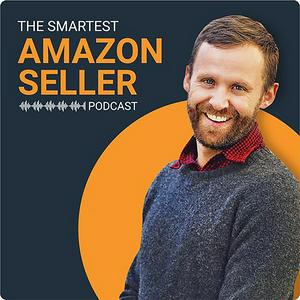
Scott Needham is the Founder of SmartScout. An Amazon software developer for 10 years his company BuyBoxer has done over $300m in sales on Amazon. Scott has accumulated a deep knowledge about selling product online, and in the podcast he shares his knowledge with you to help you become a better Amazon seller.
Podcast-WebsiteHöre The Smartest Amazon Seller, KREWKAST und viele andere Podcasts aus aller Welt mit der radio.at-App
Hol dir die kostenlose radio.at App
- Sender und Podcasts favorisieren
- Streamen via Wifi oder Bluetooth
- Unterstützt Carplay & Android Auto
- viele weitere App Funktionen
Hol dir die kostenlose radio.at App
- Sender und Podcasts favorisieren
- Streamen via Wifi oder Bluetooth
- Unterstützt Carplay & Android Auto
- viele weitere App Funktionen
The Smartest Amazon Seller
Code scannen,
App laden,
loshören.
App laden,
loshören.
The Smartest Amazon Seller: Zugehörige Podcasts
 Österreich