
Höre diesen Podcast kostenlos in der App: Kostenlos im App Store laden
radio.at
Sleeptimer
Sender speichern
223 Episoden
Where Did Punctuation Come From?
02.10.2026 | 27 Min.Ever wondered where all our squiggles and dots of modern punctuation come from? Author of On The Mark Florence Hazrat gives us a witty and fascinating insight into how punctuation began and has evolved through the centuries, continuing to adapt and change as our methods of writing and communicating become increasingly short and pithy as we do so much online.
Produced in partnership with the Open University by Maggie Ayre for BBC Audio BristolWord of Mouth
01.10.2026 | 27 Min.Language and how we use it. The history of punctuationBouncer George Bass on de-escalating conflict
24.09.2026 | 27 Min.Michael Rosen talks to security guard George Bass, the author of What The Bouncer Saw: Life on the Front Line of the Security Business. George says words and tone are his riot shield. He shares what he's learned about how to talk and joke people down from anti-social behaviour and also how to communicate in code on the radio.
Produced for BBC Audio Bristol by Beth O'Dea, in partnership with the Open University
Subscribe to the Word of Mouth podcast and never miss an episode: https://www.bbc.co.uk/sounds/brand/b006qtnzVoices of Manchester
20.09.2026 | 27 Min.Rob Drummond, Professor of Sociolinguistics at Manchester Metropolitan University, talks to Michael about the ways people talk in Greater Manchester. They discuss which areas are seen as more 'Lancashire' or more 'Manc' in their speech, and what is known as the 'happy vowel.' Plus they dissect the accents of celebrities such as the Gallagher Brothers, Gary Neville and Sara Cox.
Rob's project can be found here: https://explore.manchestervoices.org/
Produced for BBC Audio Bristol by Sally Heaven, in partnership with the Open UniversityBias against women's voices
10.09.2026 | 28 Min.Jane Setter talks to Michael Rosen about negative attitudes to vocal traits seen as exclusively female, from vocal fry to higher pitch. Can men really not talk in a sexy voice? And why did Margaret Thatcher change hers?
Produced for BBC Audio Bristol by Sally Heaven, in partnership with the Open University
Weitere Gesellschaft und Kultur Podcasts









Trending Gesellschaft und Kultur Podcasts









Über Word of Mouth
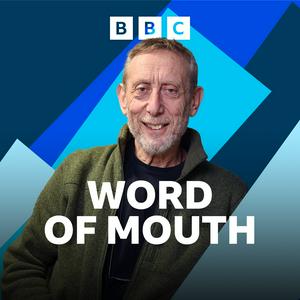
Series exploring the world of words and the ways in which we use them
Podcast-WebsiteHöre Word of Mouth, Hotel Matze und viele andere Podcasts aus aller Welt mit der radio.at-App
Hol dir die kostenlose radio.at App
- Sender und Podcasts favorisieren
- Streamen via Wifi oder Bluetooth
- Unterstützt Carplay & Android Auto
- viele weitere App Funktionen
Hol dir die kostenlose radio.at App
- Sender und Podcasts favorisieren
- Streamen via Wifi oder Bluetooth
- Unterstützt Carplay & Android Auto
- viele weitere App Funktionen
Word of Mouth
Code scannen,
App laden,
loshören.
App laden,
loshören.
Word of Mouth: Zugehörige Podcasts
 Österreich