

Höre diesen Podcast kostenlos in der App: Kostenlos im App Store laden
radio.at
Sleeptimer
Sender speichern
162 Episoden
Inside The Fight For The House
15.10.2026 | 18 Min.This is a free preview of a paid episode. To hear more, visit www.gdpolitics.com
Heads up: The GD POLITICS merch store is back for election season! We’ve got super comfy “Good Data, Bad Data, Not Data” T-shirts, baseball caps, and totes. Paid subscribers can find a discount code in the paid-subscriber chat!
The full episode is available to paid subscribers. Once you become a paid subscriber, you can connect your account to your preferred podcast player here.
Democrats need to gain just three seats to take control of the House. But with a favorable national environment opening up opportunities in Republican territory, the bigger question is probably how far they can go and what might limit their gains.
On today’s episode, Cook Political Report’s Erin Covey and Inside Elections’ Jacob Rubashkin join me to tour the House battlefield. They explain what district-level polling reveals about the election, why some traditionally Republican areas are seeing particularly large shifts toward Democrats, and how campaign spending is keeping vulnerable Republicans competitive.
We also debate whether individual candidates can still overcome their party’s political fortunes. From Republican Brian Fitzpatrick’s durability in Pennsylvania to Democrat Jamie Ager’s campaign in western North Carolina, local reputations and issues offer a more complicated picture than national polling alone can provide.
Erin and Jacob also dive into the differences between expert race ratings and statistical forecasts, the campaign messages dominating the airwaves, and the lasting consequences of gerrymandering. And they consider what the size of a Democratic majority would mean for Hakeem Jeffries and governance during the final two years of Trump’s presidency.Alex Bores Puts The Odds Of AI Doom At 20%
12.10.2026 | 57 Min.If you thought there was a 20 percent chance that artificial intelligence could wipe out humanity, what would you do about it? That’s my guest’s estimate of the risk if we continue on our current trajectory with AI. And he’s trying to write the laws that could change it.
Alex Bores is a Democratic New York State assemblyman and the sponsor of the RAISE Act, which requires major AI developers to publish safety plans and report certain critical incidents. He’s also the co-founder of Who Decides, an organization working to shape Democrats’ AI agenda ahead of 2028.
On today’s podcast, we discuss what taking these risks seriously actually means. Should the government have to approve AI models before they’re released to the public? Should we pause the development of more powerful AI altogether? And what happens if slowing down rattles the economy or gives China a leg up?
I also press him on why New York Governor Kathy Hochul moved to water down his AI legislation, and what that experience tells us about the obstacles to regulating AI more broadly.
And we get into partisan politics. If Democratic and Republican voters share many concerns about AI, could making it a partisan issue be counterproductive? And either way, how might AI reshape the politics of 2028?
This is a public episode. If you'd like to discuss this with other subscribers or get access to bonus episodes, visit www.gdpolitics.com/subscribeThe Fight For The Right After Trump
08.10.2026 | 26 Min.This is a free preview of a paid episode. To hear more, visit www.gdpolitics.com
Heads up: The GD POLITICS merch store is back for election season! We’ve got super comfy “Good Data, Bad Data, Not Data” T-shirts, baseball caps, and totes. Paid subscribers can find a discount code in the paid-subscriber chat!
The full episode is available to paid subscribers. Once you become a paid subscriber, you can connect your account to your preferred podcast player here.
Fights between the Left and the Democratic establishment have been front and center this election cycle, but it’d be a mistake to conclude that it’s mainly Democrats whose looks like a question mark.
Trump has kept an often discordant coalition together through force of personality, but time is running out on that dynamic. He’s term-limited and 20 points underwater with the American public. And his decisions on everything from Iran and the Epstein files to tariffs and AI have created cracks that threaten to break wide open.
JD Vance is the heir apparent, but without Trump, will he be able to keep it all together? And beyond a personal brand, is there a worldview that can unite Republicans?
Before Trump, there was the three-legged stool of free markets, traditional values, and national security hawkishness. In the Trump era, philosophies like America First, national conservatism, and common good conservatism have been bandied about under the umbrella of the “New Right.”
Amid it all, it seems like there’s no going back to the principles that guided the GOP during the second half of the 20th century. But if not those principles, then what? And how fierce will the fight be?
That’s what I’m talking about today with Stephanie Slade, a senior editor at the libertarian magazine Reason and the author of the new book Fusionism: Liberty, Virtue, and the Future of the American Right.Your Midterms Questions, Debated Over Drinks
07.10.2026 | 17 Min.This is a free preview of a paid episode. To hear more, visit www.gdpolitics.com
The full episode is available to paid subscribers. Once you become a paid subscriber, you can connect your account to your preferred podcast player here.
What’s the next swing state: Texas, Kansas or Minnesota? And how much should we trust the polls pointing toward a big blue wave this November?
Mary Radcliffe and Nathaniel Rakich joined me for our first GD POLITICS paid-sunscriber happy hour to debate the changing electoral map and answer your questions about the midterms. We covered everything from the Senate battlegrounds, to whether campaign ads can backfire, and when we might know who controls Congress.
We also took a few detours into bourbon spreadsheets, Brené Brown, politician crushes and life after FiveThirtyEight. It was a lot of fun catching up with friends and spending the evening with you all!What Do America’s Socialists Want?
05.10.2026 | 50 Min.Heads up: We’re hosting our first-ever virtual happy hour for paid subscribers on Tuesday, October 6, at 8 p.m. ET at gdpolitics.com. Special guests Mary Radcliffe and Nathaniel Rakich will join me to answer your questions live while we sip an adult beverage or two. To join the fun, become a paid subscriber here. I look forward to seeing you there!
Today, we’re talking about socialism. Democrats are heading into the 2026 midterms after a “hot socialist summer,” in which Democratic Socialists and DSA-aligned candidates had their best primary season since Bernie Sanders popularized the organization in 2016.
There are two DSA members in the House today: Alexandria Ocasio-Cortez and Rashida Tlaib. At the start of the next Congress, there could be seven.
They’ve also won state and local primaries. And there are roughly a dozen other candidates — including Abdul El-Sayed in Michigan, Troy Jackson in Maine, and Brad Lander in New York — who are not Democratic Socialists in name but are strongly aligned with the movement.
It’s not quite the 45 Tea Party-backed congressional candidates who won in the 2010 midterms, but the dynamic isn’t so different: An insurgent ideological movement, fed up with the status quo, is challenging the powers that be in one of America’s two major parties.
So where did the movement come from? What does it want? And can it coexist with the rest of the Democratic Party, or is it seeking a MAGA-style takeover?
In this episode, I dig into these questions and more with Charles Homans, a national politics reporter for The New York Times Magazine. He recently reported the article “Moderates See Socialists as a Threat to the Democratic Party. Socialists Agree,” for which he spoke with DSA candidates, organizers, and members in New York, Chicago, Michigan, and Wisconsin.
This is a public episode. If you'd like to discuss this with other subscribers or get access to bonus episodes, visit www.gdpolitics.com/subscribe
Weitere Nachrichten Podcasts










Trending Nachrichten Podcasts

















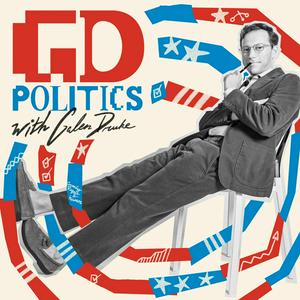
Über GD POLITICS
Making sense of politics and the world with curiosity, rigor, and a sense of humor. www.gdpolitics.com
Podcast-WebsiteHöre GD POLITICS, Thema des Tages und viele andere Podcasts aus aller Welt mit der radio.at-App
Hol dir die kostenlose radio.at App
- Sender und Podcasts favorisieren
- Streamen via Wifi oder Bluetooth
- Unterstützt Carplay & Android Auto
- viele weitere App Funktionen
Hol dir die kostenlose radio.at App
- Sender und Podcasts favorisieren
- Streamen via Wifi oder Bluetooth
- Unterstützt Carplay & Android Auto
- viele weitere App Funktionen

GD POLITICS
Code scannen,
App laden,
loshören.
App laden,
loshören.
GD POLITICS: Zugehörige Podcasts
 Österreich