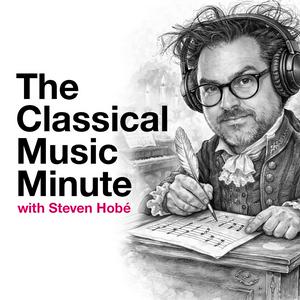
PodcastsBildungThe Classical Music Minute

The Classical Music Minute

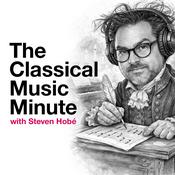
Steven Hobé, Composer & Host
The Classical Music Minute
Neueste Episode

276 Episoden

  • The Classical Music Minute

    Why Did Beethoven Go Deaf? | The Classical Music Minute

    26.05.2026 | 1 Min.
    Send us Fan Mail
    Why did Beethoven lose his hearing?
    In this episode of The Classical Music Minute, we explore one of the most famous mysteries in music history. Ludwig van Beethoven began experiencing hearing problems in his late twenties, including ringing in the ears and difficulty hearing high sounds and distant voices.
    By 1802, he knew the condition was serious and progressive. During a stay in Heiligenstadt, he wrote the deeply personal Heiligenstadt Testament, describing the distress caused by his hearing loss.
    Although many possible causes have been suggested, including illness, infection, autoimmune disease, and lead exposure, the exact reason for Beethoven’s deafness remains uncertain.
    What makes his story extraordinary is that he continued to compose some of his most powerful music even as his hearing declined.
    In just sixty seconds, discover how Beethoven’s deafness became part of one of the most remarkable creative stories in classical music.
    Fun Fact
    Beethoven’s Ninth Symphony premiered in 1824, when he was profoundly deaf. According to one famous account, he could not hear the audience applauding and had to be turned around to see their reaction.
    About The Classical Music Minute
    The Classical Music Minute is a short podcast exploring fascinating stories, quirky history, and surprising facts from the world of classical music—all in about sixty seconds.
    Each episode offers a quick and entertaining glimpse into composers, masterpieces, musical traditions, and the curious moments that shaped music history.
    You can also read the written versions of these episodes on Substack, where they’re published as short articles delivered directly to subscribers.
    About Steven, Host
    Steven Hobé is a Canadian composer and actor based in Toronto and a member of the Canadian League of Composers. He is the creator and host of The Classical Music Minute, a series devoted to making classical music history engaging, surprising, and accessible.
    Topics Covered
    Beethoven deafness, why did Beethoven go deaf, Beethoven hearing loss, Ludwig van Beethoven, Heiligenstadt Testament, Beethoven Ninth Symphony, Beethoven biography, classical music history, composers with hearing loss, Beethoven facts

    Join me on Substack
  • The Classical Music Minute

    Why Is Pachelbel’s Canon Played at So Many Weddings? | The Classical Music Minute

    19.05.2026 | 1 Min.
    Send us Fan Mail
    Why has Pachelbel’s Canon in D become one of the most popular wedding pieces of all time?
    In this episode of The Classical Music Minute, we explore how a Baroque composition written centuries ago became closely associated with modern wedding ceremonies.
    Known for its flowing melodies and repeating harmonic progression, Canon in D creates a calm and elegant atmosphere that naturally suits processions and ceremonial moments. Its adaptable instrumentation has also helped make it a favourite for string quartets, organists, pianists, and wedding ensembles of all kinds.
    Although the piece was not originally composed for weddings, its popularity grew rapidly during the twentieth century through recordings, films, and widely broadcast ceremonies.
    In just sixty seconds, discover why this gentle Baroque masterpiece continues to accompany couples down the aisle around the world.
    Fun Fact
    The famous chord progression in Canon in D has become so recognizable that variations of it have appeared in countless pop songs over the years, leading some musicians to jokingly call it “the four-chord ancestor” of modern music.
    About The Classical Music Minute
    The Classical Music Minute is a short podcast exploring fascinating stories, quirky history, and surprising facts from the world of classical music—all in about sixty seconds.
    Each episode offers a quick and entertaining glimpse into composers, masterpieces, musical traditions, and the curious moments that shaped music history.
    You can also read the written versions of these episodes on Substack, where they’re published as short articles delivered directly to subscribers.
    About Steven, Host
    Steven Hobé is a Canadian composer and actor based in Toronto and a member of the Canadian League of Composers. He is the creator and host of The Classical Music Minute, a series devoted to making classical music history engaging, surprising, and accessible.
    Topics Covered
    Canon in D, Pachelbel Canon in D, wedding classical music, why Canon in D weddings, Johann Pachelbel, famous wedding music, Baroque music, classical wedding songs, Canon in D history, wedding procession music

    Join me on Substack
  • The Classical Music Minute

    Why Is Vivaldi’s Four Seasons So Popular? | The Classical Music Minute

    12.05.2026 | 1 Min.
    Send us Fan Mail
    Why has The Four Seasons remained one of the world’s most recognizable pieces of classical music?
    In this episode of The Classical Music Minute, we explore the enduring popularity of Antonio Vivaldi’s famous set of violin concertos. Written in the early eighteenth century, The Four Seasons uses music to depict scenes from nature, including birdsong, storms, flowing water, hunting scenes, and winter winds.
    This approach, known as program music, helped make the work vivid and accessible to audiences. Combined with energetic rhythms, memorable melodies, and dazzling violin writing, the music continues to captivate listeners centuries after it was composed.
    Today, The Four Seasons remains a staple of concert halls and one of the most frequently used classical works in film and television.
    In just sixty seconds, discover why Vivaldi’s musical portrait of the seasons still resonates today.
    Fun Fact
    Each concerto in The Four Seasons was originally published alongside a sonnet—possibly written by Vivaldi himself—describing the scenes and imagery the music was intended to portray.
    About The Classical Music Minute
    The Classical Music Minute is a short podcast exploring fascinating stories, quirky history, and surprising facts from the world of classical music—all in about sixty seconds.
    Each episode offers a quick and entertaining glimpse into composers, masterpieces, musical traditions, and the curious moments that shaped music history.
    You can also read the written versions of these episodes on Substack, where they’re published as short articles delivered directly to subscribers.
    About Steven, Host
    Steven Hobé is a Canadian composer and actor based in Toronto and a member of the Canadian League of Composers. He is the creator and host of The Classical Music Minute, a series devoted to making classical music history engaging, surprising, and accessible.
    Topics Covered
    Vivaldi Four Seasons, why is Four Seasons popular, Antonio Vivaldi, Four Seasons explained, program music, Baroque violin music, famous violin concertos, classical music for beginners, Four Seasons history, Vivaldi masterpiece

    Join me on Substack
  • The Classical Music Minute

    Why Is Bach Called the Father of Classical Music? | The Classical Music Minute

    04.05.2026 | 1 Min.
    Send us Fan Mail
    Why Is Bach Called the Father of Classical Music?
    Why is Johann Sebastian Bach often referred to as the “Father of Classical Music”?
    In this episode of The Classical Music Minute, we explore the lasting influence of one of history’s greatest composers. Although Bach lived during the Baroque period, his work laid the foundation for much of the music that followed.
    Renowned for his mastery of counterpoint, Bach demonstrated how multiple independent musical lines could work together in harmony. His compositions, including The Well-Tempered Clavier and The Art of Fugue, are still studied today for their structural brilliance and expressive depth.
    Later composers such as Mozart, Beethoven, and Brahms learned from Bach’s techniques, helping to carry his influence into the Classical and Romantic eras.
    In just sixty seconds, discover why Bach’s music continues to shape the sound of classical music centuries later.
    Fun Fact
    Bach’s music was largely forgotten after his death in 1750 until it was revived decades later—most notably when Felix Mendelssohn conducted a famous performance of the St. Matthew Passion in 1829, sparking renewed interest in his work.
    About The Classical Music Minute
    The Classical Music Minute is a short podcast exploring fascinating stories, quirky history, and surprising facts from the world of classical music—all in about sixty seconds.
    Each episode offers a quick and entertaining glimpse into composers, masterpieces, musical traditions, and the curious moments that shaped music history.
    You can also read the written versions of these episodes on Substack, where they’re published as short articles delivered directly to subscribers.
    About Steven, Host
    Steven Hobé is a Canadian composer and actor based in Toronto and a member of the Canadian League of Composers. He is the creator and host of The Classical Music Minute, a series devoted to making classical music history engaging, surprising, and accessible.

    Join me on Substack

  • The Classical Music Minute

    What Does “Opus” Mean in Classical Music? | The Classical Music Minute

    27.04.2026 | 1 Min.
    Send us Fan Mail
    What Does “Opus” Mean in Classical Music?
    What does “opus” mean when you see it in a classical music title?
    In this episode of The Classical Music Minute, we explore the meaning behind this common musical term. Derived from the Latin word for “work,” opus numbers are used to catalogue and organize a composer’s compositions.
    Typically assigned in order of publication rather than composition, opus numbers help distinguish one piece from another—especially when composers wrote many works in the same genre.
    For example, Beethoven’s Moonlight Sonata is listed as Op. 27, No. 2, indicating its place within a published set of works.
    While not all composers used opus numbers consistently, the term remains a helpful way to navigate the vast world of classical music.
    In just sixty seconds, discover how one simple word helps organize centuries of musical creativity.
    Fun Fact
    Some composers, including Frédéric Chopin, were very selective about which works received opus numbers—often assigning them only to pieces they felt were worthy of publication, leaving many compositions unpublished or without a number.
    About The Classical Music Minute
    The Classical Music Minute is a short podcast exploring fascinating stories, quirky history, and surprising facts from the world of classical music—all in about sixty seconds.
    Each episode offers a quick and entertaining glimpse into composers, masterpieces, musical traditions, and the curious moments that shaped music history.
    You can also read the written versions of these episodes on Substack, where they’re published as short articles delivered directly to subscribers.
    About Steven, Host
    Steven Hobé is a Canadian composer and actor based in Toronto and a member of the Canadian League of Composers. He is the creator and host of The Classical Music Minute, a series devoted to making classical music history engaging, surprising, and accessible.

    Join me on Substack
Weitere Bildung Podcasts
Über The Classical Music Minute
The Classical Music Minute is a short, engaging classical music podcast that explores the stories, composers, and curious traditions behind the world’s greatest music.Ever wondered who the Florentine Camerata were? Where the conductor’s baton came from? Or what the difference is between opera buffa and opera seria?Hosted by Canadian composer and storyteller Steven Hobé, each episode offers a quick and entertaining journey through classical music history, uncovering fascinating facts about composers, famous works, opera, orchestras, and musical traditions.Whether you’re a lifelong music lover or simply curious about classical music, hop around music history with Steven—one musical minute at a time.
Podcast-Website

Höre The Classical Music Minute, The Mel Robbins Podcast und viele andere Podcasts aus aller Welt mit der radio.at-App

Hol dir die kostenlose radio.at App

  • Sender und Podcasts favorisieren
  • Streamen via Wifi oder Bluetooth
  • Unterstützt Carplay & Android Auto
  • viele weitere App Funktionen
Rechtliches
Social
v8.9.4| © 2007-2026 radio.de GmbH
Generated: 5/31/2026 - 10:17:34 AM