

Höre diesen Podcast kostenlos in der App: Kostenlos im App Store laden
radio.at
Sleeptimer
Sender speichern
186 Episoden
The League of Nations and International Law
24.08.2026 | 52 Min.Editors Karin van Leeuwen and Morten Rasmussen explain how their Cambridge Handbook uses deep archival research across dozens of collections and brings together international contributors to reveal how the League of Nations used legal techniques, institutions, and networks to shape an incipient form of global governance.
The episode highlights key findings — the League’s legal section and court experiments, tensions between sovereign equality and imperial hierarchies, and case studies like Upper Silesia and the Manchurian crisis — and argues the handbook reframes the League as central to the development of international law and institutions, while noting the limits of ‘‘peace through law".
Resources: Ask a Librarian! Ask an Archivist!
Ikonomou, H. A. et al. (eds.) (2026) The Cambridge Handbook of the League of Nations and International Law. 1st ed. Cambridge: Cambridge University Press.
Available via Global Search
Where to listen to this episode
Apple podcasts: https://podcasts.apple.com/us/podcast/the-next-page/id1469021154
Spotify: https://open.spotify.com/show/10fp8ROoVdve0el88KyFLy
YouTube: https://youtu.be/
Content
Guests: Karin van Leeuwen
Morten Rasmussen
Host: Amy Smith
Recorded & produced at the United Nations Library & Archives GenevaDiplomacy's Keystone: International Law for Diplomats
07.08.2026 | 20 Min.Mario Oyarzábal, Member of the International Law Commission and the Legal Advisor to the Argentine Ministry of Foreign Affairs, discusses the new book International Law for Diplomats, a concise, practitioner-focused guide written to help diplomats—lawyers and non-lawyers alike—handle real-world issues like treaty negotiation, state immunities, use of force, human rights, and dispute settlement.
The episode explains the book’s structure around systemic issues, current issues, and practical craft, its accessible style, and the UN Legal Counsel’s foreword. Its central message is that international law is not a specialist domain but diplomacy’s keystone, essential for advancing state interests and reinforcing the rule of law.
Mario Oyarzábal reminds us, "that international law is a toolbox for cooperation for resolving disputes peacefully, for accountability."
Resources: Ask a Librarian! Ask an Archivist!
International Law for Diplomats
Available via Global Search
Where to listen to this episode
Apple podcasts: https://podcasts.apple.com/us/podcast/the-next-page/id1469021154
Spotify: https://open.spotify.com/show/10fp8ROoVdve0el88KyFLy
YouTube: https://youtu.be/
Content
Guest:
Ambassador Mario Oyarzábal
Host: Amy Smith
Recorded & produced at the United Nations Library & Archives GenevaAIxMultilateralism: Down to Earth — Why AI Depends on Planetary Intelligence, with Martín Tironi Rodó
26.06.2026 | 28 Min.This is AI x Multilateralism, a playlist of conversations at the UN Library & Archives Geneva where we’re joined by experts who help us unpack the many ideas and issues at the nexus of AI and international cooperation.
The environmental impact of AI systems is becoming clearer and increasingly discussed. But what if we went beyond this to look at how the success of AI is dependent on the earth’s resources? In this episode we are joined by Martín Tironi Rodó, Director of FAIR, the Futures of Artificial Intelligence Research Nucleus, and the sociologist of Pontificia Universidad Católica de Chile. He shares why artificial intelligence is deeply interconnected with planetary intelligence, and calls for more research, agency and leadership across Chile and Latin America in shaping the future of AI.
Resources:
Learn about the Futures of Artificial Intelligence Research (FAIR) Nucleus
Discover the Conceptual Cartographies of AI
Explore the Hybrid Ecologies Exhibition
Discover the exhibition Bajo nuestros pies: The Rare Earths of AI
Consult Martin's work and research publications
Production:
Guest: Martín Tironi Rodó
Host, production and editing: Natalie Alexander Julien
Podcast Music credits:
Music from #Uppbeat (free for Creators!):
https://uppbeat.io/t/img/sequence
License code: AVHFBHYLV8MCYE1CDemocracy, Trust and Emotions in the History of Global Governance
12.06.2026 | 50 Min.In this episode we explore some of the emotional and psychological life of international governance.
Professor Daniel Laqua, Professor Dan Gorman and Dr. Anne-Isabelle Richard talk about GLO, a transatlantic research project examining how civil society, activists, and NGOs have campaigned to build, shape, reform or put an end to international organizations from the early 20th century to the early 2000s.
They discuss findings from the project about emotional experiences such as love, hate, trust, and sense of belonging in this context, and consider the way people relate to and through international institutions through psychodynamic concepts of projection and transference. Listen to examples from the League of Nations, United Nations Associations, Jubilee 2000, and the Council of Europe. Learn about the archival research methods, and what grassroots diplomacy suggests about the possibilities of change.
Resources: Ask a Librarian! Ask an Archivist!
Global Governance Trust and Democratic Engagement in Past and Present (GLO)
Project website: https://research.northumbria.ac.uk/glo
The podcast was recorded on the occasion of the conference ‘Love, Hate, and the Fate of International Organisations: The Psychological Life of Global Governance (1900–Present)’, held at the Geneva Graduate Institute
https://www.graduateinstitute.ch/communications/events/love-hate-and-fate-international-organisations-psychological-life-global
Where to listen to this episode
Apple podcasts: https://podcasts.apple.com/us/podcast/the-next-page/id1469021154
Spotify: https://open.spotify.com/show/10fp8ROoVdve0el88KyFLy
YouTube: https://youtu.be/b8_gKFMad20
Content
Guests:
Professor Daniel Laqua, Northumbria University, UK.
Professor Dan Gorman, University of Waterloo, Canada.
Dr. Anne-Isabelle Richard, Institute for History, Leiden University.
Host: Amy Smith
Recorded & produced at the United Nations Library & Archives GenevaAIxMultilateralism: Philanthropy's Role in Inclusive, Ethical AI
29.05.2026 | 31 Min.This is AI x Multilateralism, a playlist of conversations at the UN Library & Archives Geneva where we’re joined by experts who help us unpack the many ideas and issues at the nexus of AI and international cooperation.
Should philanthropy be a part of the development and governance of AI? We’re exploring this question with Hubert Halopé and Giuseppe Ugazio, both part of the team at the Artificial Intelligence & Philanthropy Project at the University of Geneva. They explore:
- Why studying the links between AI and philanthropy matter.
- The findings in the project's open source book, The Routledge Handbook of Artificial Intelligence and Philanthropy, including how AI can be used within philanthropy itself, and how philanthropy can impact the inclusive and responsible development and use of AI.
- Why philanthropic organisations should play a key role in AI governance and in the ethical use of AI, and
- How philanthropy can be present in multilateral AI governance mechanisms at the UN.
Resources:
Learn about the Artificial Intelligence & Philanthropy Project at the University of Geneva.
Read The Routledge Handbook of Artificial Intelligence and Philanthropy (open source version), edited by Giuseppe Ugazio & Milos Maricic.
Read Giuseppe's recommended book, The Green and The Blue: Digital Politics in Philosophical Discussion, edited by Luciano Floridi and Jörg Noller.
Production:
Guests: Giuseppe Ugazio and Hubert Halopé
Host, production and editing: Natalie Alexander Julien
Podcast Music credits:
Music from #Uppbeat (free for Creators!):
https://uppbeat.io/t/img/sequence
License code: NXAZUHU70MDKU4E9
#AI #ArtificialIntelligence #Philanthropy #Governance
Weitere Regierung Podcasts
 Wo ist Sanelas Schwester?Dokumentation, Gesellschaft und Kultur, Regierung, True Crime
 Capitalisn'tNachrichten, Regierung, Wirtschaft
 This Means WarRegierung
 Storia Orale della Diplomazia ItalianaRegierung
 Stadt Wien PodcastRegierung
 The Proceedings PodcastRegierung
 The InterviewNachrichten, Politik, Regierung
 Sig det' løgnNachrichten, Politik, Regierung
 Any Questions? and Any Answers?Regierung
Trending Regierung Podcasts
 Edi Rama PodcastRegierung
- Storia Orale della Diplomazia ItalianaRegierung
- Any Questions? and Any Answers?Regierung
 The National Security PodcastBildung, Kommentare, Nachrichten, Politik, Regierung
 Fora do BaralhoRegierung
 Clearer Than TruthGeschichte, Kunst, Regierung, Sozialwissenschaften, Wissenschaft
 V središčuRegierung
 Stadtcafé LinzRegierung
 Gut für Kärnten - der PodcastBildung, Gesellschaft und Kultur, Persönliche Geschichten, Regierung, Selbstverwirklichung
- This Means WarRegierung
- Sig det' løgnNachrichten, Politik, Regierung
 No es el fin del mundoNachrichten, Regierung, Unterhaltungs-News
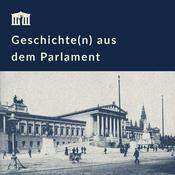 Geschichte(n) aus dem ParlamentRegierung
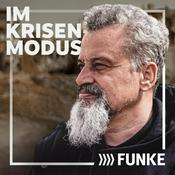 Im KrisenmodusDokumentation, Gesellschaft und Kultur, Nachrichten, Politik, Regierung
 5-4Kommentare, Nachrichten, Regierung
 apolut: TagesdosisGesellschaft und Kultur, Nachrichten, Regierung
- The Proceedings PodcastRegierung
 MacroaggressionsComedy, Nachrichten, Regierung
 Strict ScrutinyGesellschaft und Kultur, Nachrichten, Philosophie, Regierung
 9500. Villach-Podcast. Alles außer Blabla.Nachrichten, Politik, Regierung
Über The Next Page
Are you curious about the power of international cooperation? And how it affects our future? Tune in to the #NextPagePod, the podcast of the UN Library & Archives Geneva, designed to advance the conversation on multilateralism.
Podcast-WebsiteHöre The Next Page, Wo ist Sanelas Schwester? und viele andere Podcasts aus aller Welt mit der radio.at-App
Hol dir die kostenlose radio.at App
- Sender und Podcasts favorisieren
- Streamen via Wifi oder Bluetooth
- Unterstützt Carplay & Android Auto
- viele weitere App Funktionen
Hol dir die kostenlose radio.at App
- Sender und Podcasts favorisieren
- Streamen via Wifi oder Bluetooth
- Unterstützt Carplay & Android Auto
- viele weitere App Funktionen

The Next Page
Code scannen,
App laden,
loshören.
App laden,
loshören.
 Österreich