
Höre diesen Podcast kostenlos in der App: Kostenlos im App Store laden
radio.at
Sleeptimer
Sender speichern
200 Episoden

A Good Productivity System Knows How To have A Bad Day.
18.10.2026 | 14 Min.Are you trying to build a productivity system, or are you building something more resilient? This week, we’re looking at why even the most organised systems break down and how to build resiliency into your own systems.
Links:
Email Me | Twitter | Facebook | Website | Linkedin
You can join the Get Back On Track Course here
Learn more about the Productivity Academy
Get Your Copy Of Your Time, Your Way: Time Well Managed, Life Well Lived
The Working With… Weekly Newsletter
Carl Pullein Learning Centre
Carl’s YouTube Channel
Carl Pullein Coaching Programmes
Subscribe to my Substack
The Working With… Podcast Previous episodes page
Script | 438
Hello, and welcome to episode 438 of the Your Time, Your Way Podcast. A podcast to answer all your questions about productivity, time management, self-development, and goal planning. My name is Carl Pullein, and I am your host of this show.
Whenever I take on a new coaching client, the first steps we take are usually to get things organised so we can clear the decks, so to speak. In other words, in order to build a system, we need clear space on which to build.
It’s the same if you were rebuilding a house. Before you can build the new house, you will need to clear away the old house and start with the ground levelled, while leaving the essentials such as the power, water and gas inputs.
Well, it’s the same with building, or rebuilding, a productivity system; we need to retain the basics—a calendar, a task manager and somewhere to keep information, such as a notes app.
Once we have a clear space to work with, we can go to work on the more important aspects of getting organised and being able to better manage the workload that is coming at us.
This week’s question is about how to do just that. Clear the decks and then build some resiliency into your system so that whenever you have a challenging day, and we all have those, your system does not break down again, but instead supports you.
So, without further ado, let me hand you over to the Mystery Podcast Voice for this week’s question.
This week’s question comes from Kelly. Kelly asks: Hi Carl, how would you go about doing a complete reset of your system? I’ve been trying to stay organised for years and have never found anything I can stay consistent with. What would you advise someone who needed to do a complete reset?
Hi Kelly, thank you for your question.
As a coach, it’s easy for me to give someone ways to simplify their system, keep their task manager clean and remove conflicting meetings on their calendar. I can also help them clean up their notes and files and build wonderful ways to organise their workload.
I can introduce time blocking techniques that work and a lot of other remedies. I have a whole cabinet full of productivity medicine I could prescribe.
But often that’s not the real problem. It can be a symptom of an underlying problem. Having a wonderfully organised system that looks pretty and clean may not always help you make the decision about what to work on next.
As the saying goes, you can put lipstick on a pig, but it’s still a pig
The problem, though, Kelly, might not be your system. It might be something a little simpler than that.
In the past, I’ve talked a lot about building processes for doing your most important work. These are important because they remove one of the most common reasons why any system may break down.
Never being completely confident that what you are working on is the right thing.
A process allows you to pre-decide what to do and how to do it. The more you run the process, the faster and more efficient you become at running it.
Take email and message management as an example. The process is simple:
Clear your inbox early, then later in the day, as late as you feel comfortable, allocate some time to go through your actionable messages.
There are some variables in this process. Depending on the kind of work you do, you may find you need to respond to messages a little more frequently.
Many of my coaching clients manage teams of people, where some messages, such as an urgent decision, need to be made. These messages can be built into the process so they are dealt with two or three times a day.
The good thing about building processes is that you can add these variables to your own processes.
Take, for example, some of the professors I have as clients. Many of them have to write and submit grant applications two or three times a year. These can be complex documents that require research, collaboration and a lot of time.
If this is something you often need to do, then building a process to write and submit your applications would mean that you would know when to start, what needs to be done, and you would be able to protect sufficient time for completing the application.
Some of these applications can take three or four months to complete and submit. With these, you would be able to trigger the process at the right time. All you would need is the application deadline.
The processes you build for your most frequently recurring work ensure that you don’t need to overthink anything or guess when to start.
You’ve effectively pre-decided what needs to happen and when.
(I know there’s likely to be some variables in these kinds of projects; not all grant applications are the same, but you can allow for these variables when you begin the process.)
This is better than a single task that comes up in your task manager that says “work on grant application”. When you see a task like that, and it’s surrounded by tasks such as “follow up with Chloe on the marketing material” or “submit holiday request form”, which task are you most likely to do?
I bet it’s not “work on the grant application”.
The grant application might be more important, but it’s unclear, vague, and will likely take up hours of your day.
Sending a message to the wonderful Chloe, someone you like and enjoy chatting with, is going to be much more attractive.
And that brings me to another area you may wish to look at, and that is how you define your system breaking down.
One or two bad days a week does not necessarily mean that your system has broken down. There will be days when genuine emergencies, meetings and other responsibilities prevent you from doing your important tasks.
What matters is that you can recognise that your day’s not been a good one and be accepting of that.
Again, you can bring in a process to reset your week here.
Look at what you were not able to do, and with your calendar open, look at the rest of your week and decide what is important now.
You may find that something you were hoping to get started this week will now have to move to next week so you have the space to do tomorrow what was important today.
Our planned weeks can change very quickly once the week starts. This is why you will find that doing a short, five-minute review of your plan at the end of the day can help you to reassess your week and, if necessary, reprioritise things.
One of the reasons I put together my Getting Back on Track course was to give you the processes to be able to recover a week (or quarter) that has gone downhill fast.
When I was putting together the course, I wanted to find a quick, simple way you could get back on track without having to reinvent everything,
This starts with knowing what your absolutes are, the non-negotiables of your day, if you like.
For example, for me, my daily non-negotiables are walking Louis, exercising, spending a minimum of 20 minutes on my communications and doing at least one creative thing each day.
Aside from walking Louis, there’s a great deal of flexibility there.
Of course, on most days I will do quite a bit more than those things, but if my day gets interrupted by an emergency, if all I did was deal with the emergency as best I could and did those non-negotiables, I can reach the end of the day knowing it’s been a good day. It may not have been spectacular, but I managed to get my non-negotiables done.
The key when your day has been disrupted is to do the five-minute reset at the end of the day. Reassess your priorities for the week and see what can be moved to next week to give you the room to absorb the disruption.
The interesting thing here is that if one or two of your days have been disrupted and you were unable to do the work you intended to do, there’s likely to be insufficient week at the end of your task list anyway.
So something’s not going to get done. Would it not be better to pre-decide that now, rather than get to the end of the week feeling bad because you weren’t able to finish everything you wanted to?
If you’ve got an efficient collection system where your to-dos, appointments and notes are collected, and you allow time every 24 to 48 hours to process what you collected, then the mechanics of your system are working.
And organising what you have collected is simply asking what is it? What do I need to do with it? And if it’s a task, when am I going to do it?
(Again, a process)
However, there is one more thing you can do to give you more confidence in your system…
That is something I’ve already alluded to: Pre-decide your priorities.
The first time management book I ever read was Hyrum Smith’s Ten Natural Laws of Time and Life Management. It’s a brilliant book, and as a consequence of getting that book, I began using a Franklin Planner, although in those days it was called a Franklin Quest.
In the book, Hyrum Smith spends around a quarter of the book explaining Governing Values. These are the values we hold dear to ourselves. They can relate to our relationship with our family, spirituality, our beliefs about right and wrong, diligence and work ethic.
He explains that there is a natural hierarchy to the values. Some are higher in importance to us than others. For example, if you place going to church higher than your friends, then if there ever was a conflict between attending church or playing a round of golf with your friends, you would choose going to church.
You’ve effectively pre-decided what you would do in a given scenario.
Towards the end, Smith translates these governing values into how we approach our work.
If you identify your most important work, for instance, if your role requires you to manage a team of people, you could pre-prioritise your work by
Top priority: helping deal with major issues and crises and ensuring my team has everything they need to do their work.
Medium priority: departmental strategy, budgets and communications with other departments.
Low priority: Work that can be delegated and low-level admin tasks.
Then, if one day you walk into a major crisis with an important customer, and the finance director is chasing you for next quarter’s budget, you already know where to put your focus. The crisis.
You can respond to your finance director, explain the crisis, and tell her that you will send the budget later.
You effectively pre-decided where you will put your attention.
So, Kelly, before you do a complete reset of your system, consider that there may be some other underlying issue.
Ask yourself: what exactly happened without judging yourself, and then ask which parts of the breakdown were within your control?
Often our systems break down not because of anything we did, or didn’t do, but because something much bigger outside of our control got in the way.
Ultimately, a successful productivity system helps you make progress during normal days and weeks and helps you recover quickly during difficult ones.
I hope that has helped, and thank you for your question, and thank you to you too for listening.
It just remains for me now to wish you all a very, very productive week.Are You Busy With Things You No Longer Care About?
11.10.2026 | 13 Min.What if the routines you have today are not the routines that will get you to where you want to be?
You can join the Get Back On Track Course here
This is something that’s popped up from quite a few of you who have recently taken my new How To Get Back On Track Course. Let’s look at what’s happening and what you can do to alter your routines to move towards the life you want to live.
Links:
Learn more about the Productivity Academy
Get Your Copy Of Your Time, Your Way: Time Well Managed, Life Well Lived
The Working With… Weekly Newsletter
Carl Pullein Learning Centre
Carl’s YouTube Channel
Carl Pullein Coaching Programmes
Subscribe to my Substack
The Working With… Podcast Previous episodes pageHow to Get Back On Track When the Wheels Come Off
04.10.2026 | 13 Min.Podcast 436
Learn more about the How To Get Back On Track Course here:
https://www.carlpullein.com/blog/when-things-fall-apart/2/10/2026
Perhaps the biggest difficulty people face when managing their work is not creating a system or building processes. It’s maintaining those systems and processes when they become overloaded by work and personal commitments.
In this week’s episode, I’m sharing a few ideas that have helped me regain control over the years when things have become a little bit frazzled, and the work coming in is greater than the amount of work getting done.
Links:
Email Me | Twitter | Facebook | Website | Linkedin
You can join the Get Back On Track Course here
Learn more about the Productivity Academy
Get Your Copy Of Your Time, Your Way: Time Well Managed, Life Well Lived
The Working With… Weekly Newsletter
Carl Pullein Learning Centre
Carl’s YouTube Channel
Carl Pullein Coaching Programmes
Subscribe to my Substack
The Working With… Podcast Previous episodes page
Script | 436
Hello, and welcome to episode 436 of the Your Time, Your Way Podcast. A podcast to answer all your questions about productivity, time management, self-development, and goal planning. My name is Carl Pullein, and I am your host of this show.
You may have read the books, taken the courses and watched the YouTube videos. You know what’s needed to create a way to manage your workload, and you have all the tools to contain everything.
Then, something goes wrong. A major client threatens to go to a competitor, your boss decides to change your responsibilities, or your son or daughter gets sick, and you need to stay at home for a couple of days while they recover, and you have to start cancelling meetings and postponing deadlines.
It happens to all of us from time to time. The stress this creates just adds to the sense of overwhelm and leaves us not knowing which way to turn.
Suddenly, our system and processes no longer seem to work, and we’re running around in circles, not knowing which way to turn.
And yet, it’s times like these that our systems are built for.
This week I launched a brand-new course called How to Get Back on Track, and the inspiration for developing this course was my coaching clients.
My clients come to me when they are stuck and don’t know how to get out and back on track. And over the years, I’ve developed a few ideas that have helped hundreds of my clients get back on track quickly and without adding more stress or hours to their already busy schedules.
The first thing to do when you find yourself off track, so to speak, is to stop.
Yes, I know that seems to be the last thing you should do, but there is an old saying that goes, “if you find yourself in a hole, stop digging”
And it’s true.
Running around in circles not knowing what you should work on means nothing is getting done. The pile of work is growing, and all you are doing is looking at a growing list of things to do, and nothing is happening.
Stopping gives you time to look at everything coming in and make a decision about what needs your attention right now.
You can only give one thing your attention at a time. If you’ve hundreds of unread emails and messages sitting in your inbox, several quotes to get out, and a boss who wants you to send her a list of all the quotes in play today, you’re not going to be able to do all of those things at the same time.
You are going to need to decide which one deserves your attention right now.
Stopping allows your brain to slow down for a moment to look at what you have and to decide objectively what you should begin with.
Often we will pick the easiest thing because that gives us a sense of progress, yet the easiest thing is likely to be the least important. (Unless you’re lucky.)
Now, when I say stop, I don’t mean stop for long. All you need is five to ten minutes where you stop, look at what’s on your list of things to do and make a decision about what you will work on for the next hour or two.
Ultimately, what matters is what you can do today to begin reducing the list. And that will depend on how many meetings and appointments you have today.
There’s an interesting human behavioural instinct that comes into play when we are faced with declining an invitation from someone.
There’s the easy way out; that’s to say, “Yes, I can meet with you.”, even though we know the best thing to do is to say no and offer an alternative time next week.
Or the alternative is to say, unfortunately, I’m very busy this week; could we meet next week instead?
The “fear” of having to negotiate with someone overcomes the common-sense answer of “no, not this week”.
So we add more commitments to an already full schedule. Now you have to move some other things around, allowing your emails and messages to continue to grow; after all, you’ve got no time for dealing with that, but you’d better keep checking them to see if anything important or urgent is in there. (As if you’ve got time to deal with it if there is)
Oh, and we are so good at justifying these decisions to ourselves.
We’ll tell ourselves that we had no choice. It’s my boss. I have to do everything they ask of me, don’t I? Or it’s an important customer. I can’t tell them I can meet with them next week. I have to meet them today!
And those reasons may be valid. But have you ever tried to negotiate with any of these people, or are these reasons just reasons you made up with no evidence as to their truth?
Stopping and stepping back gives you some space to think these decisions through and to better prioritise what you will do next.
Strangely, one of the most effective ways to deal with this situation I’ve found is to grab Louis’s lead and go out for a walk. We usually walk for 45 to 60 minutes, and it’s just him, sniffing the trees and lamp posts, and me thinking through the pile of work I have to get done and mentally mapping out what I will do and when I will do it.
I’m not suggesting you go out and buy yourself a dog, but the idea is you get away from your workspace for a time, go for a walk outside and mentally map out what you will do and when.
In evolutionary terms, this is how humans have historically done their thinking. We are designed for it.
When we were living in caves, and there were threats to our lives everywhere, we had to make decisions about escaping the fast-approaching predator while on the move. (Often while moving very fast)
That instinct has not left us. So, if you want to make better decisions, get outside and move.
To give you something from the How to Get Back on Track course, here is a checklist-type procedure you can follow. It’s designed to quickly get you back on track and help you focus on what matters this week.
The first is to ask: What are my most important commitments this week?
This could be meetings, appointments or an impending deadline. All you want to know is what these commitments are for this week. Do not worry about next week. You can reassess those later. All you need to know is what your critical commitments and deadlines are for this week.
Everything else should be postponed. For that, you will need to send out some messages apologising and explaining that you are not going to be able to make it this week. More on that in a moment.
Next: Are your next 7 days’ tasks realistic? This means removing anything that is not critical this week. This will likely need some compromise, but the goal here is to reduce your to-do list so that what remains are only the tasks that will have to be done this week.
Hint: most things do not need to be done this week. For example, if your boss has asked you to send them a report by the end of the week, a quick message or conversation with your boss could have that report delayed until Tuesday next week.
Then: Have the people affected by delays been informed or updated? Now, in the course, I have given you a list of suggested scripts you can use, but when you put requesting extensions to deadlines as a separate task, you will tend to look at it less personally and more objectively.
I remember back in my 20s when I abused my credit cards. There were a few months when I was unable to pay my cards, and I remember my bank manager telling me all I had to do was call the bank and tell them you were going to be late and you’d be fine as long as you kept your promise to pay.
And he was right. It was the times I tried to hide from any repayments that got me into trouble. Get ahead of it. Ask for an extension or a meeting postponement upfront. What’s the worst that can happen?
The worst is they refuse your request for an extension. That’s unlikely, though.
Finally, when the day starts, the only thing that matters is what you do today. So: Do you have a realistic day today?
Have you reduced your meetings to the minimum, and are you clear on what tasks must be done today?
I know asking for extensions and to be excused from meetings is hard. But what’s the alternative?
You see, the issue is not the amount of work you have to do. That’s always going to be more than you can do. The problem is time, or rather, that time is fixed, and there’s nothing you can do to change that.
All you have control over is what you do today. You can choose that.
Ultimately, what you are doing is buying yourself time to get back on top of things.
Looking for new apps or changing the way you organise your notes won’t help you when you’ve become overwhelmed. What will help you is to step back, look at what’s on your plate and decide what you need to eliminate.
That’s the hard part. Letting go of things that are not serving you.
I mentioned in a recent blog post that the one thing that destroys someone’s career is an inability to manage their time as their responsibilities grow. It’s rarely because they don’t work hard enough or are lazy.
After all, if you don’t work hard or are lazy, it’s unlikely you’ll get promoted.
With each promotion, you take on new responsibilities and the scope of your work widens. Yet, you don’t get more time when you’re promoted. That stays the same.
To maintain your trajectory, managing your workload will be an essential skill. There will be times when everything seems to be happening all at once; we all go through those phases. Having a strategy that helps you stay on track is a key skill that will keep you moving forward.
If you want to learn more about this brand-new course, a course I feel is the missing piece in my course library, then I will put a link in the show notes where you can learn more.
Over the last eight years, I produced courses around systems and strategies to help you organise your work; the piece I realised that was missing is what you can do when things break down. After all, even Rolls-Royces break down from time to time.
Even the best systems have a breaking point, and with the amount of work seemingly increasing each month, having a procedure to help you through those busy times will ensure that you won’t be the one left at the side of the road wondering what to do.
Thank you for listening, and I wish you all a very, very productive week.The Annual Planning Season Kick Off
27.09.2026 | 16 Min.This week's episode is a special one.
Taken from my Annual Planning episode last year, this will show you how to make next year a productive, focused one that will leave you energised and fulfilled.
“I used to say, ‘I sure hope things will change, ' then I learned that the only way things are going to change for me is when I change."
That’s a quote from the wonderful Jim Rohn. A strong proponent of developing a plan for your life, and a part of that is creating a strong plan for the new year.
In this special episode, I’ll walk you through the steps for the Annual Planning Season, which began on October 1st.
You can subscribe to this podcast on:
Podbean | Apple Podcasts | Stitcher | Spotify | TUNEIN
Links:
Email Me | Twitter | Facebook | Website | Linkedin
Join the Time And Life Mastery Programme here.
Use the coupon code: codisgreat to get 50% off.
Get Your Copy Of Your Time, Your Way: Time Well Managed, Life Well Lived
The Time Sector System 5th Year Anniversary
The Working With… Weekly Newsletter
Carl Pullein Learning Centre
Carl’s YouTube Channel
Carl Pullein Coaching Programmes
Subscribe to my Substack
The Working With… Podcast Previous episodes page
Script | 388
Hello, and welcome to episode 388 of the Your Time, Your Way Podcast. A podcast to answer all your questions about productivity, time management, self-development, and goal planning. My name is Carl Pullein, and I am your host of this show.
A mistake I used to make was to come up with some ideas about what I would like to change in the new year in that gap between Christmas and the New Year.
The only reason I ever did that was because my friends were asking, “What are your New Year’s resolutions?” I never really had any, so I used to quickly think up some cool-sounding ideas and say that was what I was going to do.
And yet, it wasn’t always like that.
When I was a competitive athlete in my teens, each year in December, I would sit down with my coach and plan what we would achieve the following year.
What times we were going for and which races were to be the “big ones”.
I still remember the year I broke 2 minutes for the 800 metres and 4 minutes for the 1,500 metres. We knew I was close, having ended the previous year at 2 minutes 3 seconds for the 800 and 4 minutes 6 seconds for the 1,500.
All that was needed was a good, strong winter and pre-season training. I remember going into 1986 in one of the most positive frames of mind ever.
Then, when I stopped running competitively—one of my biggest regrets—I stopped planning the year. And that coincided with my not achieving very much.
I drifted from one job to another. Had no idea what I wanted to do, and I remember feeling unfulfilled and lost.
Fortunately, I rediscovered annual planning. The sitting down and thinking about what I wanted to accomplish. It was that restart that resulted in me coming to Korea, and discovering my passion—teaching.
Everything I have achieved over the last 23 years can be traced back to following my annual planning method.
From finding a career I loved, to getting married and moving to the East Coast of Korea—one of the most beautiful places in the world—and starting the company I run today, now employing four people.
All of these ideas began with the annual planning method.
So, what is the annual planning method? Well, it’s five simple questions you ask yourself and give some thought to over two months—October and November.
Those five questions are:
What would you like to change about yourself?
What would you like to change about your lifestyle?
What would you like to change about the way you work?
What could you do to challenge yourself?
What goals would you like to achieve?
Let me explain the kind of things you can think about.
What would you like to change about yourself? This is about you. Your current habits and routines. Are these delivering the results you want?
When I sat down to write Your Time, Your Way, I knew I had to sacrifice some exercise time in order to write. I was okay with that, and I also knew a consequence of reducing my exercise time would be a gain in weight.
Two years later, I had gained eight kilograms (about 17 ½ pounds)!
Not good. If my weight exceeds 83 kilograms, I feel sluggish and quickly become tired.
So, in my planning last year, I made it a non-negotiable to get my weight back to my regular weight of 80 kilograms (about 176 pounds or 12 ½ stone)
Today, as I write this, my weight is 80.5 kgs. Well within my weight window.
That all started with asking myself, “What do I want to change about myself?” The answer was to get back into my regular exercise routine.
So, what would you like to change about yourself? Are you doing things that are not contributing to the results you want? Are you not consistently planning your days or weeks?
Are you not moving enough? Are you spending too much time sitting down in front of a screen and not enough time in nature?
Another one is how you dress. The pandemic saw a collapse in the way people dressed. This may not interest you, but perhaps you’d like to dress better when you go out. What could you do to improve your dress sense?
Maybe you’d like to begin journaling or meditation. Write anything you consider down. You’re not committing to anything yet; you’re brainstorming ideas. The commitments you make come in December. October and November are all about developing ideas and going deep.
The next question, “What do I want to change about my lifestyle?” Is about how you live your life every day. Is your house a mess? Do you leave your bed unmade when you get up in the morning? What about your car? Is it a garbage can on wheels?
Perhaps you’d like to come home to a clean home at the end of the day? If so, what could you do to change things?
One idea that my wife and I had at the end of 2019 was to move to the East Coast of Korea. To do that, we knew we’d have to finally get a car. Living in Seoul, the capital city, with its superb public transport system, meant that having a car was not a high priority for us.
Yet, for us to get out of Seoul and live in a cleaner, quieter city, we needed to explore Korea. So, that became the plan: to buy a car and begin exploring possible places to live.
By the end of 2020, we had a car and moved to the East Coast.
That change brought some tremendously positive changes in our lives.
Yet, I know that had we not sat down to talk about our future plans, we’d still be living in a crowded, noisy, polluted city. Seoul is a great city, don’t get me wrong, but with 11 million people sharing it, you can imagine how noisy and crowded it can be.
Is there anything you’ve always wanted to do relating to your lifestyle that you’ve never considered what you need to do to make happen? Write that down.
What would you like to change about the way you work? A great question if you’ve found yourself stuck in a job or career that leaves you feeling dead inside.
Some people I know have decided to completely change their careers when answering this question, while others have started their own businesses.
It doesn’t have to be as dramatic as that, though. Perhaps you don’t like the structure you have in place to do your work. It could be a tools thing, too. Do you need to upgrade the way you manage your tasks and projects?
What about your workspace? Does it need an overhaul? I’ve done that a few times. Does your current workspace feel sterile and cold? Could you change your desk or your chair?
If you work from home, can you do anything to make your workspace more stimulating? Perhaps move your desk nearer a window or change the lighting?
All these ideas can lead to some fantastic changes. However, you do need time to think things through, and that’s what October and November are for.
The fourth question is What can you do to challenge yourself?
This question is there because often we get stuck in our comfort zones. We become afraid to change anything because we fear what those changes may bring. Yet, if you’re not challenging yourself, you soon find yourself trapped in stagnation.
Physical challenges are a great place to start. If you feel you’ve become a little too sedentary, perhaps you could challenge yourself to do a park run in March.
Or for those of you who are more ambitious, perhaps you could challenge yourself to do a triathlon or a full marathon in 2026.
What about going back to school and getting a degree? One such challenge that comes up each year on my list is to do a master’s in contemporary British history. I’m sure it will be on my list this year, too.
Think of the things that frighten you. Is there anything you could do to overcome that fear?
The final question is What goals would you like to achieve in 2026?
There’s a reason this is the final question. That’s because after you’ve thought about the previous four questions, you’re more likely to think about how you can measure success in the changes you want to make.
One such goal my wife and I have already added is to have a big savings goal in 2026. This will affect both our spending habits—no more fountain pen purchases for me (oh no!) We haven’t settled on an amount yet, but we’re thinking about it.
Perhaps you want to set the goal of getting a promotion next year or finally starting that business you’ve been thinking about for years.
Or it could simply be a bad habit that you want to stop. Doom scrolling, the new smoking bad habit, or going to bed earlier. What about reading books? How many would you like to read in 2026?
The purpose of these questions is to get you to think. Think about what you want out of life.
You are amazing, and there’s so much you could do. Yet, you will only be able to do those incredible things if you externalise them and begin to think about how you could make them happen.
The best place to keep this list of questions is in a paper notebook. I used to do this digitally, but found I was too easily distracted when trying to write them out on my iPad or phone.
When I switched to writing these questions out in my Planning Book—an A4 notebook where I keep all my initial project plans, weekly planning sessions, and YouTube video plans—I found I thought more deeply and better.
But, if you prefer digital notes, then by all means use that.
Remember, now is not the time to make any firm commitments or even to think about how you will accomplish any of these things. Now is about idea generation.
Many of the things you write down may not be practical or realistic next year, but they may begin a chain of thought that leads you towards achieving them in future years.
That’s why it’s important to write your thoughts down in a place to return to next year. It’s a starting block. I’m always amazed at what I accomplished when I review my previous years’ notes on 1st October. And yes, occasionally disappointed that I didn’t follow through with something.
The focus, though, is ultimately on 2026. What do you want to accomplish?
Now, for those of you who have taken my Time And Life Mastery programme, October’s a great time to retake it.
When I developed that course, my purpose was to create something you could return to each year to help stimulate ideas and remind you of what you want to do in your life.
I must confess, even though it’s a course I created and wrote, I use October to go through it myself. It reminds me of my long-term vision of the life I want to live and refocuses me on my objectives.
If you haven’t joined the programme yet, you can do so today. And if you use the coupon code “codingreat,” you’ll get 50% off your purchase.
I’ll leave the details in the show notes for you.
And there you go. That’s how to plan out a fruitful, exciting year. Start now and begin thinking about what you want to change. Don’t hold back either. Be as wild as you can be. You do not have to commit to anything right now. That’s for December. All you are doing now is preparing the land, if you like. You can choose what to sow later.
And, one more thing… Have fun with this and talk with your partner and loved ones. I involve my wife because the lifestyle question involves both of us, and the things I want to change about myself can often be stimulated by asking her what she thinks. My wife can be brutally honest, frequently leading to some excellent changes.
Thank you for listening, and it just remains for me now to wish you all a very, very productive week.Why Time Blocking Keeps Failing You
20.09.2026 | 13 Min."It was Hercule Poirot’s custom to open his morning mail using a small letter-opener with an ivory handle, making a neat slice along the top edge of each envelope... Each letter was then extracted, unfolded, smoothed flat with the palm of his hand, and read with deliberate, unhurried precision. Only when one piece of correspondence was thoroughly digested and placed in its neat, appointed stack would he permit himself to move on to the next."
That’s an extract from Sophie Hannah’s Hercule Poirot’s continuation novel, The Monogram Murders, which captures a part of Hercule Poirot’s morning routine with his letter-opening ritual. Something he did at the same time each day, at the breakfast table.
And it connects nicely with today’s episode. So let’s begin.
Links:
Email Me | Twitter | Facebook | Website | Linkedin
Learn more about the Productivity Academy
Discover my Apple Productivity Programme
Use the early-bird discount code caps27eb to get $25.00 off
Get Your Copy Of Your Time, Your Way: Time Well Managed, Life Well Lived
The Working With… Weekly Newsletter
Carl Pullein Learning Centre
Carl’s YouTube Channel
Carl Pullein Coaching Programmes
Subscribe to my Substack
The Working With… Podcast Previous episodes page
Script | 434
Hello, and welcome to episode 434 of the Your Time, Your Way Podcast. A podcast to answer all your questions about productivity, time management, self-development, and goal planning. My name is Carl Pullein, and I am your host of this show.
Before we begin, with Apple launching their latest operating systems last Monday, I have updated my Apple Productivity Course.
The course is not about tips and tricks; you can get all those on YouTube. This course is about helping you to build a 100% Apple productivity system that will keep you focused on what matters, when it matters and help keep and store important information so you know where to find it when you need it.
No subscriptions to third-party apps, just a simple set of productivity tools that do exactly what they were designed to do. Keep you on time and organised.
I will put a link in the show notes to where you can learn more about this; if I may say so, fantastic course.
Okay, on with the episode.
Something that many people miss about time blocking is that it’s not just another way to organise your calendar. It’s actually a way to reframe how you approach your work.
Over the last 26 years or so, certainly since the explosion of digital task managers, many people have become focused on the number of things they have to do.
Yet, that wasn’t always the case.
For example, if you had to go into town to buy something, you would also naturally look for other things you may have to do while you were in town. Perhaps drop some dry cleaning off, or buy some stamps at the post office.
You would do as many of these chores as you could in the time that you had available.
I’ve spoken before about how the likes of Charles Darwin, Winston Churchill and CS Lewis had time set aside for dealing with their correspondence. It was never about how many letters they replied to. It was simply spending an hour or so each day writing replies.
If they didn’t get through their pile of letters in the time they had, they would leave what was left until the next day when they replied to their letters.
Yet today, I find that so many people are stressed out and worried about the number of things they have on their lists and the size of their backlogs.
Yet, it really doesn’t matter how many things you’ve got to do; if you’re like most people, you will have far more things than you will ever have the time to do anyway.
What really matters is how you use the time you have available to do the things that really matter.
That leads me nicely on to this week’s question. Unfortunately, the Mystery Podcast Voice is locked away in a room preparing for an important exam tomorrow, so once again, you’re stuck with me asking the question.
This week’s question comes from Jim. Jim asks, “ Hi Carl, I’ve tried organising my calendar and protecting time, as you call it, for doing my email and messages and focused work. Yet, I really struggle. I find I ignore the time blocks and then feel guilty at the end of the day because I didn’t get done what I wanted to do. What am I doing wrong?
Hi Jim, thank you for your question.
Well, the simple answer, and I know this will be a bit harsh, is that you are ignoring your protected time.
Time blocking only works if you respect the time blocks you set for yourself.
However, let me take you back to the opening of this podcast and the excerpt I shared from Sophie Hannah’s Hercule Poirot continuation novel.
“It was Hercule Poirot’s custom to open his morning mail using a small letter-opener with an ivory handle, making a neat slice along the top edge of each envelope…”
The key part of this was “it was Hercule Poirot’s custom…”
The key to succeeding with time blocking is consistency. If it was your custom to drink a cup of tea or coffee each morning when you wake up, it would never be something you would ignore. It’s your “custom” to drink tea or coffee when you wake up.
If someone dragged you out of bed for whatever reason, it would not be long before you were structuring your day mentally, wondering where you would get your morning tea or coffee.
As I write this script, my mother is currently at Dublin Airport waiting for a flight to Paris. She’s travelled through the night by bus and, on arrival at the airport, the first thing she did was to go and get herself a cup of tea.
Why? Because it’s her “custom” to have tea first thing in the morning. And while it is not a normal day, she still follows her routine.
The most successful coaching clients I have are the ones who decide to protect the same time each day for doing their most important work.
Now, the CEOs among these clients find this easier, as they are in a position of authority and find saying “no” to interruptions easier than most.
One client of mine gets to his office at around 8:00 am and from 8:30 to 10 am he closes his office door and does the most pressing pieces of work he has that day.
Because he knows there will be no interruptions—everyone in his office knows not to interrupt him during this time—he can sit down and give 100% focus to the work he is doing.
And because he does this every day, none of his team ever considers interrupting him.
But time blocking goes beyond this.
I mentioned earlier that time blocking is not another cool way to organise your calendar. It’s a reframing exercise.
What I mean by this is that the purpose of time blocking is to say I have this large pile of work to do. I am going to work on it for the next two hours. When the two hours are up, I will stop.
It doesn’t matter whether there are twenty, thirty, fifty or a hundred things to do. You do as many as you can in the time that you have. Stop, and return to the pile the next time you have a time block for working on the pile.
Now there is an interesting shift that happens to your mind when you focus on the time you have rather than the number you have.
Let’s imagine you have twenty things to do and you have 90 minutes protected for doing them.
As you begin, you’re not that aware of the time. But once you go past sixty minutes and you see you only have 30 minutes left, your focus narrows. You tense up slightly, and you speed up.
It might have taken you an hour to do eleven tasks; I can promise you that if you have nine tasks left and only twenty-five minutes in which to do them, you will finish.
You become hyper-focused, blocking out all external distractions.
This is the reverse of what happens when you don’t have a time constraint. With no time constraint, you will let in all sorts of distractions.
Oh, I must check to see if those shoes have come back into stock.
Oh, I’ll just message Jessica to see how her presentation went yesterday.
Oh yeah, how did Arsenal get on last night in the FA Cup?
I’d better go and refill my water bottle.
And how much time do all these little things swallow up? Just those 4, if all you did was exactly what those four things said, that’ll be ten lost minutes, at least.
But you know Jessica will reply, and you will feel obliged to reply to her reply, and now you’re in a full-blown conversation. You’re suddenly focused on trying to do your tasks and thinking of your replies to Jessica.
That’s why you should never begin a message thread just before sitting down to do some focused work. Do it when you’re finished, or else you’ll find yourself splitting your concentration and not doing either thing well.
Another mistake with time blocking is to block too much time in any given day.
Really, for time blocking to be effective, I would advise caution.
Two hours for focused work and another hour of admin and communications is a good balance. That leaves you with at least five hours where you can attend meetings, deal with sudden and unexpected emergencies and the regular daily workplace socialising. (And of course your mandatory mid-morning and afternoon tea breaks)
I’ve seen people try and protect far too much time, which then leaves them with little to no flexibility.
Days never go according to plan. Each day will throw something unexpected up. That could be a traffic jam, a colleague calling in sick, or Andy from the accounts cornering you in the staff canteen to tell you a bit of gossip.
Or your computer crashes, the Internet goes down, your boss calls an urgent meeting in 30 minutes in meeting room five—the one where they keep the difficult questions and uncomfortable chairs. You know the kind of meeting they can be.
I’ve found, after working with nearly 500 clients over the years, that the optimum time for time blocking is three hours a day. If you can get to that level and be consistent with your times, you’ll find that adopting time blocking techniques quickly becomes a custom you follow every day.
You don’t become more productive and better at managing time passively. It requires action. It’s up to you to decide whether you will shut off potential interruptions, say no to a spurious meeting request or allow yourself to be distracted by low-level things like checking football scores or shoe availability.
Yet the thing to always remember is that of all the things in your control each day, the one thing that will remain constant is the passing of time. Time does not recognise a vacuum. It continues whether you stare out the window wondering what to do next, scroll through the news or take a nap.
It’s fixed. All you have are your 24 hours each day.
The one variable you have is what you do each day. That remains your decision.
If you give yourself five to ten minutes at the end of each day to decide what your priorities will be tomorrow and what you will do in your protected time, you will find that, on the whole, you will get a lot of what you planned to do done.
I hope this has helped, Jim, and thank you for your question. And thank you to you, too, for listening.
It just remains for me now to wish you all a very, very productive week.
Weitere Bildung Podcasts










Trending Bildung Podcasts






























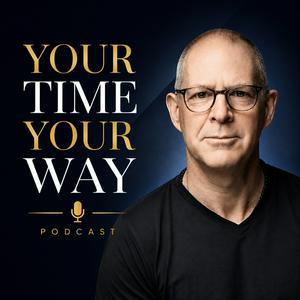
Über Your Time, Your Way
Showing you ways to get control of your time through tested techniques that will give you more time to do the things you want to do.
Podcast-WebsiteHöre Your Time, Your Way, Wissen mit Johnny und viele andere Podcasts aus aller Welt mit der radio.at-App
Hol dir die kostenlose radio.at App
- Sender und Podcasts favorisieren
- Streamen via Wifi oder Bluetooth
- Unterstützt Carplay & Android Auto
- viele weitere App Funktionen
Hol dir die kostenlose radio.at App
- Sender und Podcasts favorisieren
- Streamen via Wifi oder Bluetooth
- Unterstützt Carplay & Android Auto
- viele weitere App Funktionen

Your Time, Your Way
Code scannen,
App laden,
loshören.
App laden,
loshören.
 Österreich