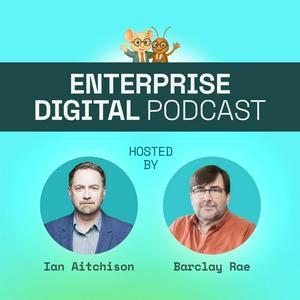
Rob Akershoek joins Barclay and Ian this week for a conversation that will feel uncomfortably familiar to anyone who's ever tried to get a straight answer out of their organisation about what IT services it actually delivers.
Most organisations can't produce a reliable, consolidated list of their applications and digital products, and that gap has direct implications for managing cost, risk, and value. Rob makes the case for treating the application portfolio as a foundational backbone, not an administrative exercise, and explains why the problem keeps recurring every time a new technology wave arrives, from SaaS to cloud to AI.
The discussion covers why top-down and bottom-up approaches both have limits, how domain-based ownership structures can make the problem manageable at scale, and why the CMDB as currently used rarely does the job. Rob introduces the idea of a "licence to operate" for applications, a simple but effective policy mechanism that forces registration before contracts, infrastructure, or budgets can move forward.
Ian brings his software asset management background to push back on whether discovery tools can fill the gap (Rob's view: they can't, not on their own), and Barclay draws on his own experience of organisations that have been circling this problem for years without resolution.
Ian's trivia this week involves a digitally simulated fruit fly brain. It's relevant by the end. Just about.





















 Österreich