PodcastsGeschichteThe Cosmic Tusk

The Cosmic Tusk

George Howard
The Cosmic Tusk
Neueste Episode

48 Episoden

  • The Cosmic Tusk

    He Studied the Carolina Bays for 10 Years. Then Reversed His Theory.

    06.07.2026 | 1 Std. 11 Min.
    Chris Cottrell of Dabbler’s Den has been one of the key researchers carrying the Carolina Bays investigation forward for a decade, and his conversation with George Howard on the Cosmic Tusk podcast covers the full arc of the research: where the community started, how the tools evolved, where the three main researchers diverge, and why Chris changed his publicly held position on the age of the bays after years of telling a different story on YouTube.
    The foundational tool that opened the investigation to citizen researchers is the lidar overlay built by Michael Davis, who spent close to twenty years converting USGS lidar data into a format navigable on Google Earth, fitting ellipses to nearly 80,000 individual Carolina Bays, cataloguing each one with its length, orientation, and mathematical properties. The result became an accidental industry tool: wetland mitigation companies and university ecology programmes started using Davis's lidar independently of the Carolina Bays research, having discovered it was simply the best coastal plain elevation visualisation available. Tim Harris, a former Lockheed Martin and Boeing aerospace engineer, then applied the same orbital mechanics equations used for ballistic missiles to the elliptical orientation data and traced the radial pattern of the bays back to a single point of origin in the Saginaw Bay region of Michigan.
    The chemical link to the Australasian tektite field, impact glass found across South Asia and Australia from an event 786,000 years ago whose source crater has never been identified, provides the most striking convergence. The chemical signature of the Australasian tektites matches the missing sandstone geology of the Michigan basin, and when Tim Harris ran the orbital math, the tektite field falls on the antipodal side of the planet from the proposed impact site. Chris Cottrell spent years publicly supporting a Younger Dryas origin for the bays alongside Antonio Zamora, and his shift came from the sea level record: if the bays were formed 12,800 years ago, they should appear along the entire coastline down to the lower elevations that were exposed at that time, but they are absent below roughly 30 feet, a threshold that corresponds precisely to the high water mark of the last interglacial period 125,000 years ago. That absence, he says, means the bays were already there and got washed away by sea level rise after they formed, placing their formation before 125,000 years ago, and in line with the 786,000-year Australasian tektite event.
    Subscribe and turn on notifications. New episodes come out every day.
    **CHAPTERS**
    00:00 Introduction: George Howard and the Carolina Bays community
    02:12 Chris Cottrell's origin story: the geology field trip and Ask Jeeves
    05:27 Returning to the subject: the 2015 family hike and the YouTube channel
    07:17 Three researchers, three hypotheses: Davis, Zamora, and Cottrell
    07:52 Michael Davis's lidar tool and how it changed everything
    14:57 The Nebraska rainwater basin and how the pattern extends westward
    18:41 The Australasian tektites: 786,000 years and a missing impact site
    22:02 Tim Harris, ballistic missile equations, and tracing the origin to Michigan
    25:53 Why Chris changed his mind: the sea level argument
    32:00 The Delmarva Peninsula anomaly and subsidence
    35:00 Herndon Bay, Blythe Bay, and the field research
    ~60:00 The Arabian Bay dig: backhoes, sediment, and what they found
    ~90:00 Closing thoughts and what comes next
    **GUESTS**
    Chris Cottrell
    YT Channel - @DabblersDen (https://studio.youtube.com/channel/UCJ8v7TydVhPpXGGi0XqCBpg)
    Latest Book - https://us.amazon.com/Gone-But-Not-Forgotten-Catastrophe-ebook/dp/B0H35FGLRD
    **ABOUT**
    TTN News covers the cosmic history that shaped this planet, the deep human past still buried in the ground, and the disclosure story unfolding right now, with primary sources and the people doing the work.
    **FOLLOW TTN NEWS**
    [https://www.facebook.com/cosmicsummit] · [https://x.com/Cosmicsummitx] · [https://www.instagram.com/cosmicsummit2025/] · [https://thetitan.network/]
    #TTNNews #CarolinaBays #GeorgeHoward #ChrisCottrell #CosmicTusk #DabblersDen #YoungerDryas #CatastrophismAustralasianTektites #ImpactHypothesis
  • The Cosmic Tusk

    Half a Million People Watched It for a Year and the Egyptian Military Investigated It

    03.07.2026 | 40 Min.
    PART TWO

    In 1984, Dr. Greg Little published the first work connecting plasma physics to the UFO phenomenon, and forty years later his position has only solidified. This second conversation with George Howard picks up where part one ended and moves into territory that covers plasma, UAPs, the Zeitoun apparitions, Edgar Cayce, and four decades of expeditions to the Bahamas.

    The plasma argument is grounded in physics rather than speculation. The Earth generates plasma through tectonic pressure and the piezoelectric effect, and Dr. Little's work with neuroscientist Michael Persinger at Laurentian University in the early 1990s established that swirling balls of electromagnetic energy focused on the temporal lobe could induce abduction experiences and UAP sightings in undergraduate students in a lab setting. The Zeitoun apparitions in Egypt in the early 1970s, where millions of people including Egyptian military investigators witnessed what appeared to be a luminous figure moving around a Coptic church for close to a year, are, in Dr. Little's framing, one of the best documented plasma events in the historical record, and he and his wife went to Egypt to interview witnesses and obtain the original newspaper coverage firsthand.

    The final thread is Edgar Cayce, the ARE, and Bimini Road. Cayce predicted in the 1930s that evidence of Atlantis would be found in the Bahamas around 1968 or 1969, and a stone formation now known as Bimini Road was discovered underwater in the Bahamas in 1968. Dr. Little has led expeditions there for four decades, and the conversation covers what the team has found, what the evidence points toward, the glowing orbs his wife saw during one crossing, the five simultaneous waterspouts, and the electrical failure that left them without air conditioning and refrigeration in the middle of the ocean, catching fresh fish because there was nothing else to eat.

    Subscribe and turn on notifications. New episodes come out every day.

    **CHAPTERS**

    00:00 Plasma, Carl Jung, and the archetype experience

    ~10:00 Michael Persinger, electromagnetic fields, and induced UAP experiences

    ~20:00 The Zeitoun apparitions: half a million witnesses and a year of documented events

    ~35:00 Origins of the Gods and the piezoelectric theory of UAP generation

    ~50:00 Edgar Cayce, the ARE, and what Cayce predicted about the Bahamas

    ~01:05:00 Bimini Road: discovery, expeditions, and forty years of research

    ~01:25:00 The Bahamas crossings: orbs, waterspouts, and the electrical failure

    ~01:35:00 What the evidence points toward and what comes next

    **GUESTS**

    Dr. Greg Little — https://x.com/DrGregLittle2

    **COMET RESEARCH GROUP**

    Donate to the Comet Research Group today and fund research that could change the history of civilization: https://cometresearchgroup.org/

    **ABOUT**

    TTN News covers the cosmic history that shaped this planet, the deep human past still buried in the ground, and the disclosure story unfolding right now, with primary sources and the people doing the work.

    **FOLLOW TTN NEWS**

    [https://www.facebook.com/cosmicsummit] · [https://x.com/Cosmicsummitx] · [https://www.instagram.com/cosmicsummit2025/] · [https://thetitan.network/]

    #TTNNews #DrGregLittle #Plasma #UAP #EdgarCayce #BiminiRoad #Bahamas #Zeitoun #SentientPlasma
  • The Cosmic Tusk

    A Million Mounds Across America and Nobody Is Talking About Them

    03.07.2026 | 1 Std. 38 Min.
    PART ONE

    Dr. Greg Little has spent forty years mapping, researching, and documenting the mound builders of North America, and the number he keeps coming back to is one that most people are not prepared for: there were probably a million mounds spread across this continent, from the Aleutian Islands to Florida, from New York to California, and roughly 100,000 still exist today. George Howard sits down with him for the first of two conversations that cover the full scope of what that civilisation actually was.

    The mounds range from small conical burial mounds a few feet high to platform complexes the scale of Cahokia, a walled city ten miles from Saint Louis that housed between 50,000 and 80,000 people around the year 1200 AD, was built in twenty years or less from scratch, and covered a footprint larger than the Great Pyramid. Dr. Little walks through the geometry of the earthworks and their astronomical alignments, the Path of Souls iconography connecting Orion and Cygnus across dozens of sites, and the haplogroup X question: a mitochondrial DNA signature found in the oldest mound skeletons that has no confirmed origin in Asia, and that Dr. Little believes traces back to the Denisovans moving through the Solutrean into North America from the west.

    The second half of the conversation covers NAGPRA, the Native American Graves Protection and Repatriation Act, and Dr. Little's position on it: honest, measured, and worth hearing from someone who has been in this field since 1983 and has watched the entire arc of how that legislation has shaped, and in his view suppressed, public access to the most important archaeological record in North America.

    Subscribe and turn on notifications. Part two covers plasma, UAPs, Edgar Cayce, and the Bahamas.

    **PART TWO LANDS MONDAY 22ND JUNE 2026**

    **CHAPTERS**

    00:00 Introduction and the mound encyclopaedia

    02:15 How many mounds were there and how many remain

    08:24 A million mounds: the calculation

    12:05 Cahokia, Saint Louis, and the city nobody talks about

    25:15 North Carolina, shell mounds, and the coastal record

    36:25 Astronomical alignments and the Path of Souls

    48:08 Mass migrations, Chaco Canyon, and Teotihuacan trade routes

    53:45 The LSU mounds and the oldest known mound in the Americas

    01:01:02 Haplogroup X, the Denisovans, and the Solutrean hypothesis
    01:16:14 NAGPRA: what it is, what it has done, and Dr. Little's position

    01:17:24 Giant skeletons: the Smithsonian reports and the statistical analysis

    01:30:15 Cherokee DNA, the Milford menorah, and Middle Eastern haplogroups in North America

    **GUESTS**

    Dr. Greg Little — https://x.com/DrGregLittle2

    **COMET RESEARCH GROUP**

    Donate to the Comet Research Group today and fund research that could change the history of civilization: https://cometresearchgroup.org/

    **ABOUT**

    TTN News covers the cosmic history that shaped this planet, the deep human past still buried in the ground, and the disclosure story unfolding right now, with primary sources and the people doing the work.

    **FOLLOW TTN NEWS**

    [https://www.facebook.com/cosmicsummit] · [https://x.com/Cosmicsummitx] · [https://www.instagram.com/cosmicsummit2025/] · [https://thetitan.network/]

    #TTNNews #DrGregLittle #MoundBuilders #Cahokia #HaplogroupX #NativeAmerica #YoungerDryas #NAGPRA
  • The Cosmic Tusk

    Plato Recorded a Disaster. We Called It a Myth.

    03.07.2026 | 1 Std. 14 Min.
    The Cosmic Tusk Podcast brings together George Howard and Randall Carlson for a wide-ranging conversation that moves from the megaflood geology of the Canadian Shield to the Younger Dryas boundary, through Monument Valley and the Colorado Plateau, and finally to Plato, Ignatius Donnelly, and what the original text of Timaeus and Critias actually says about Atlantis.

    The geological thread runs through the whole episode. Randall makes the case that Lake Agassi formed not gradually but near-instantaneously, as the direct byproduct of multiple cosmic impacts over the Laurentide Ice Sheet, and walks through the Lake Nipigon basin as a candidate impact site with erosional signatures consistent with the Channeled Scablands. He then turns to Monument Valley, arguing that the buttes, mesas, and slot canyons of the Colorado Plateau bear the fingerprints of catastrophic water flows on a scale nobody in mainstream geology has yet addressed directly. The pattern he keeps returning to is the same one that took decades to accept in Washington State: the landscape cannot be explained one drop at a time.

    The Atlantis section closes the episode. Randall is careful about what he is and is not claiming. He has read Plato in the original Greek, and his position is that the geological dismissal of Atlantis published in 1977 relied on plate tectonics to rule out a sunken Atlantic landmass, while openly acknowledging that less than a fraction of a percent of the ocean floor had been explored at the time. The book declared the case closed. The ocean had barely been opened.

    **CHAPTERS**
    00:00 Introduction and catching up
    ~05:00 Lake Agassi, Lake Nipigon, and megaflood geology of the Canadian Shield
    ~27:00 Instantaneous formation hypothesis and the Younger Dryas boundary

    ~43:00 James Teller's work and the extraterrestrial event paper
    ~50:00 Randall's viral Monument Valley clip and the Colorado Plateau
    ~60:00 Atlantis, Ignatius Donnelly, and going back to Plato

    **GUESTS**
    Randall Carlson - @TheRandallCarlson (https://studio.youtube.com/channel/UCAPciy143ZBXBrFpCVPnWDg)

    ABOUT
    TTN News covers the cosmic history that shaped this planet, the deep human past still buried in the ground, and the disclosure story unfolding right now, with primary sources and the people doing the work.

    FOLLOW TTN NEWS
    [https://www.facebook.com/cosmicsummit]· [https://x.com/Cosmicsummitx] · [https://www.instagram.com/cosmicsummit2025/] · [https://thetitan.network/]

    #TTNNews #YoungerDryas #UAPDisclosure

    For more information & to stay up to date: https://thetitan.network/
  • The Cosmic Tusk

    Farnsworth, the Star in a Jar, & the Nuclear Fusion Secret He Took to His Grave, ft Paul Schatzkin

    03.07.2026 | 1 Std. 33 Min.
    Paul Schatzkin is the author of two books that George Howard considers among the most important and least known in the alternative science space - The Boy Who Invented Television and The Man Who Mastered Gravity. This episode focuses primarily on the first, marking the 100th anniversary of the invention that became the most ubiquitous technology on the planet, but the conversation inevitably extends into the deeper and more troubling story of what Philo Farnsworth did after television was finished with him.

    The origin story of television is extraordinary precisely because it has been almost entirely lost. Philo T. Farnsworth was born in 1906 to a Mormon farming family in Beaver, Utah, grew up on the frontier without electricity, and by the age of twelve was repairing the Delco generator on his family's Idaho homestead better than any adult could. He was a native of Einstein's universe - born the year after the 1905 papers, he grew up treating relativity and quantum mechanics as background reality rather than revolutionary novelty. In the summer of 1921, plowing a field under the Idaho sun at age fourteen, he looked back at the parallel rows he had carved and in that moment understood how to create an electrical counterpart to an optical image and scan it one line at a time on a magnetically deflected beam of electrons. He drew the concept on a chalkboard for his high school science teacher in 1922. He demonstrated the first working all-electronic television in 1927. The sketch and the working tube are essentially the same device. Every screen on Earth traces its lineage to that field in Idaho.

    The reason Farnsworth's name is not as universally known as Edison or the Wright Brothers comes down to three factors Paul identifies with precision. Farnsworth himself was constitutionally uninterested in his past achievements and had moved on from television by the late 1930s. Numerous pretenders - most significantly David Sarnoff's RCA, whose engineers reverse-engineered Farnsworth's patents after a young engineer named Vladimir Zworykin visited his laboratory under the pretence of collaboration - spent decades attempting to claim the invention. And when Farnsworth Television and Radio was acquired by ITT in 1949 for pennies on the dollar, the institutional memory of the invention's true origin was extinguished with it.

    The deeper story is what Farnsworth turned his attention to after television. Declining an invitation to participate in the Manhattan Project in 1941 - telling his wife he believed they were building an atomic bomb and wanted no part of it - he spent the war in his private laboratory in Maine, working at the quantum level on problems that only he fully understood. A chance encounter in 1948 led to a phone call with Albert Einstein, in which Farnsworth described his nascent ideas about nuclear fusion. Einstein, despondent since Hiroshima and Nagasaki about what his theories had been used for, told Farnsworth these are the good parts of my theories - you must continue this work. In 1953, on a drive through the Utah desert, Farnsworth had the conception for inertial electrostatic confinement - a fusion approach using a reactor the size of a softball rather than a gymnasium, requiring no superconducting magnets or incomprehensible engineering complexity. He spent six years doing the mathematics before building anything. The machines produced neutron fluxes on the order of 100 billion neutrons per second - proof of fusion. A portable demonstration unit was wheeled into an Atomic Energy Commission meeting in Washington and plugged into a wall. The institutional response was not excitement. It was a room full of people representing vested interests in existing plasma physics programmes, and a chairman who leaned back and asked whose budget was this going to come out of.

    Farnsworth died in 1971. A journal discovered after his death had seven pages torn out. His widow's note on the last remaining page said his final ideas he felt were too confidential - that mankind was not ready for them and perhaps not worthy. Paul has been telling this story to anyone who will listen since he first heard it on a hillside overlooking the Pacific Ocean in the summer of 1973.

    Paul Schatzkin’s books: https://www.amazon.co.uk/stores/author/B0C15BQDPC
Weitere Geschichte Podcasts
Über The Cosmic Tusk
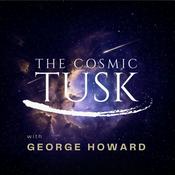
Welcome to The Cosmic Tusk, hosted by George Howard. This is a podcast where we uncover the mysteries of ancient cultures and delve deep into the wisdom of old.
Podcast-Website

Höre The Cosmic Tusk, WDR Zeitzeichen und viele andere Podcasts aus aller Welt mit der radio.at-App

Hol dir die kostenlose radio.at App

  • Sender und Podcasts favorisieren
  • Streamen via Wifi oder Bluetooth
  • Unterstützt Carplay & Android Auto
  • viele weitere App Funktionen
The Cosmic Tusk: Zugehörige Podcasts
Rechtliches
Social
v8.11.1| © 2007-2026 radio.de GmbH
Generated: 7/8/2026 - 5:25:43 AM