
Höre diesen Podcast kostenlos in der App: Kostenlos im App Store laden
radio.at
Sleeptimer
Sender speichern
108 Episoden
E108 - The Neuroscience of Cognitive Dysfunction with Daniel Shaw
20.10.2026 | 58 Min.In this episode of Canine Arthritis Matters, Hannah is joined by animal behaviourist and neuroscience expert Daniel Shaw to explore canine cognitive dysfunction (CCD) and its relationship with chronic pain. They discuss how CCD is often underdiagnosed, why its early signs can be subtle, and how pain, sensory decline and anxiety can mimic or worsen cognitive symptoms. Daniel explains that while age-related brain changes cannot always be prevented, we can support healthy brain function through appropriate physical activity, cognitive and social enrichment, good nutrition and quality sleep. They also explore the importance of adapting activities to each dog's individual needs and recognising that chronic pain and CCD can coexist. The episode highlights the value of a holistic, multidisciplinary approach to helping older dogs maintain their wellbeing and quality of life.
5 Key Take-Home Points
CCD is often underdiagnosed: Early signs can be subtle and easily mistaken for normal ageing.
Chronic pain and CCD are linked: Pain can mimic or worsen cognitive and behavioural changes.
Keep the brain active: Cognitive, physical and social enrichment can help support brain health.
Adapt to your dog's changing needs: Prioritise safe exercise, sniffing opportunities, social interaction and quality sleep.
Take a holistic approach: Pain management, appropriate nutrition and lifestyle adaptations all contribute to a better quality of life.
References mentioned
The Canine cognitive dysfunction rating scale (CCDR): a data-driven and ecologically relevant assessment tool Hannah E. Salvin 2010
Evidence-based clinical management of Canine Cognitive Dysfunction Syndrome: Diagnostic algorithms, practical guidelines, critical appraisal of biomarkers and translational limitations M Dondi et al 2026
Cognitive disturbances in old dogs suffering from the canine counterpart of Alzheimer’s disease Rofina et al 2005
DISHAA table for dogs and cats
Dog Aging Project
Guest bio
Daniel shaw BSc (Hons), MSc, CDBC
Daniel is an experienced animal behaviourist and the owner of Animal Behaviour Kent (ABK). With a master’s degree in neuroscience and a background in psychology, Daniel takes a science based but practical approach, focusing on why behaviour happens rather than simply trying to suppress it. His work prioritises emotional wellbeing, safety, and realistic change, particularly in complex or high risk cases. Alongside his clinical work, Daniel also runs the Brain and Behaviour Academy, providing accessible education in animal behaviour, training, and neuroscience for those who want a deeper understanding of their animals.
Animal Behaviour Kent
Brain and Behaviour Academy
Brain & Behaviour Podcast on Spotify
Learn more about CAM
CAM website - CAM Education Centre - The Pain Vet
Chronic Pain Symposium - CAM Shop - CAM Podcast
Socials for Professionals:
Facebook pro - LinkedIn - Instagram
Socials for Caregivers:
Facebook - Instagram - Holly's Army
Have questions send them to: podcast@caninearthritis.co.ukE107 - Multidisciplinary Conversations Along the Chronic Pain Journey with Findy & Elena
13.10.2026 | 1 Std. 14 Min.This episode explores the complex relationship between chronic pain, behaviour, movement and the human-animal bond. Hannah is joined by Dr Findy and Elena Wilson to discuss why chronic pain can be difficult to recognise, particularly when behavioural or mobility changes are misinterpreted as training issues, ageing or stubbornness. They explore the importance of understanding the emotional and social impact of pain, supporting caregivers through difficult diagnoses, and recognising that dogs are continually communicating with us. The conversation also highlights the value of true interdisciplinary collaboration, combining veterinary, behavioural and physiotherapy expertise to provide more holistic care. Ultimately, effective chronic pain management goes beyond medication, requiring individualised support, environmental adaptations, appropriate movement, emotional safety and a strong team around both the dog and caregiver.
5 Key Take Home Points
Learn to recognise the subtle signs of pain.
Pain is biopsychosocial.
The caregiver is part of the treatment team.
Work collaboratively.
Look beyond medication.
Guest bio
Dr Findy Let's Talk Paws Veterinary Behaviour
Elena ELEVATE Veterinary Physiotherapy
Dr Findy, a vet from Australia and Elena Wilse, a vet physio from the UK. Dr Findy graduated from the University of Sydney with first class honours then went on to complete a masters in clinical animal behaviour at the Uni of Edinburgh. She leads Let's Talk Paws Veterinary Behaviour Services and believes in supporting human-animal relationships by providing owners with an understanding of behaviour from an animals' perspective. She also works in shelter rehabilitation work with a special interest in post-adoption support. Findy is pursuing a PhD with the School of Psychology at the University of Sydney, where she is researching on how best to support caregivers in their emotional and relational journey of caring for a behaviourally challenged dog.
Elena has a first-class degree in human physiotherapy and a Master's with distinction in veterinary physiotherapy from the University of Liverpool. Elena is the founder of ELEVATE Veterinary Physiotherapy. She is a chartered physiotherapist and ACPAT-registered veterinary physiotherapist, with a particular interest in the relationship between chronic pain, movement and behaviour in dogs. Drawing on around ten years of experience in human physiotherapy, Elena takes a biopsychosocial approach to canine rehabilitation—considering not only how a dog moves, but how pain may affect their emotions, behaviour, relationships and everyday life.
ELEVATE Veterinary Physiotherapy supports dogs and their carers in the UK and internationally through:
Online Gait Analysis: Structured video analysis to identify and document subtle movement asymmetries and compensatory patterns to bridge the gap between pain and behaviour. The service includes a detailed written report, an online consultation with the carer and, with consent, communication of the findings and recommendations to the dog’s veterinary team.
Online Physiotherapy Memberships: Individualised, longer-term support
Pain–behaviour support: Physiotherapy input for dogs whose pain, movement and behavioural presentations may be interconnected
Professional education: Training and educational content for veterinary and animal-care professionals
Instagram: @elevatevetphysio
Website: https://elevatevetphysio.co.uk/online-gait-analysis/
ELEVATE Free Canine Wellness Checker
Let’s Talk Paws offer a comprehensive service in supporting dogs and cats suffering from behaviour challenges. Consultations are conducted in the comfort of your home via Telehealth or in-person sessions.
Our service areas include Sydney, Central Coast, Newcastle and Hunter Surrounds.
Instagram: Let’s Talk PawsE106 Bridging the Vet–Owner Divide: How The Coerenza Approach Creates True Partnership in Canine Care with Dr Tom Walsh
06.10.2026 | 1 Std. 7 Min.In this episode, Hannah chats with Dr Tom Walsh about taking a more holistic, practical approach to canine health and osteoarthritis management. They explore his Corenza approach, built around five key pillars: exercise, environment, enrichment, nutrition and responsibility. Together, they discuss how these areas can help reduce overwhelm for caregivers while supporting dogs at every life stage, including those living with OA. From adapting exercise and improving flooring, to providing meaningful enrichment and navigating the often-confusing world of nutrition, the conversation focuses on seeing the whole dog rather than simply treating individual problems. Above all, they explore how we can help dogs live happier, healthier lives.
Buy Dr Tom’s book on amazon “Good Dogs, Broken System: A Veterinarian’s Guide to Rebuilding Trust Through the Coerenza Approach”
Visit Dr Tom’s clinic Prime Pet Rehab Therapy
Learn more about the Coerenza Approach
5 Key Take Home Points
Consultations: Think about the whole dog, not just the diagnosis.
Coerenza & the five pillars: exercise, environment, enrichment, nutrition and responsibility.
Exercise: should be individualised to the dog, their condition and their environment.
Enrichment is essential: it’s not an adjunct, or a “cherry on top” — it helps create a life worth living.
Break complex decisions into manageable areas rather than becoming overwhelmed by choice.
Guest bio
Dr. Tom Walsh had a successful career in telecommunications but always knew his true calling was helping animals. Deciding to pursue that passion, he became a veterinarian and has never looked back.After working close to a decade as a general practitioner veterinarian, he devoted all of his focus into small animal rehabilitation. Dr. Walsh established PrimePet Rehabilitation Therapy, a mobile small animal rehabilitation service. In just 3 years, he transitioned the original PrimePet Rehab mobile concept to a permanent location in downtown Myrtle Beach, building one of the premier and innovative small animal rehabilitation centers on the East Coast. Additionally, Dr. Walsh is a featured national speaker at veterinary and technology conferences, webinars and podcasts. He has just released his first book - Good Dogs, Broken System - The Coerenza Approach
Learn more about CAM
CAM website - CAM Education Centre - The Pain Vet
Chronic Pain Symposium - CAM Shop - CAM Podcast
Socials for Professionals:
Facebook pro - LinkedIn - Instagram
Socials for Caregivers:
Facebook - Instagram - Holly's Army
Have questions send them to: podcast@caninearthritis.co.uk
Stay tuned to learn more about nutrition with Dr Conny Mosely next week!E105 - Rebuilding Trust for Dogs and Owners with Tamsin Durston
29.09.2026 | 1 Std. 26 Min.This episode explores the emotional wellbeing of dogs, caregivers and veterinary teams, with Tamsin Durston sharing practical ways to create safer, more supportive veterinary experiences. Hannah and Tam discuss the impact of osteoarthritis and chronic disease on both dogs and their caregivers, including anxiety, guilt, grief and caregiver burden. They explore how simple environmental changes, empathetic communication and thoughtful appointment planning can reduce stress and improve psychological safety. The conversation also highlights trigger stacking in veterinary teams and the importance of taking small pauses to reset between patients. Above all, the episode encourages veterinary professionals to recognise caregivers as part of the patient journey, build their confidence and help transform guilt into pride.
5 Key Take-Home Points
Psychological safety matters — for dogs, caregivers and veterinary teams.
Small changes can make a big difference — many improvements are practical and low-cost.
Recognise trigger stacking — stress builds throughout the day, so pause and reset when you can.
Support the caregiver too — chronic disease affects the whole family, not just the dog.
Turn guilt into empowerment — help caregivers recognise what they are doing well and build confidence in their ability to care for their dog.
Links
Dogs Trust Behaviour Support Line
Dog Friendly Vet Clinics
Emotional Well-being for Animal Welfare Professionals by Tamsin Durston
Guest Bio
Tamsin is a Registered Veterinary Nurse, Clinical Animal Behaviourist, and accredited Dog Training Instructor, with 25yrs experience working predominately for the charities Blue Cross and, currently, Dogs Trust. In her current role of Veterinary Engagement Manager, Tam leads a team creating welfare driven interventions aimed at embedding canine behavioural principles into veterinary practice and improving the experience of veterinary care for dog, owners, and veterinary teams alike. As well as the animals we all care so deeply for, Tam is keen to optimise mental and emotional health for humans and has researched and authored a book on ‘Emotional Well-being for the Animal Welfare Professional’.
Learn more about CAM
CAM website - CAM Education Centre - The Pain Vet
Chronic Pain Symposium - CAM Shop - CAM Podcast
Socials for Professionals:
Facebook pro - LinkedIn - Instagram
Socials for Caregivers:
Facebook - Instagram - Holly's Army
Have questions send them to: podcast@caninearthritis.co.uk
Join us next week with Tom Walsh and Hannah discussing the Coerenza Approach to owner-vet relationshipsE104 - The Future of OA management; Dedicated clinics with Drew Tootal
22.09.2026 | 1 Std. 19 Min.In this episode, Hannah and Drew explore the changing face of canine osteoarthritis (OA), highlighting why early detection and proactive management are so important. They discuss how OA can develop at a surprisingly young age, often before obvious clinical or radiographic signs appear. Drew explains how objective gait and stance analysis can help identify subtle changes, establish baselines and monitor responses to treatment. The conversation covers multimodal and layered approaches to OA management, including weight management, exercise, lifestyle changes, physiotherapy and intra-articular therapies. Above all, they emphasise that OA management is a journey, requiring regular monitoring, individualised plans and a focus on improving comfort and quality of life.
OA can start young — don’t assume it’s just a disease of old age.
Early detection matters — subtle changes can appear before X-ray findings.
Objective monitoring helps — gait and stance analysis can track changes over time.
Think multimodal — weight, exercise, lifestyle, medication and therapies all have a role.
There’s no quick fix — OA management is an ongoing, individualised journey.
Speaker bio:
Drew graduated from the University of Liverpool School of Veterinary Science in 2004 and joined the Royal Army Veterinary Corps just a few months later. During a 17-year military career he was fortunate to be able to work extensively with Military Working Dogs, from procuring them for training, deploying with them to Iraq in 2007 and, as Officer Commanding of the Veterinary Training Squadron at the Defence Animal Training Regiment, assisting in their retirement. In 2022 Drew left the RAVC to help start MSK Vets, part of the Nupsala Group, and he focuses exclusively on dog mobility, objective gait analysis, and the use of innovative therapies for the management of osteoarthritis and other musculoskeletal conditions. He is still involved with the working dog community and helping them keep their dogs fit and healthy, and he also provides mobility support services to retired Service Dogs.
Learn more about CAM
CAM website - CAM Education Centre - The Pain Vet
Chronic Pain Symposium - CAM Shop - CAM Podcast
Socials for Professionals:
Facebook pro - LinkedIn - Instagram
Socials for Caregivers:
Facebook - Instagram - Holly's Army
Have questions send them to: podcast@caninearthritis.co.uk
Join us next week for the first episode in the new series; “Rebuild”
5 Key Take-Home Points
Weitere Haus- und Wildtiere Podcasts






Trending Haus- und Wildtiere Podcasts


Über Canine Arthritis Matters
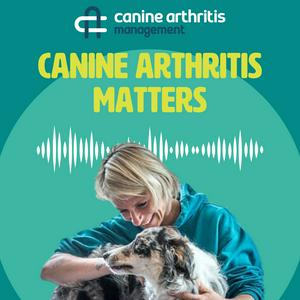
Welcome to Canine Arthritis Matters, your go-to resource for canine health and wellbeing. Hosted by Dr. Hannah Capon, our podcast provides valuable insights and practical advice on managing canine arthritis, mobility issues, and chronic pain. Our goal is to educate and support dog owners in early identification, proactive management, and comprehensive care practices, ensuring dogs lead long, comfortable, and happy lives. Join us on this journey to improve the quality of life for your furry friend.
Have questions send them to: info@caninearthritis.co.uk
https://caninearthritis.co.uk/
Podcast-WebsiteHöre Canine Arthritis Matters, Anna und die wilden Tiere und viele andere Podcasts aus aller Welt mit der radio.at-App
Hol dir die kostenlose radio.at App
- Sender und Podcasts favorisieren
- Streamen via Wifi oder Bluetooth
- Unterstützt Carplay & Android Auto
- viele weitere App Funktionen
Hol dir die kostenlose radio.at App
- Sender und Podcasts favorisieren
- Streamen via Wifi oder Bluetooth
- Unterstützt Carplay & Android Auto
- viele weitere App Funktionen

Canine Arthritis Matters
Code scannen,
App laden,
loshören.
App laden,
loshören.
 Österreich