PodcastsMusik(in)sight-reading enlightenment/early music podcast

(in)sight-reading enlightenment/early music podcast

Darina Ablogina
(in)sight-reading enlightenment/early music podcast
Neueste Episode

76 Episoden

  • (in)sight-reading enlightenment/early music podcast

    Reinoud Van Mechelen: 🌙 From Morning to Night

    29.12.2025 | 37 Min.

    🎧 Season finale | (In)Sight-Reading EnlightenmentWhat does it mean to perform Baroque music today?In the final episode of Season 6, I speak with Belgian tenor Reinoud Van Mechelen, founder and artistic director of a nocte temporis, about navigating the early music world between iconic masterpieces and forgotten jewels. We talk about festivals, opera characters, curating programs from morning to night, and how to stay fresh when performing the same repertoire again and again.While editing this episode, one thought kept returning: the audience doesn’t come to check if we are right or wrong — they come for an experience. Simply “playing a concert” is no longer enough. People are ready to receive more.https://www.reinoudvanmechelen.be/enSpecial thanks for the music intro to the conductor Martin Wåhlberg, nmy beloved Orkester Nord and Reinoud as Sandomir. Check out this wonderful recording where I had a pleasure to take part: https://open.spotify.com/album/19J7sAU0eMMvi3UYxZjUJl🎶 Episode 12 is out now — and with it, the close of Season 6.Contact me: [email protected]#insightreadingenlightenment #earlymusic #baroquemusic #anotcetemporis #reinoudvanmechelen #earlymusicensemble #historicalperformance #baroqueopera #musicprogramming #festivalmusic #classicalmusic #artisticprocess #musicianslife #earlymusicpodcast

  • (in)sight-reading enlightenment/early music podcast

    Special Series for zamus: Why We Gather – Behind the zamus Symposium

    08.10.2025 | 18 Min.

    In this final episode of our zamus mini-series, we meet two of the driving forces behind the “Creating New Spaces” symposium: Charlotte Nachtsheim, organiser of the event, and Mélanie Froehly artistic director of zamus. Together with the artistic director of the festival Midori Seiler they have shaped the structure of the symposium and brought this idea come true.We speak with Charlotte about the meaning of colonialism and decolonialism in the context of early music—how the field is shaped by its history, and what it means to rethink that history in today’s world. Can early music become a space for equity, awareness, and reflection?Then, Mélanie shares her artistic vision and the story behind integrating such an important topic into a festival setting. We talk about structural challenges, curatorial decisions, and the deep personal motivation that connects both women to this work—not just as organisers, but as musicians and advocates for a more inclusive and responsible cultural scene.Together, they explore how music and art can become a safe space—where difficult conversations are welcomed, and new perspectives can flourish.Music in the episode:Florence Price: Symphony No. 1 in E minorAlice Smith (1839-1884) - Symphony in A minor00:00 – Intro & guest introductions: Charlotte Nachtsheim & Mélanie Froehly00:53 – Symposium theme: “Creating New Spaces”02:09 – Colonialism & decolonisation in early music04:49 – Problematic content & how to handle it06:10 – Transition to Mélanie Froehly07:07 – The concept of zamus - Center of Early Music in Cologne08:58 – How the idea for the symposium emerged, collegial approach11:14 – Integrating the symposium into the festival12:40 – Present perspectives & future plans13:18 – Personal motivation & societal change15:22 – Sneak peek at the next zamus edition18:40 – Outro#EarlyMusic#DecolonisingMusic#ColonialHeritage#HistoricalPerformance#CriticalClassics#OperaReimagined#MusicAndSociety#InclusiveArts#MusicHistoryMatters#BaroqueVoices#SoundAndStory#ArtAsResistance#NewSpacesInMusic#CulturalReflection#ListeningDifferently

  • (in)sight-reading enlightenment/early music podcast

    Special Series for zamus: Troubled Texts, Critical Questions – Inside Critical Classics

    08.10.2025 | 22 Min.

    In this second episode of our zamus mini-series, we take a deep dive into the work of Critical Classics—an initiative that rethinks how we perform historical operas and oratorios by addressing racism, exoticism, and other forms of discrimination embedded in the original texts.We’re joined by Leyla Ercan, co-initiator of the project, and Änne-Marthe Kühn, dramaturge and researcher, who reflect on how theatre can both reveal and reproduce harmful narratives. Together, they share the origins of the project, their guiding principles, and what it means to reframe canonical works like The Magic Flute in a way that speaks to our current world.We discuss strategies of sensitivity reading, the role of text and subtext, and how audiences respond when difficult truths are brought to light. What does it mean to preserve tradition—and when does that tradition need to be questioned?🎭 More about the project: criticalclassics.org/downloads🎼 With music from Orkester Nord, courtesy of Aparte label: Watch hereTimecodes:00:00 – Introduction of guests: Leyla Ercan & Änne-Marthe Kühn01:10 – “I dislike theatre” – the critical power of the stage02:02 – Änne-Marthe Kühn: background & why she joined Critical Classics03:09 – Leyla Ercan: the roots of theatre criticism04:15 – Aims & mission of Critical Classics07:15 – Audience reactions & communication09:49 – Theatre tools & character portrayal12:44 – Strategies for working with texts15:25 – Technical methods: how Critical Classics handles opera material18:17 – Finding inner conflicts that speak to today19:18 – Why we still need these old stories20:21 – Historical context of classical opera theatre22:04 – Outro#EarlyMusic#DecolonisingMusic#ColonialHeritage#HistoricalPerformance#CriticalClassics#OperaReimagined#MusicAndSociety#InclusiveArts#MusicHistoryMatters#BaroqueVoices#SoundAndStory#ArtAsResistance#NewSpacesInMusic#CulturalReflection#ListeningDifferently


  • (in)sight-reading enlightenment/early music podcast

    Special Series for zamus: Decolonial Futures and Forgotten Origins

    08.10.2025 | 29 Min.

    In this opening episode of our special series with zamus for the “Creating New Spaces” Decolonisation Symposium, we explore the colonial shadows cast over the world of early music. Historian and activist Dr. Rahab Njeri speaks about decolonial aesthetics and the need to reclaim artistic spaces through marginalized and indigenous forms of knowledge.https://frauengeschichtsverein.de/2023/08/22/dr-des-rahab-njeri/We then turn to musician and researcher Jorge Silva, who guides us through the African and South American origins of familiar Baroque dances. What colonial narratives are hidden in the elegant sarabande—and what happens when we start to listen differently?https://www.jorgesilvahpd.com/Timecodes00:00 – Intro & ZAMUS collaboration01:18 – Dr. Rahab Njeri: Picasso & African art03:01 – Cultural appropriation spectrum04:31 – Critical diversity06:15 – Institutional change07:35 – Power vs. African philosophy09:11 – Empathy & decoloniality11:24 – Gaze into the future13:00 – Jorge Silva: Baroque dance & origins14:27 – Hidden narratives in dance16:19 – The sarabande’s transformation18:40 – Performance & research20:52 – Lundu & Brazilian sources23:45 – Generational trauma & music26:23 – Layers of history in Baroque27:40 – Being a musician today28:35 – OutroMusic in this episode from the playlist of Midori Seiler: https://youtube.com/playlist?list=PLQt6ev5eI6q_ZyMJrIyN898Fd0RGuxkug&si=h6sx4-49tD48Ugr4#EarlyMusic#DecolonisingMusic#ColonialHeritage#HistoricalPerformance#CriticalClassics#OperaReimagined#MusicAndSociety#InclusiveArts#MusicHistoryMatters#BaroqueVoices#SoundAndStory#ArtAsResistance#NewSpacesInMusic#CulturalReflection#ListeningDifferently

  • (in)sight-reading enlightenment/early music podcast

    Taste of Dissonance – Rachel Brown (Part 2)

    30.9.2025 | 37 Min.

    In this second part of my conversation with the internationally acclaimed flutist, researcher, and author Rachel Brown, we continue our journey into the world of 18th-century flute culture.We speak about the flute makers who shaped the sound of our time, the virtuoso players of the 18th century and their repertoire, and the surprising way dissonance can be described in terms of taste experiences. Our conversation also touches on the role of historical clothing and why women were often excluded from playing wind instruments, and Rachel shares her own creative voice as a composer, including her projects inspired by Telemann’s Twelve Fantasias for solo flute.This episode of (In)Sight-Reading Enlightenment is kindly supported by the Christoph Merian Stiftung.💌 I’d love to hear from you: write me at [email protected].#RachelBrown #Quantz #Telemann #BaroqueFlute #Traverso #EarlyMusic #HistoricalPerformance #Bach #FlutePodcast #BaroqueMusic #18thCenturyMusic #WomenInMusic #ChristophMerianStiftung

Weitere Musik Podcasts

Über (in)sight-reading enlightenment/early music podcast

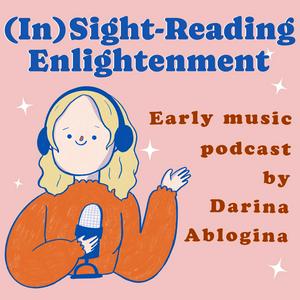
Hello dear friends! Welcome to our brand new podcast dedicated to sight-reading. Why sight-reading? We want to show the behind-the-scenes of music-making. We begin each episode with our initial thoughts on a new score as well as musings about style, aesthetics, and instruments. We challenge ourselves to apply our understanding of historical practices to achieve a more musical reading of a given text. Whether you are amateur musicians looking for tips on sight-reading and insight into historical performance or a seasoned musician, we would be happy if you joined us.
Podcast-Website

Höre (in)sight-reading enlightenment/early music podcast, PRISMATIC und viele andere Podcasts aus aller Welt mit der radio.at-App

Hol dir die kostenlose radio.at App

  • Sender und Podcasts favorisieren
  • Streamen via Wifi oder Bluetooth
  • Unterstützt Carplay & Android Auto
  • viele weitere App Funktionen
Rechtliches
Social
v8.2.2 | © 2007-2026 radio.de GmbH
Generated: 1/15/2026 - 12:24:25 AM