
Höre diesen Podcast kostenlos in der App: Kostenlos im App Store laden
radio.at
Sleeptimer
Sender speichern
394 Episoden
The STEMI Trap: Are We Missing Heart Attacks? With Michael DeFilippo
19.10.2026 | 38 Min.Today on the Pre-Hospital Care Podcast, we’re tackling a topic that challenges one of the most deeply embedded concepts across Pre-hospital care. For decades, we’ve taught clinicians to think in binary terms: STEMI or not STEMI. Spot the ST elevation, activate the pathway, and move the patient toward reperfusion. It’s a model that has transformed care and saved countless lives. But what if that framework is also causing us to miss patients?
Increasingly, there’s a growing conversation around the idea that acute coronary occlusion doesn’t always read from the textbook. Significant coronary artery blockages may not meet traditional STEMI criteria, while subtle ECG findings, evolving patterns, and clinical context can point toward a patient experiencing a true occlusive myocardial infarction, or OMI. The argument isn’t simply about changing terminology; it’s about changing how we think.
So today we’re asking some big questions. Has STEMI become too narrow a lens? Are we over-relying on algorithms and thresholds? And what does this mean for clinicians making real-world decisions in the back of an ambulance, under pressure, with imperfect information and time-critical choices? You can read Mike's Substack piece here: https://emsdrmike.substack.com/p/beyond-stemi-in-ems
🎙️ EMS2027 – European EMS Congress
The Pre-Hospital Care Podcast is heading to Ireland.
I’m excited to announce that I’ll be in Killarney in April 2027 as the official podcast host for EMS2027, the European EMS Congress.
📅 13–15 April 2027
📍 The Gleneagle, Killarney, Ireland
🎯 Theme: “Connecting Care Across Communities”
EMS2027 will bring together clinicians, researchers, educators and leaders from across Europe and beyond to explore the future of EMS, with a programme covering innovation, technology, sustainability, human factors, research and the future of integrated emergency care.
I’ll be there with the Pre-Hospital Care Podcast, bringing you interviews and conversations with speakers, clinicians, researchers and EMS leaders — capturing the ideas, experiences and discussions shaping contemporary pre-hospital care.
If you work in EMS, emergency medicine, pre-hospital care or healthcare, make sure you have 13–15 April 2027 in your diary.
I’ll see you in Killarney!
For Early Bird registration, see here.When the Textbook Fails: Recognising SCAD and Posterior Stroke
16.10.2026 | 1 Std. 2 Min.Some of the most important diagnoses in pre-hospital care are the ones we least expect, conditions that challenge our assumptions, present outside familiar clinical patterns, and can be missed when we rely too heavily on traditional assessment tools.
In this episode, we revisit two important conversations from the Pre-Hospital Care Podcast that highlight the consequences of diagnostic overshadowing and the need for clinical curiosity.
First: Spontaneous Coronary Artery Dissection (SCAD)
SCAD is an important, often under-recognised cause of acute coronary syndrome. It can affect patients, particularly women, who may have few or none of the traditional cardiovascular risk factors associated with myocardial infarction. Through the perspectives of a survivor, the clinician who treated her, and an advocate raising awareness, we explore how SCAD presents, why it can be overlooked, and how pre-hospital clinicians can improve recognition.
🎧 Listen to the original episode: Spontaneous Coronary Artery Dissection (SCAD): The Condition We Often Miss
Second: Posterior Circulation Stroke
FAST has an important role in stroke recognition, but it does not identify every presentation. Posterior circulation strokes can manifest through dizziness, imbalance, visual disturbance, impaired coordination, and difficulty walking, sometimes without the classic signs of facial weakness, arm weakness or speech disturbance.
Joining us in the original conversation, paramedic and researcher Shane Devlin explores the clinical and research challenges of recognising posterior circulation stroke. My brother, Ronan Walker, also shares his experience of suffering a posterior stroke in his late thirties, highlighting what can happen when symptoms don't fit the expected picture.
🎧 Listen to the original episode: Not So FAST: Rethinking Stroke Recognition in Pre-Hospital Care with Shane Devlin and Ronan Walker
The key message: The patient doesn't have to fit the textbook for the diagnosis to be real. Whether we're assessing a potentially life-threatening cardiac event or a stroke that falls outside traditional screening criteria, careful assessment, clinical curiosity, and a willingness to challenge our initial impression can make a critical difference.
This Episode is Sponsored by PAX
In pre-hospital and emergency medicine, your clinical equipment is only as effective as your ability to access it when it matters. That’s why healthcare professionals in some of the world's most demanding environments trust PAX Bags.
Designed specifically for emergency and rescue professionals, PAX combines durability, intelligent organisation and practical functionality to create equipment bags that work with you, not against you.
Whether you’re operating from a helicopter, responding on the road, working in remote environments or managing a complex clinical situation, PAX bags are designed to keep essential equipment protected, organised and immediately accessible.
For professionals who rely on their equipment every day, that attention to detail matters. It can mean knowing exactly where something is, being able to access it quickly, and having confidence that your kit will perform when the environment is anything but predictable.
PAX Bags: Professional equipment solutions, designed for the reality of emergency care.
Find out more about PAX and explore their range of professional medical and rescue bags at https://www.pax-bags.com/The PRONTO Study: How We Detect Large Vessel Occlusion Stroke with Prof Chris Price
12.10.2026 | 49 Min.Today, we’re exploring a critical challenge in stroke care: identifying patients with large vessel occlusion (LVO) and getting them to the right hospital as quickly as possible.
Mechanical thrombectomy can transform outcomes, but access depends on rapid identification and appropriate prehospital triage. Current clinical assessment and stroke severity scales have limitations, making it difficult to reliably distinguish LVO from other strokes and stroke mimics.
Professor Christopher Price, Professor of Stroke and Applied Health Research at Newcastle University, has been investigating whether rapid, lateral-flow blood tests detecting stroke biomarkers could complement paramedic assessment and improve prehospital identification of patients suitable for thrombectomy.
Could point-of-care testing help clinicians make better destination decisions, reduce delays from inter-hospital transfers, and get the right patients to treatment sooner? We’ll explore the evidence, the limitations, and what this technology could mean for the future of prehospital stroke care.
Could the next major advance in stroke care happen before the patient reaches hospital?
Find out more about the research: https://www.ncl.ac.uk/press/articles/latest/2026/07/standardtemplate/
This Episode is Sponsored by PAX
In pre-hospital and emergency medicine, your clinical equipment is only as effective as your ability to access it when it matters. That’s why healthcare professionals in some of the world's most demanding environments trust PAX Bags.
Designed specifically for emergency and rescue professionals, PAX combines durability, intelligent organisation and practical functionality to create equipment bags that work with you, not against you.
Whether you’re operating from a helicopter, responding on the road, working in remote environments or managing a complex clinical situation, PAX bags are designed to keep essential equipment protected, organised and immediately accessible.
For professionals who rely on their equipment every day, that attention to detail matters. It can mean knowing exactly where something is, being able to access it quickly, and having confidence that your kit will perform when the environment is anything but predictable.
PAX Bags: Professional equipment solutions, designed for the reality of emergency care.
Find out more about PAX and explore their range of professional medical and rescue bags at https://www.pax-bags.com/
Event Spotlight: GWAAC Clinical Symposium 2026 – Innovation in Pre-Hospital Care
The Great Western Air Ambulance Charity (GWAAC) Clinical Symposium returns on Friday 16 October 2026 at Ashton Gate Stadium, Bristol, bringing together clinicians and experts to explore innovation in pre-hospital emergency medicine (PHEM).
With a programme of expert speakers covering topics including advanced practice, cardiac arrest management, team performance, military medicine and clinical education, the symposium offers an opportunity to challenge established thinking, share experience and take practical ideas back into clinical practice.
Whether you work in pre-hospital critical care, emergency medicine or frontline ambulance services, this is an opportunity to connect with colleagues and explore new approaches to improving patient care.
📍 Venue: Pravha Lounge, Ashton Gate Stadium, Bristol
📅 Date: Friday 16 October 2026, from 09:00
🎟️ Tickets: £18–£35
Register and find out more: https://greatwesternairambulance.com/support-us/events/special/gwaac-symposium-2026/Trauma Handover: When Communication Meets Pressure
08.10.2026 | 44 Min.A good clinical handover sounds simple. But when the environment is noisy, time is limited, cognitive load is high, and the stakes are significant, communicating the right information and ensuring it is understood becomes much harder.
In this compilation episode, we explore the relationship between trauma handover, human factors, simulation and performance under pressure, bringing together two conversations that approach the problem from different perspectives.
We revisit our conversation with Andrew Pearce to explore what makes an effective trauma handover and the challenges of transferring critical information between pre-hospital and hospital teams. We look at communication, structure, information loss and the human factors that can influence how information is delivered and received.
We then turn to Neel Bhanderi and the science of high-fidelity simulation. Neel explores how we can move beyond simply practising clinical skills and instead create training environments that reproduce the cognitive, environmental and interpersonal pressures clinicians experience in the real world. His discussion takes us into stress, task loading, communication, handover, environmental distraction, and the importance of effective debriefing.
High Fidelity Simulation with Neel Bhanderi
Originally released 15 May 2023.
Listen to the original episode on Apple Podcasts
Trauma Handover with Andrew Pearce
Listen to the original episode on Castro
This Episode is Sponsored by PAX
In pre-hospital and emergency medicine, your clinical equipment is only as effective as your ability to access it when it matters. That’s why healthcare professionals in some of the world's most demanding environments trust PAX Bags.
Designed specifically for emergency and rescue professionals, PAX combines durability, intelligent organisation and practical functionality to create equipment bags that work with you, not against you.
Whether you’re operating from a helicopter, responding on the road, working in remote environments or managing a complex clinical situation, PAX bags are designed to keep essential equipment protected, organised and immediately accessible.
For professionals who rely on their equipment every day, that attention to detail matters. It can mean knowing exactly where something is, being able to access it quickly, and having confidence that your kit will perform when the environment is anything but predictable.
PAX Bags: Professional equipment solutions, designed for the reality of emergency care.
Find out more about PAX and explore their range of professional medical and rescue bags at PAX-Bags.com
🎙️ EMS2027 – European EMS Congress
The Pre-Hospital Care Podcast is heading to Ireland.
I’m excited to announce that I’ll be in Killarney in April 2027 as the official podcast host for EMS2027, the European EMS Congress.
📅 13–15 April 2027
📍 The Gleneagle, Killarney, Ireland
🎯 Theme: “Connecting Care Across Communities”
EMS2027 will bring together clinicians, researchers, educators and leaders from across Europe and beyond to explore the future of EMS, with a programme covering innovation, technology, sustainability, human factors, research and the future of integrated emergency care.
I’ll be there with the Pre-Hospital Care Podcast, bringing you interviews and conversations with speakers, clinicians, researchers and EMS leaders — capturing the ideas, experiences and discussions shaping contemporary pre-hospital care.
If you work in EMS, emergency medicine, pre-hospital care or healthcare, make sure you have 13–15 April 2027 in your diary.
I’ll see you in Killarney!
For Early Bird registration, see here.CRASH-4: Can Early TXA Save Lives After a Fall with Prof Ian Roberts
05.10.2026 | 35 Min.A fall from standing height can have devastating consequences in an older adult. In this episode, Professor Ian Roberts joins the Pre-Hospital Care Podcast to discuss CRASH-4, a major randomised trial investigating whether giving intramuscular tranexamic acid (TXA) within three hours of injury can reduce intracranial bleeding, disability and death following symptomatic mild traumatic brain injury in older adults.
The trial is particularly relevant to pre-hospital clinicians because TXA can be administered by paramedics at the scene or during transport, before the presence of intracranial haemorrhage is known. CRASH-4 follows on from the findings of CRASH-3 and addresses an important unanswered question: could giving TXA even earlier, before the CT scan, improve outcomes?
In this interview, Ian discusses the rationale behind CRASH-4, the evidence that led to the trial, the practicalities of administering IM TXA, what the study has learned so far, and what the results could mean for the future management of older patients with head injury.
CRASH-4 Trial: Official CRASH-4 study website
Study protocol – Version 3.0: Read the full CRASH-4 study protocol
This Episode is Sponsored by PAX
In pre-hospital and emergency medicine, your clinical equipment is only as effective as your ability to access it when it matters. That’s why healthcare professionals in some of the world's most demanding environments trust PAX Bags.
Designed specifically for emergency and rescue professionals, PAX combines durability, intelligent organisation and practical functionality to create equipment bags that work with you, not against you.
Whether you’re operating from a helicopter, responding on the road, working in remote environments or managing a complex clinical situation, PAX bags are designed to keep essential equipment protected, organised and immediately accessible.
For professionals who rely on their equipment every day, that attention to detail matters. It can mean knowing exactly where something is, being able to access it quickly, and having confidence that your kit will perform when the environment is anything but predictable.
PAX Bags: Professional equipment solutions, designed for the reality of emergency care.
Find out more about PAX and explore their range of professional medical and rescue bags at PAX-Bags.com
🎙️ EMS2027 – European EMS Congress
The Pre-Hospital Care Podcast is heading to Ireland.
I’m excited to announce that I’ll be in Killarney in April 2027 as the official podcast host for EMS2027, the European EMS Congress.
📅 13–15 April 2027
📍 The Gleneagle, Killarney, Ireland
🎯 Theme: “Connecting Care Across Communities”
EMS2027 will bring together clinicians, researchers, educators and leaders from across Europe and beyond to explore the future of EMS, with a programme covering innovation, technology, sustainability, human factors, research and the future of integrated emergency care.
I’ll be there with the Pre-Hospital Care Podcast, bringing you interviews and conversations with speakers, clinicians, researchers and EMS leaders — capturing the ideas, experiences and discussions shaping contemporary pre-hospital care.
If you work in EMS, emergency medicine, pre-hospital care or healthcare, make sure you have 13–15 April 2027 in your diary.
I’ll see you in Killarney!
Find out more and register with EMS Europe – EMS2027.
Weitere Bildung Podcasts









Trending Bildung Podcasts
























Über Pre-Hospital Care Podcast
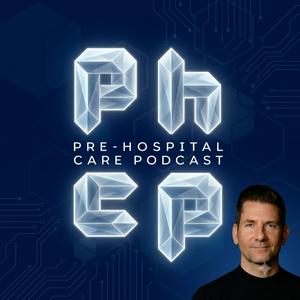
This podcast is designed to have engaging and inspirational conversations with some of the worlds leading experts in or relating to pre-hospital care. We hope you take a lot from the conversations both from a technical and non-technical perspective. Please rate and review the show as feedback helps ensure that the best information gets back to you throughout the project.
Podcast-WebsiteHöre Pre-Hospital Care Podcast, Einschlafen mit Geografie und viele andere Podcasts aus aller Welt mit der radio.at-App
Hol dir die kostenlose radio.at App
- Sender und Podcasts favorisieren
- Streamen via Wifi oder Bluetooth
- Unterstützt Carplay & Android Auto
- viele weitere App Funktionen
Hol dir die kostenlose radio.at App
- Sender und Podcasts favorisieren
- Streamen via Wifi oder Bluetooth
- Unterstützt Carplay & Android Auto
- viele weitere App Funktionen
Pre-Hospital Care Podcast
Code scannen,
App laden,
loshören.
App laden,
loshören.
Pre-Hospital Care Podcast: Zugehörige Podcasts
 Österreich