PodcastsBildungPsychology in Everyday Life: The Psych Files

Psychology in Everyday Life: The Psych Files

Michael Britt
Psychology in Everyday Life: The Psych Files
Neueste Episode

387 Episoden

  • Psychology in Everyday Life: The Psych Files

    Does Your Cat or Dog Need Closure? Pet Grief and the Psychology of Loss

    12.06.2026 | 25 Min.
    We hear the word "closure" everywhere — in true crime shows, in news coverage of trials, and in the well-meaning advice of friends after a loss. But where did this idea come from, and does the research actually support it? In this episode I trace the surprising history of closure, from the Gestalt psychologists of the 1920s, to Arie Kruglanski's research on the "need for cognitive closure," to its takeover by talk shows, the victims' rights movement, and even the funeral industry in the 1990s. Along the way we look at what the science really shows: the craving for answers is real and measurable, and confirming the reality of a death does help people grieve. But sociologist Nancy Berns, family therapist Pauline Boss (who coined the term "ambiguous loss"), and a striking study comparing homicide survivors in death penalty and life-sentence states all point to the same conclusion — grief doesn't have a finish line, and expecting one may do more harm than good.
    And then there's my cat. After I brought one of my cats to be euthanized, several people asked whether I'd brought my other cat along "so she could have closure." That question sent me into the research on animal grief: recent studies show that surviving dogs and cats really do change their behavior after a companion dies — seeking attention, eating less, even searching the house for their missing friend. But the one study that looked directly at whether viewing the body makes a difference found no effect at all. So is pet closure real science, or are we projecting a contested human concept onto our animals? Listen in and decide — and then ask yourself who that goodbye ritual is really for.
  • Psychology in Everyday Life: The Psych Files

    Home Alone: The Hidden Cost of Remote Work

    10.06.2026 | 12 Min.
    I've worked from home for about fifteen years, and I like it. I'm a writer, I'm fine being on my own, and I've got the cats for company. But there's one thing I miss, those little water-cooler conversations with colleagues, and a new study published in the journal Science speaks to exactly that. Economist Natalia Emanuel and her colleagues at the Federal Reserve Bank of New York set out to answer a deceptively simple question: what does remote work actually do to our mental health? The catch is that you can't ethically grab a thousand workers and order half of them to stay home for two years, so they had to get clever about how they studied it. In this episode I walk through that workaround, comparing "remotable" jobs to "non-remotable" ones, and what they found about isolation, anxiety, and well-being.
    I also put my skeptic hat on, because there's a real question hiding underneath the findings. Maybe working from home makes people lonelier, or maybe people who are already a bit more solitary are the ones who gravitate toward jobs they can do alone, in which case it's personality doing the work, not the office setup. That's the self-selection problem, and it's the reason random assignment matters so much in research. Along the way we get into why losing daily human contact can affect not just your mood but your immune and cardiovascular health, why I think community theater is part of what keeps my own solitude from tipping into isolation, and what both employers and remote workers might do about all of this.
  • Psychology in Everyday Life: The Psych Files

    "I'm Getting Old" — And That Thought Might Be Killing You

    27.03.2026 | 17 Min.
    Do you catch yourself saying "I'm getting old" more than you'd like to admit? Turns out, that habit might be doing more damage than you think. Psychologist Becca Levy of Yale has spent decades studying how our aging mindset — the beliefs we hold about what getting older actually means — shapes how we physically and cognitively age. In a study following more than 11,000 older Americans over twelve years, nearly half showed improvement in either cognitive or physical function, a story that gets completely buried when you only look at averages. Her earlier research found that people with a positive aging mindset lived 7.5 years longer on average than those with negative views — a bigger effect than the difference between having high or normal cholesterol. The mechanism behind this is a process called stereotype embodiment: the cultural messages we absorb about old age become self-fulfilling prophecies through three pathways — psychological, behavioral, and physiological. That last one involves chronic stress and elevated cortisol levels that, over time, actually shrink the hippocampus and accelerate biological aging. I also look at Ellen Langer's famous Counterclockwise study, one of psychology's most striking demonstrations of the mind-body connection, and what the concept of neuroplasticity tells us about our capacity for growth at any age. Plus, I talk honestly about my own complicated feelings about getting older — and what the research suggests we can actually do about them.
  • Psychology in Everyday Life: The Psych Files

    Actors Don't Really Memorize Lines!

    24.02.2026 | 9 Min.
    Why do some people remember things effortlessly while others repeat information over and over and still forget it? In this episode, Michael looks at what research on actors reveals about how memory really works. Drawing on studies by psychologists Helga and Tony Noice and the remarkable story of John Basinger — who memorized all 10,565 lines of Milton's Paradise Lost starting at age 58 — we look at why understanding something beats repeating it every time. If you're a student, a performer, or just someone who wishes they could remember things better, this episode will change how you think about learning.
  • Psychology in Everyday Life: The Psych Files

    Latest Research: Anthropomorphism and Dementia

    15.10.2025 | 18 Min.
    In this episode of The Psych Files, I explore anthropomorphism—our tendency to attribute human characteristics to non-human entities—drawing from Justin Gregg's new book "Humanish." I discuss both helpful and harmful examples of anthropomorphism, from Soviet dolphin-assisted births to Japanese raccoon imports inspired by anime, and explain how this connects to Theory of Mind, our ability to attribute mental states to others. Gregg, an expert on animal cognition, argues that anthropomorphism isn't necessarily bad if used reflectively, citing Jane Goodall's approach of using intuition as a research starting point rather than proof. I examine surprising findings about animal cognition, particularly in reptiles like crocodiles who display play and social relationships, and discuss the important distinction between biological consciousness in animals and non-conscious AI processing. The episode addresses the fundamental question of animal consciousness and Gregg's precautionary approach: when uncertain about whether animals can suffer, we should assume they can rather than risk causing harm. I also talk about the latest research on the use of puzzles and their effect on dementia.
Weitere Bildung Podcasts
Über Psychology in Everyday Life: The Psych Files
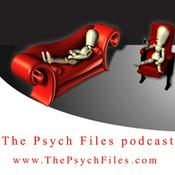
Learn how theories in psychology affect you in everyday life. Upbeat and interesting podcasts from experienced psychology teacher Michael Britt give you a bit more insight into you and your life.
Podcast-Website

Höre Psychology in Everyday Life: The Psych Files, {ungeskriptet} - Gespräche, die dich weiter bringen und viele andere Podcasts aus aller Welt mit der radio.at-App

Hol dir die kostenlose radio.at App

  • Sender und Podcasts favorisieren
  • Streamen via Wifi oder Bluetooth
  • Unterstützt Carplay & Android Auto
  • viele weitere App Funktionen
Psychology in Everyday Life: The Psych Files: Zugehörige Podcasts
Rechtliches
Social
v8.9.8| © 2007-2026 radio.de GmbH
Generated: 6/13/2026 - 8:15:57 AM