Zum Inhalt springen
PodcastsNachrichtenThe Chuck ToddCast

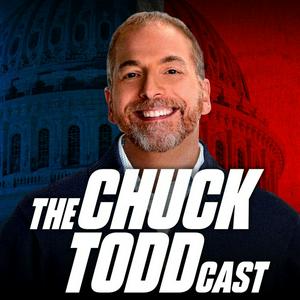
The Chuck ToddCast

iHeartPodcasts
The Chuck ToddCast
Neueste Episode

527 Episoden

  • The Chuck ToddCast

    Alabama: How the Crimson Tide Took Over College Football (Part 1)

    18.08.2026 | 58 Min.
    Chuck Todd and J.A. Adande explore the origins of the Crimson Tide and the remarkable rise of Bear Bryant. From Alabama’s early Rose Bowl triumphs and the beginnings of the Crimson Tide name to Bryant’s near-departure for the Miami Dolphins, they trace the moments that helped turn Alabama into the standard of college football.
    They also examine one of the most complicated chapters in the program’s history: integration, Bear Bryant’s role in a changing South, and Alabama’s landmark 1970 matchup with USC.
    It’s the story of how football became inseparable from Alabama—and how the foundation was laid for one of the greatest dynasties in sports history.
    See omnystudio.com/listener for privacy information.
  • The Chuck ToddCast

    Super Tuesdays - 2028 Presidential Preview: AOC Rising, Newsom Overrated, Harris Out

    18.08.2026 | 1 Std. 1 Min.
    With under 80 days to the midterms, Chuck Todd and Chris Cillizza pause the horse race for a full "where are we now" audit of the 2028 Democratic field — prompted, Chris admits, by listener pushback that they'd been too dismissive of Gavin Newsom. Using the Kalshi and Polymarket odds as a starting point rather than gospel, they work through a top tier of AOC, Newsom, and Jon Ossoff. Chuck's central thesis is that AOC could become a magnetic force on the scale of Trump in 2016 or Obama in 2008 — a candidacy the entire field gets measured against, potentially freezing out half the governors and senators eyeing a run. He maps how she could be the frontrunner while playing underdog in South Carolina, and why the new calendar's crowded first state may actually cushion her. On Newsom, Chuck is blunt: the prediction markets are artificially inflating him, the attention economy is doing the work, and a California governor with a mixed record has no obvious state to win. They also make the case that Kamala Harris ultimately doesn't run — and that not running is the smarter play for 2032.
    The back half turns to the field's second tier and its long shots: whether Mark Kelly has the hunger and the issue to go with the biography (Chuck's dream ticket: Kelly and Warnock, order randomized), why John Glenn and Bill Bradley are the cautionary tales for résumé candidates, whether Ossoff can realistically jump straight from an $87 million Senate race into a billion-dollar presidential campaign, and a genuine dark-horse case for Rahm Emanuel built on the party's underinvestment in rural Black voters. They preview Tuesday's Florida primary — Byron Donalds's real ceiling, why Chuck thinks the general could land inside five points, the Mel Martinez precedent, and Corey Mills, Debbie Wasserman Schultz, and Alex Vindman. Then the tone shifts hard: an angry, unsparing exchange about the expired US-Iran memorandum, the Strait of Hormuz, conditions aboard the USS Abraham Lincoln, and Pete Hegseth's fitness for the job.
    Timeline:
    (Timestamps may vary based on advertisements)
    00:00 Under 80 days out — and a full 2028 Democratic audit
    01:06 Why Chuck thinks JD Vance will divide the right
    02:08 The prediction markets as one data point, not the whole story
    02:55 Reading Polymarket and Kalshi: AOC, Newsom, Ossoff at the top
    05:12 Could AOC suck up all the oxygen the way Trump did in '16?
    06:15 The egg-freezing story as proof of her magnetic pull
    06:42 Skeptical Newsom can play in Michigan, Iowa, South Carolina
    07:30 The impossible position for Newsom
    08:16 AOC's advantage — no long record to defend
    09:38 Could egg-freezing access become an issue she champions?
    10:01 How her presence could paralyze half the field before it starts
    10:57 Where does that leave Pritzker? Or Ossoff?
    11:59 The formalized DNC calendar
    13:37 Nevada, Michigan and the Culinary Union question
    14:42 Why a crowded South Carolina helps the progressive lane
    15:13 What 2020 looked like when South Carolina came fourth
    15:49 Newsom's real problem: where does he actually win?
    16:59 Harris's East Coast headquarters lesson
    17:22 Advice: put your HQ in Michigan, not San Francisco
    19:42 The counterargument: no gatekeepers left, and the hustler wins
    20:10 Ossoff, Buttigieg & who's actually willing to burn the boats
    21:08 Newsom one-on-one vs. Newsom in a big room
    22:08 Would a swing-state Democrat invite Newsom to campaign?
    23:04 Harris analysis: you don't buy in Malibu if you're running
    24:06 The Dan Quayle risk if she runs under these circumstances
    25:01 Newsom and Harris can't both run
    26:20 Mark Kelly in Iowa & the quote that reads like a stump speech
    27:15 Chuck's lab-built ticket: an astronaut and a pastor
    27:50 Will the Democratic base accept Kelly?
    29:30 Is Kelly too pro-business for this version of the party?
    30:45 How Trump's attacks on Kelly may have helped him
    31:33 The real gap: Kelly has no signature issue
    32:03 AOC is the change candidate — inside the party and outside it
    33:09 Biographies don't win the presidency
    33:30 The cautionary tales: John Glenn and Bill Bradley
    35:08 The charisma gap — and Kelly's habit of yelling to show energy
    35:55 Scanning the long shots on the board
    36:55 If not AOC, then Ro Khanna
    37:16 Pritzker at 1% — the governor who could reach the left
    37:46 Chuck's real dark horse: Rahm Emanuel
    39:32 Democrats' rural problem isn't just rural whites
    39:59 The left will never accept him
    42:07 Not a cycle for an insider — but maybe for an ideas guy
    42:27 The Wisconsin lesson: Crowley won against something
    42:50 To Florida: Tuesday's primary and Tuesday night's live stream
    43:35 Jolly-Donalds could land inside five points
    44:01 Why Florida isn't as noncompetitive as people assume
    44:44 Could DeSantis win a third term?
    45:24 What's Donalds's real number?
    46:16 The Mel Martinez precedent
    48:29 Why Chuck thinks Jerry Demings had the better shot at Donalds
    49:56 The 2018 what-if: Bernie, Soros, Gillum and DeSantis
    50:43 Credit to DeSantis for saying what Trump never does
    51:48 Debbie Wasserman Schultz in a majority-Black district
    52:38 The Vindman question — and the residency problem
    54:23 The US-Iran memorandum expires with no deal
    55:46 A $1.5 trillion budget and a carrier crew that can't get fed
    56:11 Testosterone tests and push-up contests while the Lincoln goes short
    56:33 Operationally a disaster — and where's the audit?
    57:57 Damaging the last institution still standing
    59:51 The Nats get swept by the Mets
    See omnystudio.com/listener for privacy information.
  • The Chuck ToddCast

    Interview Only w/ Jonathan Martin - Sizing Up The 2028 Presidential Contenders

    17.08.2026 | 1 Std.
    Politico politics bureau chief and senior political columnist Jonathan Martin joins the Chuck Toddcast for a reporter's-eye tour of the 2028 landscape, starting from an observation both men keep circling: the governing wing of each party is badly out of step with its own voters. Martin walks through the Democratic field with real granularity. Pete Buttigieg carries genuine Biden baggage and is fundamentally a creature of institutions — he isn't going to burn the house down, which is precisely why the left will never trust his establishment credentials, and why Martin wonders aloud whether his future might be more as an advisor than a candidate. On AOC, Martin's read is that the entire question is simply whether she runs: if she does, she's the lead car in the progressive lane and could clear it outright, and she'd be formidable in a crowded field. He notes it's no accident she reemerged right after El-Sayed's Michigan win, that she's been careful and disciplined about picking her spots during the primaries, and that she more than held her own speaking at Ebenezer Baptist church — which matters enormously given the Democratic calendar was explicitly designed to stymie progressives by putting South Carolina first. Martin isn't at all convinced Jon Ossoff runs, even though Ossoff checks every box on the list of things Democrats have historically wanted, and he thinks Abdul El-Sayed could be a genuinely formidable presidential candidate. The overarching question, as Martin frames it, is whether Democrats vote with their head or their heart in 2028 — a decision the November midterms will shape more than anything else.
    On the Republican side, they point out Vance simply wasn't a good candidate when he ran for Senate and needed both Trump and Peter Thiel to drag him over the finish line, that Rubio's presidential campaigns always ran into whoever's "turn" it was, and that the fastest way to lose in this environment is to be seen as one of the donor candidates. Vance's real challenge, Martin argues, is the Tucker Carlson model — and the open question of who carries that banner in 2028. He and Chuck agree the far left is currently stronger than the far right within their respective parties, and that insurgencies are a natural feature of the party out of power. Nothing, Martin says flatly, gets better for Republicans between now and the midterms; the Iranians want to humiliate Trump and Jimmy Carter him, and they're timing their moves to the American political calendar. They agree Democrats are either picking up two Senate seats or six with very little in between, and predict Greg Abbott will have to spend real money to win in Texas. Plus: why in-person interviews still beat remote ones, the disappearance of the old guard of Tennessee Republican politics, how Buttigieg's sexuality might factor into a national campaign, why online small-dollar money means Democrats no longer need to court only big donors — and whether UVA can actually contend in football this year.

    Upgrade your everyday. Go to https://Quince.com/CHUCK for free shipping on your order and 365-day returns.
    Play ball and swing for the fences on FanDuel, an official partner of the MLB at https://FANDUEL.COM.
    For free and unbiased Medicare help, dial (980) 734-3985 to speak with my trusted partner, Chapter, or go to askchapter.org/chuck / *Paid Partnership

    Chapter and its affiliates are not connected with or endorsed by any government entity or the federal Medicare program. Chapter Advisory, LLC represents Medicare Advantage HMO, PPO, and PFFS organizations and stand alone prescription drug plans that have a Medicare contract. Enrollment depends on the plan’s contract renewal. While we have a database of every Medicare plan nationwide and can help you to search among all plans, we have contracts with many but not all plans. As a result, we do not offer every plan available in your area. Currently we represent 50 organizations which offer 18,160 products nationwide. We search and recommend all plans, even those we don’t directly offer. You can contact a licensed Chapter agent to find out the number of products available in your specific area. Please contact Medicare.gov, 1-800-Medicare, or your local State Health Insurance Program (SHIP) to get information on all of your options.
    Timeline:
    (Timestamps may vary based on advertisements)
    00:00 Jonathan Martin joins The Chuck ToddCast
    01:30 Why in-person interviews are so much better than remote
    03:30 The old guard of GOP politics in Tennessee are gone
    05:30 The governing wing of each party aren’t agreeing with the voters
    06:15 How does Pete Buttigieg navigate carrying “Biden baggage”?
    06:45 Pete is a creature of the institutions, he won’t burn down the house
    07:30 The left won’t ever trust Pete’s establishment credentials
    08:30 How Pete’s sexuality could affect a presidential run
    09:30 Is his future more in an advisor role than an elected official?
    12:00 If AOC runs in 2028, she’ll be the lead car in the progressive lane
    13:30 The question surrounding AOC is “will she or won’t she run”
    14:00 The presidential campaign will be shaped by November midterms
    14:30 Do the Dems go with their head or their heart in 28?
    16:45 Insurgencies happen in this environment for party out of power
    18:15 Nothing gets better between now and the midterms for Republicans
    19:45 The Iranians want to humiliate Trump and “Jimmy Carter” him
    20:45 Besides Vance, Rubio and Youngkin, who else might run for the GOP?
    21:30 Who carries the Tucker Carlson banner in ‘28?
    23:45 Vance was not a good candidate when he ran for senate
    24:30 Vance needed Trump & Peter Thiel to get him over the finish line
    25:30 Rubio’s campaigns were challenging the person whose turn it was
    26:45 You don’t want to be seen as one of the “donor candidates”
    27:30 Vance’s biggest challenge will be of the Tucker model
    28:00 The far left is stronger than the far right
    31:00 Democrats primary calendar designed to stymie progressives
    32:00 Impact of South Carolina going first
    33:30 AOC would clear progressive lane & be formidable in crowded field
    34:30 Not at all convinced that Jon Ossoff runs in ‘28
    35:00 Democrats have a type, and Ossoff checks all those boxes
    36:15 Abdul El-Sayed could be formidable as a presidential candidate
    37:00 AOC could emerge from South Carolina in a strong position
    37:30 AOC held her own speaking at Ebenezer Baptist church
    38:15 Not an accident AOC reemerged after El-Sayed’s win
    40:15 AOC has been smart and careful to pick her spots during primaries
    41:30 What will keep prominent Dems from running?
    42:00 There’s lots of Dem donor money online, don’t need only big $ donors
    43:30 Dems are either picking up two senate seats… or six
    44:30 How cemented is the red/blue map?
    47:00 Kansas could be ‘06 Indiana but Dem hasn’t won senate seat since 30s
    48:15 Voters don’t like the public school funding cuts for vouchers
    49:30 Greg Abbott will have to spend big to win his race
    50:00 Will UVA be a contender in football?
    See omnystudio.com/listener for privacy information.
  • The Chuck ToddCast

    TODDCAST SPECIAL REPORT Part 2 - Did The Lakers Sale Reveal The Next Financial Crisis Waiting To Happen?

    17.08.2026 | 50 Min.
    In Part 2 of this ToddCast Special Report, Chuck Todd picks up the thread where Part 1 left it: if an insurance company's capital cushion is determined by how risky its investments are judged to be, then who is doing the judging? The answer leads to private letter ratings — a corner of finance almost no one outside it has heard of, and one that has exploded in size. Wall Street Journal reporting by Shane Shiflett and Heather Gillers assembled data on nearly 18,000 privately rated instruments held by U.S. insurers, and the growth curve is the number to remember: roughly $47 billion in 2018 to roughly $480 billion seven years later, with one estimate putting total private credit in insurance portfolios near $1 trillion. Much of that grading runs through firms most people have never heard of, and Chuck focuses on Egan-Jones, which privately graded roughly $40 billion of debt held by U.S. insurers, faces a 2024 lawsuit from two former executives alleging they were fired after raising conflict-of-interest concerns and that the firm pressured staff to inflate ratings, has drawn SEC questions about its reliability, and in January was removed by Bermuda regulators from their list of recognized ratings providers — all of which Egan-Jones forcefully denies, saying it stands behind the integrity and independence of its work. Chuck is careful throughout about what this does and does not establish: agencies can legitimately disagree, private raters often see borrower information outsiders never will, and none of it means any particular rating is wrong. It means the ratings deserve scrutiny, because if the grade helps set the size of the rainy day fund, being wrong about the grade means being wrong about the cushion.
    From there the episode widens out. Chuck walks through what a clean audit opinion actually certifies versus what people assume it certifies, revisits Executive Life — the insurer that reached for yield in junk bonds in the 1980s and was eventually seized — as a more instructive warning than Enron or 2008, and is direct that this is not a story about an insurer on the brink: Group 1001 says it is cooperating fully and that its financial position remains sound, Delaware Life reported roughly $69 billion in assets as of March and Clear Spring roughly $16 billion, and no charges have been announced against the companies or any individuals. AM Best has affirmed both companies' A- (Excellent) financial strength ratings while revising their outlooks to negative following the reclassification of private credit investments from unaffiliated to affiliated. Complicated private assets are not insolvency; related-party exposure is not insolvency; a federal investigation is not insolvency. The question Chuck is actually chasing is structural — whether a system split across fifty state insurance departments, the SEC, the Fed, offshore reinsurance regulators, and private ratings firms can assemble the whole machine fast enough when one piece breaks, and whether the real lesson of the post-2008 era is that we made the banks safer without ever asking where the behavior would go. He lays out three ways this ends, six specific questions he'd chase with subpoena power he doesn't have, and — unusually — the exact evidence that would bring him back in six months to say the warning lights looked worse than the engine. Because capitalism doesn't run on money alone. It runs on people believing that a price means what it says, that a rating means something, and that somebody understands the risk underneath a promise made to a retiree thirty years out.
    Timeline:
    00:00 Recapping Part 1: inside Mark Walter's world of structured finance
    00:30 Who looked inside the box and decided how safe it was?
    01:00 Why the risk grade determines the size of an insurer's cushion
    01:30 Credit rating agencies as the report card for debt
    02:00 A better grade can mean less capital sitting behind it
    02:15 The special purpose vehicle, the note, and the rating
    02:45 Does the grade on the box accurately reflect what's inside?
    03:15 WSJ data on nearly 18,000 privately rated investments
    03:30 From $47 billion in 2018 to $480 billion seven years later
    03:45 One estimate puts private credit near $1 trillion in insurance portfolios
    04:15 What "privately rated" actually means
    04:30 Private letter ratings and what the public can't see
    05:00 Why the quality and independence of the rating matters so much
    05:15 Egan-Jones — and the Arthur Andersen flashback
    05:45 The ratings agencies you know, and the one you don't
    06:00 Roughly $40 billion of insurer-held debt privately rated by Egan-Jones
    06:15 Egan-Jones also rated the Dodgers TV network debt
    06:30 Following the chain from annuity customer to capital cushion
    06:45 Who pays the ratings agencies? The inherent tension
    07:15 The Journal's comparison: roughly one grade higher on average
    07:45 Egan-Jones strongly disputes the Journal's analysis
    08:00 Former executives' lawsuit alleging pressure to inflate ratings
    08:15 Egan-Jones denies it; the SEC has examined its processes
    08:30 Bermuda removed Egan-Jones as a recognized ratings provider
    08:45 Allianz's response: requiring a second rating
    09:15 This doesn't mean the ratings are wrong — it means scrutiny
    09:30 Enter the auditor: KPMG and the clean opinions
    10:00 What an audit opinion addresses — and what it doesn't
    10:30 The right question to ask about a clean opinion
    11:00 Executive Life: the more useful historical warning
    11:30 Junk bonds, Michael Milken, and the reach for yield
    12:00 How Executive Life ended — and why it isn't the same thing
    12:15 The evidence that cuts against the scariest version of this story
    12:30 Delaware Life's reported assets, capital, and surplus
    12:45 Financial strength ratings and what "A-" actually means
    13:00 The more recent caution from the ratings agencies
    13:30 This is not an insurer on the verge of seizure
    13:45 The real question: confidence in conventional measures of strength
    14:00 Why asset quality matters when you're backing promises
    14:30 The safety net: state guaranty associations
    14:45 And who ultimately pays for that safety net
    15:00 Accumulating echoes: Executive Life, Enron, and 2008
    15:45 The warning lights of 2026
    16:15 Not a crisis — but a reason to ask better questions
    16:30 Can regulators adapt as fast as the system is changing?
    17:00 What regulators are actually doing right now
    17:30 This is not asleep-at-the-switch
    17:45 The structural problem: nobody sees the whole machine
    18:15 Fifty states, fifty insurance departments
    18:45 Why we regulate different financial businesses differently
    19:00 Assembling the machine when each regulator holds one piece
    19:45 Finance moves at the speed of a term sheet
    20:15 Regulation moves at the speed of rulemaking
    20:45 Understanding regulatory arbitrage
    21:00 Same television, different rules
    21:45 Most regulatory arbitrage is perfectly legal
    22:00 But risk doesn't change just because the address does
    22:15 Why regulators are reconsidering what qualifies as a bond
    22:30 Show me what's inside the box, not the wrapping paper
    23:00 The rules are being rewritten — but the money is already there
    23:30 The mistake Washington may have made after 2008
    24:00 You can't pass a law eliminating the desire to make money
    24:45 The campaign finance parallel
    25:00 We regulated the scene of the accident
    25:30 We get very good at preventing the last financial crisis
    26:00 Incentives work: if banks pull back, somebody else lends
    26:15 Maybe the behavior simply migrated
    27:15 The systemic stress test Chuck doesn't think we can pass
    27:45 Why the investigation is useful regardless of the outcome
    28:00 Looking through the legal boxes to the economics underneath
    28:30 Where the central argument lands
    29:15 What happens when something goes wrong? The honest answer
    29:30 The strongest case that nothing catastrophic happens
    30:00 Why private credit isn't structured like a bank run
    30:15 Longer-term liabilities and patient money
    30:45 Three ways this story could end
    31:00 Possibility one: Walter is the problem
    31:15 Possibility two: an extreme example of a manageable problem
    31:45 Possibility three: Walter is the X-ray
    32:00 What we do — and don't — have evidence of
    32:30 Being careful not to invent the next 2008
    32:45 Where pressure could actually come from
    33:15 When patient money becomes less patient
    33:30 Other sources of insurance funding under stress
    33:45 Borrowing, credit lines, and reinsurance triggers
    34:00 Who else made a promise based on that valuation?
    34:15 Being fair to Delaware Life and Clear Spring
    34:45 The narrower question: how much stress can the cushions absorb?
    35:15 Back to the Lakers one last time
    35:45 Why you sell the thing you can sell
    36:00 What Chuck is and isn't ready to say
    36:30 If I had subpoena power: the reporting roadmap
    37:00 What open-source reporting can and can't do
    37:30 One: open the boxes and show the underlying assets
    37:45 Two: did the structure change the regulatory treatment?
    38:15 Schedule D vs. Schedule BA — show us the math
    38:30 Three: who graded the box, and on what information?
    38:45 Four: why did 3% become something vastly larger?
    39:00 Who made that judgment, and what changed after the subpoenas?
    39:30 Five: did the Lakers money actually matter?
    39:45 Six: how much stress can these insurers absorb?
    40:15 What we know, and what we don't
    40:30 The final test: what would make Chuck say he was too worried
    40:45 Show me the marks hold up
    41:15 "I'd love to make that podcast"
    41:30 What this story already tells us
    41:45 Coming back to Josh Kushner and the timing
    42:00 No evidence of a quid pro quo
    42:15 Why the political question is the smaller question
    42:45 The more consequential story
    43:00 The full thread: Lakers to Walter to Dodgers to private credit
    43:30 What we have and haven't established
    43:45 We reinforced the part of the house that burned down
    44:15 Every private equity firm wanted its own insurance company
    44:30 "Money always finds a way"
    45:00 The failure was assuming we'd solved the behavior
    45:15 Why this matters well beyond Wall Street
    45:30 Our hypothetical retiree, and what she has to trust
    45:45 Capitalism runs on trust, not just money
    46:15 If that trust breaks, everyone finds a different villain
    46:45 Where Chuck's instincts are — and what the evidence doesn't establish
    47:00 What would change his mind
    47:15 Why it's fitting we got here through the Lakers
    47:45 Let's figure out what it is before the patient gets sick
    See omnystudio.com/listener for privacy information.
  • The Chuck ToddCast

    TODDCAST SPECIAL REPORT Part 1 - Did The Lakers Sale Reveal The Next Financial Crisis Waiting To Happen?

    17.08.2026 | 1 Std. 16 Min.
    What started as a simple sports question: why did Mark Walter sell the Los Angeles Lakers after just 14 months? — turned into something else entirely. In Part 1 of this two-part ToddCast Special Report, Chuck Todd pulls the thread from a record $12.5 billion franchise sale to the life insurance companies, private credit vehicles, and obscure Delaware LLCs sitting underneath one of the least understood transformations in American finance since 2008. The facts on the record: Walter's Delaware Life Insurance Co. and Clear Spring Life and Annuity Co. received grand jury subpoenas from Manhattan prosecutors in February, disclosed in June 26 regulatory filings, with a parallel SEC review, following earlier inquiries into Guggenheim's $362 billion money management arm. After receiving the subpoenas, both insurers conducted internal reviews, found reporting errors, and revised earlier disclosures — with Delaware Life disclosing an additional $16 billion in private credit assets linked to affiliated entities beyond what had previously been reported. Chuck is emphatic about what that does not mean: no money disappeared, no loans were declared bad, and a disclosure change is not a financial loss. No charges have been announced against the companies or any individuals, Group 1001 says it is cooperating fully with federal authorities and that its financial position remains strong, and the filings did not state that assets were improperly managed or that investors suffered losses.
    From there, Chuck builds the machine from the ground up in plain English — a retiree in Indiana buying an annuity, an insurer that has to earn enough to keep that promise, a post-2008 world where banks got safer and the risky lending simply moved somewhere with no public market attached to it. He traces Walter's career from asset-backed securitization in the 1990s through the 2012 Dodgers purchase (and the question Andrew Ross Sorkin asked at the time about where the money came from), through the corporate genealogy of Guggenheim, Delaware Life, Clear Spring, and Group 1001, to insurance filings showing hundreds of millions in debt tied to the Dodgers' regional sports network and ticket revenue. He credits the reporting he's leaning on throughout — Katie Baker at The Ringer, independent researcher Nick Nemeth at Mispriced Assets, plus Bloomberg, the Wall Street Journal, and the Financial Times — and he is scrupulous about the line between what the public record establishes and what it simply cannot. The core question isn't whether anyone broke the law; investigators with subpoena power will answer that. It's whether we understand this system well enough to know what happens when it comes under stress — because when the assets underneath an institution's balance sheet can't be continuously tested in a public market, how much confidence should any of us have in the numbers? Part 2 continues the story.
    Timeline:
    00:00 Why did Mark Walter sell the Lakers? Pulling the thread
    00:30 This stopped being a basketball story
    00:45 A record $12.5B sale — and why the seller is the story, not the buyers
    01:15 Walter took control just 14 months earlier at a $10B valuation
    01:30 The thread led to life insurance companies
    02:00 A financial market that's grown enormously since the last crisis
    02:30 Things that rhyme with 2008 — and things that rhyme with Enron
    02:45 Executive Life: the insurer that failed three decades ago
    03:15 Three different historical examples — not the same thing
    03:45 Not saying another 2008 is coming
    04:00 "A sneaking suspicion we may be looking at the beginning of something very bad"
    04:15 The questions public filings simply cannot answer
    05:15 Why some answers only exist in depositions
    05:30 Why the federal investigation matters — subpoena power
    06:00 The rule for this episode: what we know vs. what we don't
    06:30 The central question about measuring financial strength
    07:15 Why this should be a five-alarm fire for regulators
    07:45 An enormous market built around things that are private by definition
    08:15 Credit where it's due: The Ringer, Mispriced Assets, WSJ, Bloomberg, FT
    09:15 Connecting dots vs. building a case
    10:00 We made banks safer after 2008 — the money went somewhere else
    11:00 Even if it's all legal, the larger question remains
    11:45 A simple rule: when someone tells you "it's complicated"
    12:15 Complexity as a feature, not a bug
    13:00 The innocent explanation: a $2.5B gain in 14 months
    13:30 Iger and Kushner were already exploring an NBA expansion team
    13:45 Why buy the Lakers instead of building from scratch
    14:45 What "valued at $10 billion" does and doesn't mean
    15:30 We don't know how much cash Walter personally receives
    15:45 Why sell at all? Walter collects teams, he doesn't flip them
    16:30 Why only the Lakers? He's keeping the Dodgers
    17:15 February grand jury subpoenas and the parallel SEC review
    17:30 The disclosure change inside the insurers' filings
    18:15 A disclosure change is not a financial loss
    19:30 Nobody's been charged; companies say they're cooperating
    20:00 Reporting on liquidity — and the precision that question requires
    21:00 Why the timing is a legitimate reporting question
    21:15 Keeping two separate sports stories separate
    21:45 The FIFA deal collapsed roughly 10 days before the Lakers deal
    22:15 What the timing does and does not establish
    23:00 The political question: Josh Kushner, Jared Kushner, the executive branch
    23:45 The pattern is context — it is not evidence
    24:00 No evidence of a quid pro quo
    24:45 Why the question stays on the shelf
    25:15 What does "billionaire" actually mean?
    26:00 Who is Mark Walter? Cedar Rapids, a concrete plant, and anonymity
    27:15 "I'm nothing special. I'm just the king of common sense."
    27:45 Why the low profile matters to this story
    28:30 Liberty Hampshire and asset-backed securitization
    29:30 Meeting the Guggenheims and building Guggenheim Partners
    30:45 Wealth vs. commanding capital that isn't yours
    31:45 2012: buying the Dodgers, and the Frank McCourt cautionary tale
    33:00 Baseball wanted the exact opposite of McCourt
    33:45 Andrew Ross Sorkin's question: where's the rest of the money?
    34:15 Insurance company capital in the Dodgers financing
    35:15 How does retirement money end up near a baseball team?
    36:30 Following the money: a hypothetical retiree in Indiana
    37:15 The annuity bargain and what insurers do with the money
    38:15 How 2008 scrambled the insurance business
    39:00 Low rates and the hunt for yield
    39:45 Chuck's Widget Company and the loan the bank won't make
    41:00 Money always finds a way — the lesson from campaign finance
    41:45 What private credit actually is
    42:15 The genuine advantages of private credit
    43:00 Stickier capital — and why runs still happen
    43:45 Private credit isn't inherently bad. What happens when it gets big?
    44:15 No public market means no continuous price check
    45:15 What replaces the market as the check on valuation?
    46:00 Two sides looking for each other
    47:00 Multiplying one retiree's $100,000 by hundreds of thousands
    47:45 What happens when the same person owns both sides?
    48:30 This is an entire industry, not one man's invention
    49:15 Guggenheim's move into insurance and the roots of Group 1001
    50:30 The ecosystem: asset management, insurance, private credit
    51:00 Why the corporate structure is so hard to follow
    51:30 Sportsnet LA and American Media Productions
    52:00 Roughly $587M of that debt held by the two insurers, per filings
    52:30 Dodgers Tickets LLC and slicing up a franchise
    53:00 Is the Dodgers one entity or many?
    53:30 Asset-backed securitization, applied to a baseball team
    54:30 Is lending against Dodgers TV revenue inherently bad?
    55:00 The brother analogy: conflicts and other people's money
    55:30 February: subpoenas to Delaware Life and Clear Spring
    56:15 The assets were always on the books — the question is characterization
    56:30 General interrogatory 13.2 and the original 3% answer
    57:00 The revised figure: roughly $16.4B described as dependent on affiliates
    57:30 Three separate questions the public record can't resolve
    58:15 What the internal reviews concluded
    58:45 Comparing that figure to Delaware Life's reported capital and surplus
    59:15 What the number does NOT mean
    59:45 Concentration, governance, and disclosure
    1:00:30 The questions that actually matter
    1:01:00 Why the opacity itself is part of the story
    1:01:15 Someone looked at the individual borrowers, one by one
    1:02:00 Nick Nemeth and the Mispriced Assets research
    1:03:15 Why independent research matters in the new media world
    1:03:45 Roughly 230 holdings with striking similarities
    1:04:00 The names: Verdant Hills, Pines, Iroquois, Yellow Creek
    1:04:30 Special purpose vehicles — what's inside the box?
    1:05:00 The legitimate reasons to use an LLC
    1:05:30 How structure can change regulatory treatment
    1:06:15 Does the legal wrapper describe the economic risk underneath?
    1:06:45 Does that explain 230 vehicles? We don't know.
    1:07:15 The echo of the mortgage crisis
    1:08:00 Formation dates, filing numbers, and same-day funding
    1:08:45 Roughly 44% of positions held by both insurers, purchased the same day
    1:09:15 Innocent explanations exist — but this looks like a system
    1:09:30 The questions only investigators can answer
    1:10:00 Identification numbers and why outsiders can't check a price
    1:10:45 A sophisticated process may exist — but it isn't a public market
    1:11:15 What's a private note worth this morning?
    1:11:30 Carried at or near purchase price: the concern raised
    1:12:00 The great irony: the Lakers are the easy thing to value
    1:12:30 Who owns these investments — and who was promised what
    See omnystudio.com/listener for privacy information.
Weitere Nachrichten Podcasts

Über The Chuck ToddCast
The Chuck ToddCast is back! If you're looking for smart, no-nonsense political conversation, you've come to the right place. The Chuck ToddCast goes beyond the headlines, featuring conversations with top reporters, insiders, and newsmakers from D.C. to the heartland. No scripts, no spin—just real discussions about what’s shaping our politics and why it matters.
Podcast-Website

Höre The Chuck ToddCast, Ö1 Journale und viele andere Podcasts aus aller Welt mit der radio.at-App
Hol dir die kostenlose radio.at App

  • Sender und Podcasts favorisieren
  • Streamen via Wifi oder Bluetooth
  • Unterstützt Carplay & Android Auto
  • viele weitere App Funktionen
The Chuck ToddCast: Zugehörige Podcasts

Rechtliches
Social
v8.14.3 | © 2007-2026 radio.de GmbH
Generated: 8/18/2026 - 9:24:46 PM