
Höre diesen Podcast kostenlos in der App: Kostenlos im App Store laden
radio.at
Sleeptimer
Sender speichern
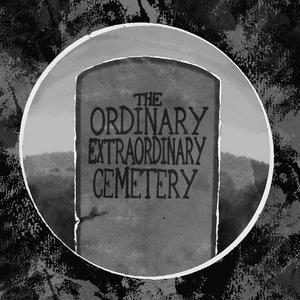
The Ordinary, Extraordinary Cemetery
Jennie Johnson & Dianne Hartshorn
Neueste Episode
297 Episoden
Episode 297 - Death and Dying 101 With Ryan Seidemann: Episode 12
15.10.2026 | 44 Min.Send us a text! We love hearing from listeners. If you'd like a response, please include your email.
Jennie and Dianne are once more joined by Ryan Seidemann to explore death and remembrance through a cross-cultural lens. Drawing from questions posed by students in Ryan's fall course at Arizona State University, "Death and Dying in Cross-Cultural Perspective," the three discuss whether burial archaeology reveals past beliefs or modern projections, whether respect for the dead is universal, and how public memorials and preserved bodies shape collective memory.
They also examine the ethical line between honoring a historical leader and stripping them of personal rights after death, whether sites like the French Catacombs should remain tourist attractions, and whether equality in death is a new idea.
Need an Ordinary Extraordinary Cemetery Podcast tee, hoodie or mug? Find all our taphophile-fun merch here: https://oecemetery.etsy.com
Family Tales: A free printable is now available! Gather 'round the table and dig into your roots! This interactive family history game is perfect for holidays, reunions, or just because. Ask, listen, and laugh your way through generations of stories and secrets. https://drive.google.com/file/d/1UT_R56qEwNTIxIBrTy8KFyVmGnFOe7g8/view?usp=sharing
Support the showEpisode 296
01.10.2026 | 30 Min.Send us a text! We love hearing from listeners. If you'd like a response, please include your email.
Support the showEpisode 295
24.09.2026 | 18 Min.Send us a text! We love hearing from listeners. If you'd like a response, please include your email.
Support the showEpisode 394 - An Ordinary Extraordinary Repatriation with Ryan Seidemann
17.09.2026 | 39 Min.Send us a text! We love hearing from listeners. If you'd like a response, please include your email.
This week, our favorite forensic anthropologist Ryan Seidemann joins us to discuss his Ordinary Extraordinary role in one of the first repatriations of its kind in the United States.
In 1871-1872, nineteen men and women of African descent died at New Orleans' Charity Hospital. What happened next should never have happened. Their remains were removed and sent to Germany, where they became part of a collection built for racially biased phrenology research.
In 2023, Leipzig University contacted the City of New Orleans to initiate repatriation. On May 15, 2025, the ancestors were carefully packed and flown home, and on May 31, 2025, Dillard University, the City of New Orleans, and community partners held a memorial service and traditional jazz funeral to lay them to rest.
Join Jennie, Dianne and Ryan for this especially moving episode.
To see the full event "Honoring the Nineteen", click here: https://www.dillard.edu/about/history-traditions/honoring-the-nineteen/
Beyond the Grave 2026: Gothic Tragedies of the Gilded Age Tickets: https://www.eventbrite.com/e/beyond-the-grave-presents-gothic-tragedies-of-the-gilded-age-tickets-1997269261125?aff=oddtdtcreator
Need an Ordinary Extraordinary Cemetery Podcast tee, hoodie or mug? Find all our taphophile-fun merch here: https://oecemetery.etsy.com
Family Tales: A free printable is now available! Gather 'round the table and dig into your roots! This interactive family history game is perfect for holidays, reunions, or just because. Ask, listen, and laugh your way through generations of stories and secrets. https://drive.google.com/file/d/1UT_R56qEwNTIxIBrTy8KFyVmGnFOe7g8/view?usp=sharing
Support the showEpisode 293 - Love Gone Wrong
03.09.2026 | 50 Min.Send us a text! We love hearing from listeners. If you'd like a response, please include your email.
This week on the Ordinary Extraordinary Cemetery, Jennie and Dianne unearth a love story gone wrong in Southeastern Colorado that left more than one heart broken. Listen along as they learn about the Bishop brothers: one ended up six feet under, while the other began adulthood behind the walls of the Colorado State Penitentiary in Cañon City.
What started as jealousy and a rumored affair led to a tragedy that shocked a small prairie town where everyone knew everyone else's business. Who was the woman in the middle? What led to that fateful August evening? And where do the brothers rest today?
Join Dianne and Jennie as they piece together newspaper archives, prison records, and gravestones to uncover a century-old story of family, love, and loss.
Beyond the Grave 2026: Gothic Tragedies of the Gilded Age Tickets: https://www.eventbrite.com/e/beyond-the-grave-presents-gothic-tragedies-of-the-gilded-age-tickets-1997269261125?aff=oddtdtcreator
Need an Ordinary Extraordinary Cemetery Podcast tee, hoodie or mug? Find all our taphophile-fun merch here: https://oecemetery.etsy.com
Family Tales: A free printable is now available! Gather 'round the table and dig into your roots! This interactive family history game is perfect for holidays, reunions, or just because. Ask, listen, and laugh your way through generations of stories and secrets. https://drive.google.com/file/d/1UT_R56qEwNTIxIBrTy8KFyVmGnFOe7g8/view?usp=sharing
Resources used to research this episode include the following historical newspaper articles, as well as various additional articles from Newspapers.com and documents from Ancestry.com.
"Brother Slays Brother Southwest of Campo Love for Latter's Wife." The Democrat-Herald [Springfield ], 31 Aug. 1923, p. 1.
"Trinidad, Colo.." Fort Collins Coloradoan [Fort Collins], 24 Sep. 1923, p. 2.
Support the show
Weitere Geschichte Podcasts






Trending Geschichte Podcasts






Über The Ordinary, Extraordinary Cemetery
The Ordinary, Extraordinary Cemetery is a podcast for cemetery lovers, preservationists, and even those who've never walked among the graves. Join hosts Jennie and Dianne as they explore old cemeteries and learn the stories of those buried within their walls. After all, every death had a life, and every life had a story.
Podcast-WebsiteHöre The Ordinary, Extraordinary Cemetery, Terra X History - Der Podcast und viele andere Podcasts aus aller Welt mit der radio.at-App
Hol dir die kostenlose radio.at App
- Sender und Podcasts favorisieren
- Streamen via Wifi oder Bluetooth
- Unterstützt Carplay & Android Auto
- viele weitere App Funktionen
Hol dir die kostenlose radio.at App
- Sender und Podcasts favorisieren
- Streamen via Wifi oder Bluetooth
- Unterstützt Carplay & Android Auto
- viele weitere App Funktionen
The Ordinary, Extraordinary Cemetery
Code scannen,
App laden,
loshören.
App laden,
loshören.
 Österreich