
Höre diesen Podcast kostenlos in der App: Kostenlos im App Store laden
radio.at
Sleeptimer
Sender speichern
167 Episoden
Isaias’ Rainy Remnants: 10 Hours of Rain, Wind & Ambient Textures for Relaxation
17.10.2026 | 10 Std.Isaias remnants! Sit inside a backyard shed, riding out the remnants of Isaias (portions recorded this past Saturday) with some added textures and notes. Whether you're studying, working, reading, sleeping, or unwinding after a long day, this immersive, ambient soundscape provides the perfect background.
Ignore the world.
_________________
I will not recount the tales of old storms. No, I would like to talk about poetry. I don’t like poetry. Every cell in my body wants to scream when someone starts audibly performing a poem. I would rather listen to 911 dispatch calls—cringe, unguarded, desperate… miserable. Still better than performed poetry.
I’m worried the person won’t be able to land the plane on their prose—and will be forced to witness earnestness colliding with YOURPOEMSUCKS. Germans have a word for acute embarrassment on someone else’s behalf: Fremdschämen. And that is what I have for spoken word artists.
And to be honest, the poem aversion isn’t entirely random to tropical remnants. (So you are recounting tales of old storms?) Look—when Isaias hit this past weekend, I saw a squirrel fighting the elements for a discarded pizza crust. It reminded me of a summer storm on Martha’s Vineyard (2006, I think?)—a storm that hit days after I absolutely bombed a poetry reading.
It was the mid-aughts. I had seen a note in the Gazette about a poetry reading at a local coffeeshop. And like the hero of a movie—I signed the **** up. I was convinced my fifty-page opus would wow.
The coffeehouse had a patchwork of mismatched, living-room-style chairs. Random old photos of other people's families hung on the walls. The lights were low, the room felt artsy, and folks were having a good time. The other poets had ranged from decent to good. (Wait until the ambience gentlemen grabs the mic—LIKASHOT!!)
I confidently strode to “the stage,” whipped around. And then the sea of eyes hit me. I started, “my poem is titled The Divine Comedy Part II.”
Laughter.
I spluttered, sniffled out six lines, then settled into a better rhythm. That’s when I realized how many swears I’d decorated my stanzas with.
“Krice-sakes, man,” came a muffled voice from the darkness.
Immediate tunnel vision. I continued a few more lines, trying to replace the swears with new words—imagine the Guitar Hero interface but instead of flaming circles it was F-bombs.
Then I was walking, my body already halfway through its escape routine before I realized what I was doing.
A few gasps.
A lady in glasses nearby muttered, “Oh!” and that reaction was enough to snap me from my spiral. I abruptly returned to the stage. “Thank you… I'm done.”
...To call it a smattering of applause would be generous. I hadn't earned it anyway. The lady in glasses tapped me on the way back to my seat. “Takes a lot of guts to get up there.”
“Thank you,” I said, and then sank faaaaar into the chair.
The woman in glasses quietly rose, thumbing through a few loose pages. She chose one and started to shift, then plopped it back down and pulled one from her back pocket with a nervous giggle. Swept up her cup in a smooth motion, sipped, then headed to the stage.
Then slipped while facing us, almost teetering over, “Wooph—just learned to walk this week, folks.”
Laughs.
She beamed back, searching until finding my eyes. “What’d I say about needing guts?” Laughs from crowd again, with notes of assent. She stood a moment, a tiny pause to let the jocularity pass—and then absolutely murdered every other poem read that night. About a ****ing squirrel that lived in her backyard.European Train Travel Ambience for 10 Hours | Relaxing Rain, Railway & Coach Car Sounds
10.10.2026 | 10 Std.A long, rainy Euro train trip! (It's ok to say "Euro" right?) Kick back for 10 hours of rails!
Whether you're studying, working, reading, sleeping, or unwinding after a long day, this immersive ambient railway soundscape provides the perfect background track. No interruptions, no train horns, no travel insurance. Ignore the world. (AND like and subscribe!)
________
So, speaking of train travel, let me regurgitate an all-night train trip from 1980. An Eastern Seaboard train from Charm City to sunny Orlando—my parents, fortunately, sprung for the sleeper. I don’t know if I could have slept in coach…
Early the next morning, my dad and I walked from the sleeper to the café car through coach to fetch breakfast. The door swung open onto limbs tossed over seats—bare feet angled high into the aisles, fixed at odd angles.
Being a height-challenged elementary school kid, I took it all in from below the many fleshy lichgates—dangling limbs and bare feet forming little gateways.
Or, to give it my typical military-school spin: in military school, there would be special events where student officers held up their swords so dignitaries (typically school officials and parents) could walk underneath and feel special. It was like that, but feet.
And so many mouth noises—If we were sleeping in coach I would be scheming on how to hang out with Newt in the ventilation shafts.
Our sleeper room was also a bit frightening—old and muted—awash in drab greens. My twin somehow fell off the top bunk in the middle of the night (my mother slept on the outside of the bunk with my twin sandwiched with the wall, and somehow she flipped over for a 6 foot fall).
It’s wild to dig for these memories—the orange juice I carried back to the sleeper car glows in my memory. As if it is the item that anchors the other visuals. If my long-ago plastic cup, lidded under foil and filled with glowing breakfast juice, disappeared, so might the memory?
Perhaps my mother’s morning tea (or lack of) is the cornerstone memory: “****, I forgot to add the tea bag.” Her unopened tea bag lay among the napkins and breakfast packaging we’d brought back through the lifeless limbs.
“Mom, you just drank a cup full of hot water.” I was absolutely scandalized. “Isn’t that gross?”
“Some people drink it that way," she shrugged with a smile.
I’m sure she then relayed the story of her grandmother and the Depression as we made our way to Disney. All concepts I didn’t understand—but I'd heard the lore often enough throughout my life to lay it out more accurately now. (Shout out to long departed great-grandmother—though I didn't know you, you were very much a part of my life. And came up often when I got too greedy asking for toys or milkshakes—you were my Krampus).
My great-grandmother was an Irish immigrant who came to the States in the early 1900s. She was “a hard woman.” Her frugality was legendary. Once, while my mother stayed with her, my mother proudly announced she had cleaned her toothbrush well with warm water. Then received a flying hand: “Hot water costs money.”
And my great-grandmother would drink tea sans tea—hot water… during lean times, and... ooph, where the hell are we going with this, no one wants to hear about hard times.
Look, we went to Disney World, ostensibly the happiest place on the planet. And that place scared the ever-living-**** out of me. I cried during the Haunted Mansion—so much so that a witch gave me a giant hug while we waited for an empty black cauldron. I had a claustrophobic freak-out on the submarine ride. I thought we had really left the planet on the Mission to Mars ride. And I rode Dumbo without pressing the button to make Dumbo fly.
I loved Toad’s Wild Ride.
PS: using some recordings in this episode my twin (yes the girl who fell off the top bunk) recorded in Europe during a 2025 trip (that I totally forgot about).Soulslike Ambient Soundscape | Dark Fantasy Action RPG Ambience | 10 Hours for Sleep, Study & Swords
03.10.2026 | 10 Std.Action RPG ambience! We’re hanging out in the bosom of a shielded start-point of a “Soulslike” game (we’re not bothering dragons, skeletons, or aggrieved town folk in this episode). So whether you're studying, working, reading, sleeping, or unwinding after a long day, this immersive ambient Soulslike soundscape provides the perfect background track. No talking, no interruptions. Ignore the world.
Enjoying the sounds? Tap the 5-star rating button on Spotify or Apple Podcasts to help support this independent show (daughter suggestion, I need a call to action).
___________
What’s going on with me this week? OH—caught myself explaining COVID to some lady in a pharmacy line.
Sometimes people say things and my brain leaps in to add context. Not context for what we were talking about, just ancillary context. Like someone says “chicken,” I’m thinking plantains and gravy go great with chicken, and plantains are bananas, right?
“Did you know Harry Belafonte’s “Day-O” was a song of rebellion?”
"Huh?"
(At least my mansplaining is off-topic)
Anyway—the pharmacy line lady is like, “Do long lines for medication ever feel like we’re back in COVID?”
My mouth launched: “OK, so it’s 2020… got a cold… assumed the worst.” I described waiting in a line of cars for a pharmacy window where a pharmacist could watch me thrust an overlong Q-tip up my nose; “scratch your brain,” the person encouraged.
The line lady accepted my slew, started five words back into COVID lines, and then stopped and admitted she forgot what her initial point was. Amateur. (Granted she probably just wanted a normal human connection to sort an intrusive memory and she picked the one dude in line that might be crazy.)
Oh, what ambience are we doing this week?
OK, so it’s Summer 2026 (huzzah) as far as the temperature is concerned. The trees outside my windows are mid-season green.
And while our timelines are flush with Halloween people pushing pumpkins and witches—our eyes are instructing our brains to throw a towel over a patch of grass and lie in the sun with a Danielle Steel novel.
And so with a winking nod to Halloween sans Fall we will enter a fictionally creepy “Soulslike” mildly medieval world. Er, mildly in the sense that it’s medieval but there are also dragons, demons, and detritus.
I purchased (COUGHrented) a Soulslike game expecting challenging play—the game dropped me into desolation and epic ambient sound. Then a game-over screen less than twenty paces into whatever the hell that was.
Can I describe myself a gamer if I run it on easy and still get ****** up? Dr. Wily, the green lizard from SM2, Machine Gun Willy—all had my number. I never met Gannon. Psycho Mantis kicked my ***. No Man’s Sky had a self-fulfilling title—I could never figure out how to fix my spaceship.
And before anyone is like: “You stink at games, but that’s ok—at least we’re not being forced to read a screed about commercial news this week...”
Look—(here we go) you want to know how your ****** precious news feels about you? Pay attention to the commercials—imagine pitching an ad break to your grandmother. “Dearest Nan, may I interest you in free bets or **** pills? Also, you’re joining the Air Force.”10 Hours of UFO Ambience | Alien Spaceship Sounds for Sleep, Study & Escapism
26.09.2026 | 10 Std.Inside a UFO...ambience—sit in a UFO over some crop field you just made awesome for a Led Zeppelin box edition! Whether you're studying, working, reading, sleeping, or unwinding after a long day, this immersive ambient soundscape provides the perfect background track. No talking, no interruptions, just UFO relaxation (the F stands for fun).
Ignore the world.
_____________
We’re ditching cozy vinyl for the chill depths of a hovering UFO this week. Interstellar travelers visiting the human mote of dust—turn back! Like, if I’m an alien, I’m immediately noting one species is eating all of the other species—if I land on Earth, humans might wonder what I taste like. (Or if I explode.)
This week’s episode is a low-frequency drift week for uncommon ambience Stans. BTW: Stans are celebrity devotees—it’s the hip youthful way of saying “fan” by harkening to a brutal Eminem track about obsession and dark parasocial relationships.
And while it’s nice imagining fans of this podcast, “Stan”—obviously much. Honestly, I only followed this tangent to type out cringe: “DEAR MISTER HASN’T MADE A THUNDERSTORM EPISODE IN MONTHS.”
Ooph; has anyone listened to that Eminem track? How did it get so popular? It’s extremely tragic, what’s the playback desire? (I mean I guess we’ve always had hit songs about tragedy, the late 50’s had one about lovers stalling on a railroad track and getting hit by a train).
Gawd, cable news people will just weave “Stan” into their on-air persona; embracing youthful aesthetics. News suits will say they do it to adopt the “culture of now,” but it’s not that; cable screws think it will build a gangway to new audiences. Their viewership numbers are sinking, and a lot of legacy news ******** think adopting on-trend vibes will attract the youth demo.
Viewership might be down 'cause y’all gloss over the real terrible news for lower stakes terrible news (street crime, cultural differences, internal strife, dip****s yelling at each other). And then we’re unceremoniously dumped into **** pills and gambling commercials. Only to return to telegenic faces talking odds or betting lines related to the scary stories… And a minute later, drop “Stan” into a gush over a notable wedding.
We’re not being informed, we’re being sold something.
Bahahaha—Soapbox! Look at that ambience gentleman shout into the void again!
Btw, I told y’all I changed my creator name again, right? I am now the “ambience gentleman.” It didn’t feel right affixing a “Dr.” to my fictional moniker (as I am not a doctor). I told my wife that I am now the “ambience gentleman,” and she didn’t like it. (See here for more)
“Does that make me the ambience mistress?” she asks. And I was like, “Hon, this is a family show.”
Ehem. Welp, let’s start over—ignore everything you’ve read to this point (except you should still turn off commercial news, set your TV on fire—cancel everything!! BAHAHAHA).
This week we are voyaging on an alien spaceship. You can imagine sitting in the command chair of a morphing metallic time-traveling UFO with the personality of Pee-Wee Herman.
Or you could be in the spaceship from Stephen King’s novel The Tommyknockers—spoilers: the book has a switcheroo hero who straps himself into a spaceship and yeets himself into the universe to save the planet. (Asked my daughter if I used “yeet” correctly—she said, “Kinda’?”)
See—in The Tommyknockers, there’s this lady character named Bobbi, and she is the heart of the book (until she isn’t).
The former lover guy pal character, whom I’m sure King wanted to be likable (isn’t)—that guy swings in to rescue humanity by catching smoke with humans morphing into space-mogging chimeras. So he yeets himself into space to remove the alien craft ultimately responsible for all of that.
There’s also a side-character journalist who swings in to disrupt every cliffhanger and is fortunately hit by a flying vending machine.
PS: Used Gibber (voice generator) by artist Fred Yuan Feng for a few sounds this episode.10 Hour Shower | Shower Sounds, Ambient Noise, Relaxation & Sleep
24.09.2026 | 10 Std.Take a longer shower (see below for more details) Bonus Episode! Whether you're studying, working, reading, sleeping, or unwinding after a long day, this immersive ambient soundscape provides the perfect background soundtrack. No talking, no interruptions—just shower. Ignore the world.
Enjoying the sounds? Tap the 5-star rating button on Spotify or Apple Podcasts to help support this independent show.
_______
Okay, so this is a bonus episode—I am elongating Episode 2, as it’s one of my most-played episodes. I got some requests to make it longer.
However, I’m afraid of replacing the longer shower file with the shorter episode (after some reading indicated that a change might tweak Spotify’s algorithm, which is out of my depth—or could annoy listeners by changing their favorite episode, which... not on my watch—"YOU SHALL NOT PASS!"
I’m playing it safe.
Before I go, I have to say—DMX has the greatest track named "Intro" of any genre. Bring me every album in existence that includes a track called "Intro," and DMX’s It’s Dark and Hell Is Hot will decimate it. That **** hits harder than "Get at Me Dawg."
And that’s all! We’ll see you back here on Saturday.
Weitere Gesundheit und Fitness Podcasts










Trending Gesundheit und Fitness Podcasts
















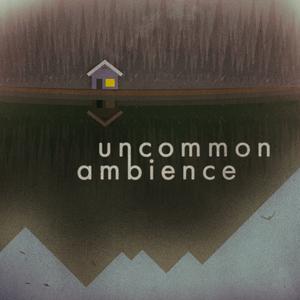
Über uncommon ambience
Ambient noise podcast. White noise, gray noise, machines, fans, ambient movie homages, nature and drifting experimental sounds. Recorded and crafted by hand. This is a place for folks who want to listen to something without a narrative, news, or exciting new material from Nas. Ignore the world.
Podcast-WebsiteHöre uncommon ambience, Unheilbar Gesund und viele andere Podcasts aus aller Welt mit der radio.at-App
Hol dir die kostenlose radio.at App
- Sender und Podcasts favorisieren
- Streamen via Wifi oder Bluetooth
- Unterstützt Carplay & Android Auto
- viele weitere App Funktionen
Hol dir die kostenlose radio.at App
- Sender und Podcasts favorisieren
- Streamen via Wifi oder Bluetooth
- Unterstützt Carplay & Android Auto
- viele weitere App Funktionen
uncommon ambience
Code scannen,
App laden,
loshören.
App laden,
loshören.
 Österreich