

Höre diesen Podcast kostenlos in der App: Kostenlos im App Store laden
radio.at
Sleeptimer
Sender speichern
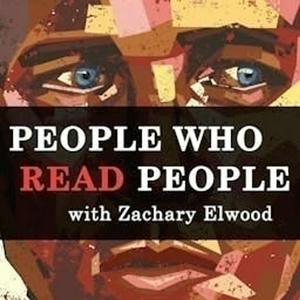
People Who Read People: A Behavior and Psychology Podcast
Zachary Elwood
Neueste Episode
264 Episoden
A critical look at Paul Ekman, Joe Navarro, and the entire "behavior expert" industry
20.09.2026 | 1 Std. 54 Min.A talk with former CIA officer Kent Clizbe about the exaggerated, irresponsible claims made by many self-described “behavior experts,” focusing especially on Paul Ekman, Joe Navarro, microexpressions, and attempts to detect deception from body language. We discuss why facial expressions and physical movements cannot be interpreted through a universal dictionary, how cultural and individual differences make behavioral judgments especially difficult, and why nervousness or discomfort is rarely meaningful evidence of guilt or deception in high-stakes situations. We examine the failed TSA SPOT program, the influence of shows like “Lie to Me” (which was loosely based on Paul Ekman’s work), and the lack of convincing real-world, high-stakes examples supporting “behavior expert” claims. We also explore how behavioral hunches can contribute to tunnel vision, false confessions, and wrongful convictions; why games like poker can offer a more constrained and useful setting for behavioral reads; and why the most actionable information in high-stakes situations almost always comes from what people say, what they leave out, and how their statements compare with known facts.
Hosted by Simplecast, an AdsWizz company. See pcm.adswizz.com for information about our collection and use of personal data for advertising.Army Psy-Op veteran talks influence, blowback, psy-op myths, and more
28.08.2026 | 1 Std. 34 Min.A talk with an Army Psychological Operations soldier about what military psy-op work really involves—and how different the reality is from many people's ideas about the nature of that work. We discuss his psy-op work in Afghanistan, why credibility and truth are usually much more persuasive and effective than deception, and fascinating historical operations involving surrender appeals, staged intelligence, and Vietnam’s eerie “ghost tapes.” We also explore the legal and ethical limits on influencing Americans, how social media has blurred those boundaries, how foreign influence campaigns exploit political polarization, and why “PSYOP” has become an all-purpose label for conspiracy theories. Finally, we examine the red flags that can help you identify self-proclaimed-but-deceptive military-persuasion experts (like Chase Hughes) who fabricate and exaggerate their credentials and experience to sell their psychology- and behavior-focused training and products.
Learn more about your ad choices. Visit megaphone.fm/adchoicesArmy Psy-Op veteran talks influence, blowback, psy-op myths, and more
28.08.2026 | 1 Std. 28 Min.A talk with an Army Psychological Operations soldier about what military psy-op work really involves—and how different the reality is from many people's ideas about the nature of that work. We discuss his psy-op work in Afghanistan, why credibility and truth are usually much more persuasive and effective than deception, and fascinating historical operations involving surrender appeals, staged intelligence, and Vietnam’s eerie “ghost tapes.” We also explore the legal and ethical limits on influencing Americans, how social media has blurred those boundaries, how foreign influence campaigns exploit political polarization, and why “PSYOP” has become an all-purpose label for conspiracy theories. Finally, we examine the red flags that can help you identify self-proclaimed-but-deceptive military-persuasion experts (like Chase Hughes) who fabricate and exaggerate their credentials and experience to sell their psychology- and behavior-focused training and products.
Hosted by Simplecast, an AdsWizz company. See pcm.adswizz.com for information about our collection and use of personal data for advertising.Can computers spot lies better than humans?, with Bennett Kleinberg
12.08.2026 | 1 Std.Can machines spot a lie better than we can? I talk with psychology researcher Bennett Kleinberg, whose work brings together psychology, machine learning, natural-language processing, and deception detection. We explore why humans are bad at identifying lies, which verbal clues may reveal deception—and why nervousness is often misleading. Bennett explains how liars use detail and how level of detail can be a clue to deception, the fact that deception usually involves a good amount of truth in the mix and what that means, and what happens when human judgment is combined with AI. We also discuss the risks of the mysterious black-box nature of some machine learning systems, and how smarter, research-informed interviewing techniques could transform criminal investigations. For more details and a transcript, see this episode’s entry at www.behavior-podcast.com.
Hosted by Simplecast, an AdsWizz company. See pcm.adswizz.com for information about our collection and use of personal data for advertising.Can computers spot lies better than humans?, with Bennett Kleinberg
11.08.2026 | 1 Std. 4 Min.Can machines spot a lie better than we can? I talk with psychology researcher Bennett Kleinberg, whose work brings together psychology, machine learning, natural-language processing, and deception detection. We explore why humans are bad at identifying lies, which verbal clues may reveal deception—and why nervousness is often misleading. Bennett explains how liars use detail and how level of detail can be a clue to deception, the fact that deception usually involves a good amount of truth in the mix and what that means, and what happens when human judgment is combined with AI. We also discuss the risks of the mysterious black-box nature of some machine learning systems, and how smarter, research-informed interviewing techniques could transform criminal investigations. For more details and a transcript, see this episode’s entry at www.behavior-podcast.com.
Learn more about your ad choices. Visit megaphone.fm/adchoices
Weitere Gesundheit und Fitness Podcasts
 Verena König Podcast für Kreative TransformationGesundheit und Fitness, Mentale Gesundheit, Religion und Spiritualität
 Psychologie to go!Bildung, Gesundheit und Fitness, Medizin, Mentale Gesundheit, Selbstverwirklichung
 So bin ich eben! Stefanie Stahls Psychologie-Podcast für alle "Normalgestörten"Beziehungen, Biowissenschaften, Gesellschaft und Kultur, Gesundheit und Fitness, Mentale Gesundheit, Wissenschaft
 Wirkstoff MenschGesundheit und Fitness
 happy, holy & confident® Dein Podcast fürs Herz und den VerstandGesundheit und Fitness
 Stahl aber herzlich – Der Psychotherapie-Podcast mit Stefanie StahlBeziehungen, Bildung, Gesellschaft und Kultur, Gesundheit und Fitness, Mentale Gesundheit, Selbstverwirklichung
 On Purpose with Jay ShettyGesundheit und Fitness, Mentale Gesundheit, Wirtschaft
 Smarter lebenFreizeit, Gesundheit und Fitness, Kinder und Familie, Kindererziehung, Mentale Gesundheit
 Huberman LabBiowissenschaften, Gesundheit und Fitness, Wissenschaft
 Besser lebenGesundheit und Fitness
Trending Gesundheit und Fitness Podcasts
 HochpalliativGesellschaft und Kultur, Gesundheit und Fitness
 Get happyBeziehungen, Bildung, Ernährung, Gesellschaft und Kultur, Gesundheit und Fitness, Medizin, Mentale Gesundheit, Selbstverwirklichung
 Pädicus - Der Podcast für KindergesundheitGesundheit und Fitness, Kinder und Familie, Kindererziehung, Medizin
 MENO AN MICH. Frauen mitten im Leben.Gesellschaft und Kultur, Gesundheit und Fitness, Medizin
 Cosmic News Feed by Phi (Dein Astro-Podcast)Bildung, Gesundheit und Fitness, Religion und Spiritualität, Selbstverwirklichung
 Musalek & Titze Im Rausch des LebensBildung, Gesundheit und Fitness, Mentale Gesundheit, Selbstverwirklichung
 The Wellness ScoopGesellschaft und Kultur, Gesundheit und Fitness, Mentale Gesundheit
 Gemischte Gefühle - Dein Mutmacher bei Angst & PanikGesundheit und Fitness, Mentale Gesundheit
 Verbotene Lust - Der Sex PodcastBeziehungen, Gesellschaft und Kultur, Gesundheit und Fitness, Sexualität
 WochenmarktErnährung, Freizeit, Gesundheit und Fitness
 All in the MindGesundheit und Fitness, Wissenschaft
 The Arc Woman PodcastGesundheit und Fitness
 Gesund informiertGesundheit und Fitness
 Entspannt einschlafen - Meditation & Achtsamkeit für die NachtGesundheit und Fitness, Mentale Gesundheit, Religion und Spiritualität, Spiritualität
 Satte Sache | Ernährung & WissenschaftErnährung, Gesundheit und Fitness, Medizin
 ÖAZ im OhrBildung, Gesundheit und Fitness, Medizin, Wissenschaft
- Verena König Podcast für Kreative TransformationGesundheit und Fitness, Mentale Gesundheit, Religion und Spiritualität
Über People Who Read People: A Behavior and Psychology Podcast
This show will help you understand human behavior and psychology so you can better navigate your personal and professional life and better connect with people. The host Zachary Elwood, known for his Reading Poker Tells trilogy of books, talks with a wide range of guests who have unique real-world insights, including: law enforcement professionals, behavior and psychology researchers, sports analysts, visa officers, jury consultants, political researchers, mental health experts, and many more. What drives this show is the idea that truly understanding people requires patience, nuance, and a willingness to question simplistic ideas and assumptions. There are more than 200 episodes. To learn more details, see transcripts, and sign up for updates, go to www.behavior-podcast.com.
Podcast-WebsiteHöre People Who Read People: A Behavior and Psychology Podcast, Verena König Podcast für Kreative Transformation und viele andere Podcasts aus aller Welt mit der radio.at-App
Hol dir die kostenlose radio.at App
- Sender und Podcasts favorisieren
- Streamen via Wifi oder Bluetooth
- Unterstützt Carplay & Android Auto
- viele weitere App Funktionen
Hol dir die kostenlose radio.at App
- Sender und Podcasts favorisieren
- Streamen via Wifi oder Bluetooth
- Unterstützt Carplay & Android Auto
- viele weitere App Funktionen
People Who Read People: A Behavior and Psychology Podcast
Code scannen,
App laden,
loshören.
App laden,
loshören.
 Österreich