Key Trends: How Philanthropy Transformed in 2025
29.12.2025 | 7 Min.
As we close out 2025, host Alberto Lidji analyses fifty deep-dive conversations from the past year to identify the key trends currently reshaping the social impact landscape. This special 2025 roundup episode moves beyond individual projects to explore the fundamental evolution of systemic transformation. Alberto synthesises the year’s insights into three defining shifts: the transition from isolated funding to orchestrator models, the strategic focus on structural root causes, and a fundamental evolution in how we approach leadership and burnout. Key Themes Explored in This Episode: The Evolution of Collaboration: Why the retreat of traditional funding streams in 2025 turned partnership from an aspiration into a vital survival mechanism. The Orchestrator Model: Exploring the move toward philanthropic bridge-building, where foundations support government-led initiatives and remove systemic friction points rather than driving isolated agendas. Rigidity in Mission, Flexibility in Approach: Why the most effective strategies this year focused on markets and addressing systemic drivers rather than treating symptoms. The Grace Shift: A look at how leadership archetypes are evolving to prioritise personnel well-being and structural support as prerequisites for long-term impact. The Call to Agency: A concluding reflection on the power of citizen entrepreneurship and why individual action remains the ultimate antidote to global anxiety. Visit our Knowledge Hub at Lidji.org for information on 350+ case studies and interviews with remarkable leaders in philanthropy, sustainability and social entrepreneurship.
Brian Sommerlad, Chairman of CLEFT: Treating Cleft Lip and Palate Through Collaboration, Training and Trust
22.12.2025 | 27 Min.
Cleft lip and palate is one of the most common congenital conditions worldwide, yet effective care goes far beyond repairing a visible deformity. It requires long-term, multidisciplinary support that addresses speech, hearing, dental development and psychological wellbeing. In this episode, Brian Sommerlad, a surgeon and Chairman of CLEFT, shares four decades of experience in cleft care across the UK and low and middle income countries. Drawing on extensive work in places such as Bangladesh and Nepal, he explains why short-term surgical missions alone are not enough and how well-intentioned philanthropy can sometimes undermine local health systems. The conversation explores what sustainable cleft care really looks like. Brian outlines CLEFT’s distinctive approach, which focuses on training local professionals, funding non-surgical roles such as speech therapists and orthodontists, and supporting multidisciplinary teams that can continue delivering care long after external support has stepped back. Key topics include: What cleft lip and palate is, how common it is, and why it affects far more than appearance The lifelong importance of speech therapy, hearing support and dental care The psychological and social impact of cleft conditions on children and families Why teaching and capacity-building create more impact than simply doing operations How poorly designed NGO activity can unintentionally weaken local services The value of treating local clinicians, hospitals and governments as equal partners Practical insights into allocating philanthropic funding for long-term benefit Brian also reflects on his own journey from medical training in Australia to international work spanning Vietnam, Bangladesh, Iraq and beyond, offering candid observations on what has and has not worked in global health over time. This episode is a thoughtful examination of how healthcare philanthropy can move from short-term intervention to lasting change, with lessons that extend well beyond cleft care alone. Visit our Knowledge Hub at Lidji.org for information on 350+ case studies and interviews with remarkable leaders in philanthropy, sustainability and social entrepreneurship.

Roger Federer Foundation's CEO, Maya Ziswiler, on their New Strategy and Achieving Philanthropic Impact
15.12.2025 | 28 Min.
This episode explores the work of the Roger Federer Foundation through a conversation with Maya Ziswiler, Chief Executive Officer, focusing on early childhood education, prevention-focused philanthropy, and long-term systems change. Maya explains how the Foundation works to give children a better start in life through early and foundational learning, with the majority of its work concentrated in Southern Africa and a growing portfolio in Switzerland. In Southern Africa, the Foundation partners closely with governments and locally rooted organisations across six countries to strengthen school readiness and early learning systems. In Switzerland, it is developing an approach that uses movement to strengthen body and mind, with an emphasis on preventing mental health challenges later in life. A central theme of the discussion is the Foundation’s data-driven School Readiness Initiative, including tablet-based learning kiosks and the Child Steps assessment tool. These tools support teachers, simplify reporting, and generate actionable data for decision making at school, regional, and national levels. Key milestones include nationwide adoption of the assessment tool in Zimbabwe and the handover of programme implementation to government authorities in parts of South Africa. The conversation also covers the Foundation’s strategic transition, with a new strategy to be launched in early 2026. Maya reflects on the shift from a single flagship solution towards an early learning continuum, the importance of partnerships, and the role of catalytic funding in strengthening an underfunded sector. The episode also traces Maya’s leadership journey from the private sector to UNICEF, UBS Optimus Foundation, and now the Roger Federer Foundation, alongside the opportunities and challenges of leading a foundation associated with a global sporting icon. Fun fact: The conversation is conducted by Alberto Lidji, former CEO of the Novak Djokovic Foundation, who interviews the CEO of the Roger Federer Foundation, offering a distinctive and collegial backdrop. Visit our Knowledge Hub at Lidji.org for information on 350+ case studies and interviews with remarkable leaders in philanthropy, sustainability and social entrepreneurship.

Guy Cave, President of the Legatum Foundation on Creating and Launching Collective Philanthropy Funds
08.12.2025 | 32 Min.
In this episode, Guy Cave, President of the Legatum Foundation, discusses how the foundation launches and scales collaborative funds that focus on ambitious, system-level change. Rather than distributing small grants, the foundation pilots approaches with local organisations, tests what works, and—when the potential for large-scale impact is clear—spins out independent funds with their own leadership, governance and investor base. Guy traces the journey behind four existing funds: the END Fund, focused on neglected tropical diseases; the Freedom Fund, which addresses human trafficking and modern slavery; the Luminos Fund, bringing out-of-school children back into learning; and, most recently, the Resilio Fund, which supports community-led humanitarian response through micro-grants to hyper-local groups. Collectively, these funds have mobilised more than US$1 billion. He also introduces two current pilots that may become future funds: care reform to help children move safely from institutions into family-based care, and criminal justice reform. Throughout the conversation, Guy unpacks how new ideas emerge, how evidence is generated, how partners are brought in, and how to let go so that independent funds—and their CEOs—can thrive. For anyone interested in collaborative philanthropy, local leadership, or building vehicles that others can support, this episode offers practical insight into sequencing, partnership, and learning at scale. Visit our Knowledge Hub at Lidji.org for information on 350+ case studies and interviews with remarkable leaders in philanthropy, sustainability and social entrepreneurship.

Tom McPartland, CEO of ELMA Philanthropies, on Navigating a New Era in Global Health and Development
01.12.2025 | 41 Min.
This conversation offers an in-depth look at the evolving landscape of philanthropy, global health, and development funding, with a particular focus on Sub-Saharan Africa. The discussion examines how current geopolitical and economic pressures are reshaping what effective partnership, sustainability, and impact look like for funders, governments, and civil society. The episode explores a wide range of thematic priorities including maternal, newborn, and child health; pediatric and adolescent HIV; early childhood development; human resources for health; and humanitarian response. It illuminates why deeply understanding country-level contexts—systems, supply chains, human capital, financing constraints, and government priorities—is central to strategic philanthropy. A significant portion of the conversation addresses how private philanthropy can play a constructive, catalytic role amid a period of unusually rapid change in global aid flows. Topics include the risks of backsliding on key health indicators, strategies for identifying truly local and embedded implementing partners, and the importance of moving from project-based funding toward general operating support to strengthen long-term institutional capacity. The episode also examines the realities and complexities of co-funding with other foundations, multilaterals, and bilaterals—what genuine partnership requires, how priorities are aligned, and how fragmentation can be reduced. A major highlight is the creation of the Beginnings Fund, a large-scale collaborative effort uniting several private funders to meaningfully advance maternal and newborn health across multiple countries in Sub-Saharan Africa. Looking ahead, the conversation outlines both the challenges and opportunities that lie between now and 2030. It reflects on where renewed discipline, focus, and collaboration are most urgently needed, and why the current moment may also be a rare chance for long-overdue recalibration in global health and development. Visit our Knowledge Hub at Lidji.org for information on 350+ case studies and interviews with remarkable leaders in philanthropy, sustainability and social entrepreneurship.


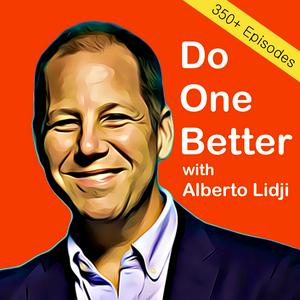
Do One Better with Alberto Lidji in Philanthropy, Sustainability and Social Entrepreneurship