Fit For Science

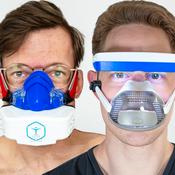
Stephan Reichl and Rob ter Horst
Fit For Science
Neueste Episode

12 Episoden

  • Fit For Science

    How We Think About Supplements: What We Take, What We Ditched & Our Daily Protocols (Fit For Science Episode 12)

    02.03.2026 | 1 Std. 5 Min.
    Rob and Stephan unpack their personal supplement protocols, discussing everything from creatine and omega-3s to the reasons they both ditched popular green powders like AG1.

    📝Summary
    In this episode, biological data scientists Rob and Stephan explore the rationale, logistics, and science behind their personal supplementation protocols, emphasizing that supplements can never replace foundational habits like sleep, nutrition, and activity. The hosts dissect their differing approaches, with Rob detailing why he stripped his stack down to just creatine and whey protein after experiencing adverse effects like vivid dreams from L-theanine, while Stephan breaks down his extensive daily routine organized by morning, noon, and evening doses. They critically evaluate the utility and safety of compounds ranging from vitamin D3, K2, and magnesium bisglycinate to more experimental interventions like lion's mane and exogenous ketones. The conversation also covers the economics of tracking health, the potential heavy metal risks associated with popular green powders like AG1, downsides of complex blends, and the immunological implications of high protein diets.

    ⏳Chapters
    00:00:00 Defining Supplements: Deficiencies versus performance optimization
    00:04:11 The Fundamentals: Why pills cannot replace sleep and nutrition
    00:09:26 Simplifying the Stack: Why Rob stopped taking pre-formulated mixes
    00:15:16 Safety First: Water-soluble vitamins versus fat-soluble accumulation
    00:18:23 The Morning Routine: Collagen, Vitamin C, and Electrolytes
    00:26:38 The Top Three: Vitamin D3, K2, and Creatine Monohydrate
    00:34:29 The Noon Routine: Lion's mane, selenium, and dark chocolate polyphenols
    00:40:23 The Evening Routine: Magnesium bisglycinate, Omega-3s, and Glycine
    00:46:03 The Cost of Supplementation: Budgeting for the quantified self
    00:48:55 On-Demand Tools: Nicotine as a stimulant and wheat germ for spermidine
    00:52:45 Protein Targets: Muscle maintenance, mTOR, and cardiovascular risk
    00:58:50 Ditched Supplements: Why we stopped taking AG1
    01:03:28 Future Experiments: Exploring exogenous ketones for metabolic flexibility

    📚Resources
    Stephan's supplement stack & schedule 
    Creatine benefits, dosage, and side effects 
    Creatine: What It Does, Benefits, Supplements & Safety 
    What Every Vegan Should Know About Vitamin B12 
    Clarification: The avid listener might notice a contradiction: B vitamins are water-soluble, yet B12 is stored for years. Both can be true because it is continuously recycled in the liver, tightly bound to proteins, and too large for the kidneys to flush out.
    Iodine: Its Role in Thyroid Hormone Biosynthesis and Beyond 
    What is the effect of combining L-theanine with caffeine? 
    Vitamin D 
    Lion’s Mane Mushroom (Hericium erinaceus): A Neuroprotective Fungus with Antioxidant, Anti-Inflammatory, and Antimicrobial Potential 
    The Master Antioxidant: Glutathione 
    Magnesium Bisglycinate vs. Other Forms: Which Is Best? 
    Omega-3 Fatty Acids benefits, dosage, and side effects 
    How Much Spermidine Is in a Tablespoon of Wheat Germ? 
    High-protein diets increase cardiovascular risk by activating macrophage mTOR to suppress mitophagy  
    Fruits, Veggies, and Other Greens Supplements Review (Including Spirulina and Chlorella) 
    …There is more: complete show notes here

    🎙️About
    Fit For Science is a deep-dive podcast hosted by two biological data scientists, Rob and Stephan, exploring the intersection of research, health tech, and data-driven lifestyle design. The hosts provide evidence-based systems, layered with practical "N=2" personal experimentation, to cut through the noise and enable everyone to become their best N-of-1.
    Learn more and subscribe on your favorite platforms:
    YouTube
    Spotify
    Apple Podcasts
    Amazon Music
    Collection of all show notes

    ⚠️Disclaimer: This podcast represents our own opinions and is for informational purposes only. It does not constitute medical or financial advice or a professional relationship.

  • Fit For Science

    Can and Should We Live Forever? Blue Zone Myths, Longevity Drugs & The 50/50 Genetics-Lifestyle Split (Fit For Science Episode 11)

    17.02.2026 | 1 Std. 8 Min.
    Rob and Stephan dissect the "Nature vs. Nurture" debate in longevity, debunk Blue Zone myths, and evaluate the potential of anti-aging interventions like calorie restriction and Rapamycin.

    📝Summary
    In this episode, biological data scientists Rob and Stephan explore the realistic limits of human lifespan, starting with the outlier case of supercentenarian Jeanne Calment. They tackle the age-old "nature vs. nurture" debate, discussing recent research that suggests a near-even split in agency compared to previous estimates, while also highlighting the "Ig Nobel" findings that attribute many Blue Zone claims to poor record-keeping or fraud rather than biological superiority. The conversation moves through the biology of aging, touching on genome-wide association studies (GWAS) and specific genes like APOE and FOXO3, before transitioning to lifestyle interventions such as calorie restriction and the concept of hormetic stress. Finally, the hosts critically evaluate the current landscape of longevity pharmacology, including Metformin, GLP-1 agonists, and Rapamycin, ultimately concluding that while living forever remains scifi, maximizing healthspan through foundational lifestyle habits remains the most effective strategy.

    ⏳Chapters
    00:00:00 Introduction: Limits of lifespan and the "Don't Die" philosophy
    00:00:40 The Maximum Lifespan: Jeanne Calment and winning the genetic lottery
    00:02:46 Blue Zones Debunked: The Ig Nobel Prize for bad record-keeping
    00:04:22 Nature vs. Nurture: Genetics, epigenetics, and the blueprint of life
    00:07:49 Genome Wide Association Studies (GWAS): How we link genes to traits
    00:12:23 Longevity Genes: APOE and FOXO3 mechanisms
    00:15:44 The 50/50 Split: Recent evidence on genetic vs. lifestyle influence
    00:23:36 Calorie Restriction: Mouse models, immune suppression, and hormesis
    00:34:16 The Vices: Smoking, obesity, alcohol, and the hygiene hypothesis
    00:39:54 Longevity Drugs: Metformin and the risk of blunting exercise gains
    00:44:46 Weight Loss Drugs: GLP-1 agonists, muscle loss, and heart rate effects
    00:47:11 Rapamycin: Inhibiting mTOR and the balance of anabolism vs. catabolism
    00:51:00 Senolytics: Clearing "zombie cells" with Quercetin and Dasatinib
    00:56:37 Life Expectancy: Realistic predictions and the definition of a good life

    📚Resources
    Jeanne Calment
    Bryan Johnson
    Ig Nobel Prize for Blue Zone debunking
    Nature versus nurture
    Huntington's disease
    Correction: life expectancy is 15-25 years after the onset of symptoms, often occurring in the 20s/30s
    Genome-wide association study (GWAS)
    Centenarian
    Multifaceted roles of APOE in Alzheimer disease
    FOXO3
    Central dogma of molecular biology (DNA -> RNA -> protein)
    Heritability of intrinsic human life span is about 50% when confounding factors are addressed (2026)
    Estimates of the Heritability of Human Longevity Are Substantially Inflated due to Assortative Mating (Calico 2018)
    CRISPR gene editing
    Germline
    Stem cell
    FDA Approves First Gene Therapies to Treat Patients with Sickle Cell Disease (2023) 
    Do ‘blue zones,’ supposed havens of longevity, rest on shaky science? 
    Sleep, Nutrition, Activity, Purpose (SNAP framework)
    Calorie restriction
    Hormesis
    Supercompensation 
    Progressive overload 
    2-year calorie restriction study (CALERIE) 
    …There is more: complete show notes here

    🎙️About
    Fit For Science is a deep-dive podcast hosted by two biological data scientists, Rob and Stephan, exploring the intersection of research, health tech, and data-driven lifestyle design. The hosts provide evidence-based systems, layered with practical "N=2" personal experimentation, to cut through the noise and enable everyone to become their best N-of-1.
    Learn more and subscribe on your favorite platforms:
    YouTube
    Spotify
    Apple Podcasts
    Amazon Music
    Collection of all show notes

    ⚠️Disclaimer: This podcast represents our own opinions and is for informational purposes only. It does not constitute medical or financial advice or a professional relationship.
  • Fit For Science

    How to Actually Read Your Sleep Data (Beyond Accuracy) + 7 Scientific "Cumulative Biomarkers" for Longevity (Fit For Science Episode 10)

    09.02.2026 | 1 Std. 17 Min.
    Rob and Stephan discuss why sleep stage trends matter more than absolute accuracy, review Oura's latest metrics, and define seven essential cumulative biomarkers for long-term health.

    📝Summary
    In this episode, biological data scientists Rob and Stephan challenge the standard approach to sleep tracking validation, proposing that detecting deviations from an individual's baseline is often more valuable for the user than absolute agreement with polysomnography. The hosts shortly brainstorm the creation of an independent, crowd-funded wearable testing institute to provide unbiased data for the quantified self community and research. Then they analyze the utility of Oura’s new Sleep Debt and Cumulative Stress features, discussing how these metrics align with subjective experiences of recovery after social events like the Viennese ball season. The conversation expands into a deep dive on "cumulative biomarkers," where Stephan outlines a suite of stable, long-term health indicators, including HbA1c, VO2 max, Grip Strength, and the Omega-3 Index, that serve as superior proxies for longevity compared to transient measurements.
    ⏳Chapters
    00:00:00 Sleep Study Analysis: User centric comparisons
    00:10:39 Testing Philosophy: Why "more or less than usual" matters most
    00:16:13 The Vision: A crowd-funded independent wearable testing lab
    00:24:37 Oura's Trend Features: Analyzing Sleep Debt and recovery timelines
    00:34:43 Cumulative Stress: Physiological stress vs “Distress” vs "Eustress"
    00:41:51 Hardware Woes: The decline of Fitbit and device longevity
    00:45:15 Feature Disparity: Oura Health Panels and US vs. EU regulations
    00:51:22 Cumulative Biomarkers: Stable markers vs. transient snapshots
    00:52:23 Metabolic Health: Why HbA1c trumps fasting glucose
    00:57:55 Fitness Markers: VO2 Max and the utility of Grip Strength
    01:01:31 Nutritional Status: The Omega-3 Index and cell membrane saturation
    01:05:22 Organ Health: Cystatin C for kidney function and DXA for body composition
    01:09:47 Cardiovascular Risk: The Coronary Artery Calcium (CAC) score
    01:12:25 Smart Scales: Bio-impedance limitations and the need for handles

    📚Resources
    In the episode we call the discussed biomarkers “integrative”, but “cumulative” better captures the intended meaning.
    Rob's sleep study
    Polysomnography 
    Cohen's Kappa (Statistic)
    Sensitivity and specificity 
    Oura's Sleep Debt Feature
    Oura's Cumulative Stress Feature
    Oura's Resilience Feature
    Oura's Daytime (Physiological) Stress feature
    Distress vs Eustress
    Electrodermal activity as proxy for stress
    FitBit Sense 2 (with cEDA sensor) 
    Oura's Health Panel feature
    Red blood cell
    Glycated hemoglobin (HbA1c) 
    HbA1c > 6.5% is used for diabetes diagnosis
    VO2 max 
    Grip strength as a mortality predictor
    Omega-3 Index (Dr. Rhonda Patrick)
    Cystatin C (Kidney Function)
    DXA Scan 
    Radiation comparison (DXA ~0.001mSv, US coast-to-coast round-trip flight ~0.03mSv)
    Coronary Artery Calcium (CAC) Score
    The limits of coronary calcium 
    Visceral Fat
    Preprint introducing "Peakspan"
    Nature Medicine paper "Shared and specific blood biomarkers for multimorbidity"

    🎙️About
    Fit For Science is a deep-dive podcast hosted by two biological data scientists, Rob and Stephan, exploring the intersection of research, health tech, and data-driven lifestyle design. The hosts provide evidence-based systems, layered with practical "N=2" personal experimentation, to cut through the noise in the health and fitness industry.
    Learn more and subscribe on your favorite platforms:
    YouTube
    Spotify
    Apple Podcasts
    Amazon Music

    Collection of all show notes

    ⚠️Disclaimer: This podcast represents our own opinions and is for informational purposes only. It does not constitute medical or financial advice or a professional relationship.
  • Fit For Science

    The “Dark Side” of Tracking & VO2 Max as Longevity Predictor: Testing, Training & Our Results (Fit For Science Episode 9)

    02.02.2026 | 1 Std. 25 Min.
    In this episode, Rob and Stephan explore the psychological risks of self-quantification, the science of aerobic capacity, and the physiological nuances of lactate thresholds.

    📝Summary
    Biological data scientists Rob and Stephan discuss the "dark side" of the quantified self, specifically focusing on orthosomnia, a condition where sleep tracking leads to increased anxiety and worsened sleep quality. They reflect on the importance of using technology as a tool for a specific purpose rather than making the tracking itself the goal. The conversation transitions into a deep dive on VO2 max, explaining its critical role as a longevity predictor and the varying results obtained from different exercise modalities like cycling and running. Finally, the hosts break down the science of lactate thresholds, explaining how the body's metabolic shift from aerobic to anaerobic states serves as a vital biomarker for training optimization.

    ⏳Chapters
    00:00:00 Introduction: The dark side of tracking and VO2 max
    00:00:55 Orthosomnia: When sleep tracking causes insomnia
    00:05:09 The psychological impact of metrics and obsession
    00:13:13 Tracking with purpose: Avoiding the identity trap
    00:25:59 Oura Ring experiences: “Injuries” and data accuracy
    00:30:50 Strength training and basal metabolic rate
    00:36:47 VO2 Max: The ultimate longevity marker?
    00:38:26 Hazard Ratios: Comparing fitness to smoking
    00:44:39 The U-shaped curve of exercise volume
    00:49:37 Gold Standard: VO2 max lab testing protocols
    01:04:25 Training for capacity: The Norwegian 4x4 protocol
    01:07:51 Lactate thresholds and metabolic switching
    01:16:09 Wearable estimations: Garmin vs. Apple vs. Oura
    01:21:47 VO2 Max Records: Oskar Svendsen (97.5) and Tadej Pogačar (96)
    01:23:42 Teaser: Biological age and integrative biomarkers

    📚Resources
    Orthosomnia
    The Molecular Precision Medicine Master’s Programme at Medical University of Vienna (where Rob and Stephan teach)
    Quote for purposeful tracking: "I shall not waste my days in trying to prolong them" - Jack London
    Natural language processing (NLP)
    Semantic analysis
    Development of a scale for measuring orthosomnia: the Bergen Orthosomnia Scale (BOS)
    Sleep tracker use nears 50%, AASM survey finds
    Prevalence of Orthosomnia in a General Population Sample 
    Dark triad (Personality Traits)
    Basal metabolic rate (BMR)
    BMR Calculator 
    Lean body mass was found to be the single predictor of BMR
    Phelps supposedly consumed 8,000-10,000 kcal per training day before the Olympic Games
    VO2 max
    Hazard ratio
    How does VO2 max correlate with longevity? - Peter Attia 
    Physical activity types, variety, and mortality: results from two prospective cohort studies 
    Peak oxygen uptake was strongly correlated to total heart volume
    Rob's VO2 max results: 58 for cycling, 54 for running
    Stephan's VO2 max results: 42 for cycling, 49 for running
    VO2 max percentile calculator
    VO2 Max Chart
    Aerobic high-intensity intervals improve VO2max more than moderate training (Norwegian 4x4) 
    How to Improve Your Cardio Capacity (VO2 Max)
    Lactate threshold for aerobic to anaerobic switch at 2mmol/litre
    Lactate shuttle hypothesis 
    Maximum heart rate formula: 220 - age in years
    Cooper test for VO2max estimation
    Walking test for VO2max estimation

    🎙️About
    Fit For Science is a deep-dive podcast hosted by two biological data scientists, Rob and Stephan, exploring the intersection of research, health tech, and data-driven lifestyle design. The hosts provide evidence-based systems, layered with practical "N=2" personal experimentation, to cut through the noise in the health and fitness industry.
    Learn more and subscribe on your favorite platforms:
    YouTube
    Spotify
    Apple Podcasts
    Amazon Music

    ⚠️Disclaimer: This podcast represents our own opinions and is for informational purposes only. It does not constitute medical or financial advice or a professional relationship.
  • Fit For Science

    AI is Changing Wearables in 2026(?) and Predicts 130 Diseases from Sleep! (Fit For Science Episode 8)

    26.01.2026 | 1 Std. 25 Min.
    Rob and Stephan evaluate current AI features in wearables, break down a revolutionary paper predicting diseases from a single night of sleep, and discuss the future of medical integration into wearables.

    📝Summary
    In this episode, biological data scientists Rob and Stephan critically assess the current use of AI in the wearable market, ranging from the practical limitations of Oura and Whoop coaches to the potential of Google’s Gemini and Withings’ biomarker-tracking devices. The central scientific discussion focuses on "SleepFM," a groundbreaking foundation model published in Nature Medicine that utilizes self-supervised learning on polysomnography data to predict over 130 diseases, biological age, and mortality risk from a single night of sleep with unprecedented accuracy. The hosts speculate on how this technology could bridge the gap between clinical sleep labs and consumer wearables, potentially transforming preventive medicine through longitudinal tracking and non-invasive sensors.

    ⏳Chapters
    00:00:00 AI in wearables and their current capabilities
    00:01:21 AI Coaches: Testing the limits of Oura, Whoop, and Garmin 
    00:12:24 The Smart Toilet: Withings U-Scan and the value of waste biomarkers 
    00:23:00 Environmental Health: PVC off-gassing and vinyl records 
    00:28:15 Generative AI: ChatGPT Health and Claude for Life Sciences 
    00:37:17 SleepFM: A multimodal sleep foundation model for disease prediction 
    00:43:00 Self-Supervised Learning: How foundation models learn from sleep data 
    00:51:00 Disease Prediction: Predicting 130 conditions with unseen accuracy
    00:59:46 The Future: Translating clinical models to consumer wearables 
    01:19:25 Community Feedback

    📚Resources
    Introducing Oura Advisor (not Coach)
    WHOOP Coach Powered by OpenAI
    Active Intelligence With Garmin Connect+
    U-Scan Nutrio
    News: Withings latest smart scale (‘longevity station’)
    Withings Intelligence
    Body Scan
    Ketone bodies
    Ketosis: Definition, Benefits & Side Effects
    Keto Breath (“dragon breath”)
    Air Quality Measurement Device
    VINYL: Maybe it's time we had an intervention.
    Introducing ChatGPT Health
    Segment about AI in health(care)
    Claude in healthcare and the life sciences
    Clarification: Anthropic's product is called Claude with three differently sized models named Haiku, Sonnet, and Opus.
    ICD-10 and ICD-11 Codes: International Classification of Diseases (ICD)
    Understanding ICD-10 | Johns Hopkins Medicine
    Healthcare Spending - Our World in Data
    Federated learning
    Swarm Learning
    SleepFM - Nature Medicine paper
    Code
    Stanford Sleep Bench v1.0
    Foundation model
    Attention Is All You Need (Transformers)
    Self-supervised learning
    ImageNet
    Fine-tuning
    Reinforcement learning from human feedback (RLHF)
    Polysomnography
    Recurrent neural network (LSTM)
    Long short-term memory (RNN)
    C-index: Evaluating Survival Models
    Best Wearables for Sleep: Scientific Rankings (2024-05)
    Best Wearables for Sleep: Scientific Rankings (2025-10)
    Philips Somnolyzer 24x7 for automated sleep staging
    Whoop listened(?) and is looking for a VP for Foundation AI
    AUROC of blood pressure to predict ASCVD ~0.80
    Podcast Recommendation: Drug Story 
    Atorvastatin (Lipitor)
    Life expectancy: Netherlands (82.2) vs Austria (82.0)
    Diagnostic and Statistical Manual of Mental Illnesses (DSM-5)
    Mechanism does not imply outcome. Outcome implies mechanism. - Layne Norton
    No Biological Free Lunches

    🎙️About
    Fit For Science is a deep-dive podcast hosted by two biological data scientists, Rob and Stephan, exploring the intersection of research, health tech, and data-driven lifestyle design. The hosts provide evidence-based systems, layered with practical "N=2" personal experimentation, to cut through the noise in the health and fitness industry.
    Learn more and subscribe on your favorite platforms:
    YouTube
    Spotify
    Apple Podcasts
    Amazon Music

    ⚠️Disclaimer: This podcast represents our own opinions and is for informational purposes only. It does not constitute medical or financial advice or a professional relationship.

Weitere Gesundheit und Fitness Podcasts

Über Fit For Science

Two scientists discuss how they live their best life, using science, data, tech, wearables, and systems. Fit For Science is a deep-dive podcast hosted by two biological data scientists, Rob and Stephan, exploring the intersection of research, health tech, and data-driven lifestyle design. The hosts provide evidence-based systems, layered with practical "N=2" personal experimentation, to cut through the noise and enable everyone to become their best N-of-1. The Quantified Scientist (Rob): youtube.com/TheQuantifiedScientist Stephan's Website: http://polytechnist.me
Podcast-Website

Höre Fit For Science, Die philosophische Morgentoilette und viele andere Podcasts aus aller Welt mit der radio.at-App

Hol dir die kostenlose radio.at App

  • Sender und Podcasts favorisieren
  • Streamen via Wifi oder Bluetooth
  • Unterstützt Carplay & Android Auto
  • viele weitere App Funktionen
Rechtliches
Social
v8.7.2 | © 2007-2026 radio.de GmbH
Generated: 3/4/2026 - 8:34:14 AM