PodcastsWissenschaftThe Fossil Files

The Fossil Files

Robert Sansom and Susannah Maidment
The Fossil Files
Neueste Episode

24 Episoden

  • The Fossil Files

    22. The dawn of dangerous seas in the Triassic

    10.2.2026 | 33 Min.
    Life nearly died 252 million years ago in a mass extinction at the end of the Permian. It was long thought that it took 10s of millions of years into the Triassic for life to recover and get back to a 'new normal'. That was until a new and very muddy fossil site from the high Arctic revealed a staggering diversity of predators and tetrapods in the earliest Triassic seas. This week we take a look at the new findings and its implications for life's ability to recover from major extinctions. 
    This week's paper is "Earliest oceanic tetrapod ecosystem reveals rapid complexification of Triassic marine communities" by Aubrey Roberts, published in Science in November 2025 DOI: 10.1126/science.adx739
    An accessible summary can be found here.
    You can see lots of nice pictures and get some extra context from some slides by Jørn Hurum here
    Wide screen art by Robert Back.
  • The Fossil Files

    21. Lead Poisoned Apes and Our Human Origins

    27.1.2026 | 42 Min.
    Lead is a well known pollutant affecting human health over the course of our urbanisation and industrialisation. But what about before this? Analysis of a range of fossil hominid teeth from the Pleistocene reveals that lead poisoning might have been a ubiquitious part of our deep evolutionary history. Furthermore, lab experiments looking at the effect of lead exposure on human and neanderthal brain development reveals the interplay between this pollutant and 'the language gene' (FOXP2). Together, this suggests that the development of language, socialisation and ultimate evolutionary success of humans might be related to our ability to overcome lead poisoning. 
    This week's paper is "Impact of intermittent lead exposure on hominid brain evolution" by Renaud Joannes-Boyau and colleagues published in Science Advances, October 2025. https://doi.org/10.1126/sciadv.adr1524
    Wide screen art by Mark Witton
  • The Fossil Files

    20. Back-breaking and baby making, the disturbing bedroom habits of hadrosaurs

    13.1.2026 | 47 Min.
    Having large body sizes conferred all sorts of advantages on dinosaurs, but it potentially made breeding a bit complicated. This week we take a look at some weird pathologies in fossil hadrosaurs (duck billed dinosaurs and friends) and what they might tell us about their amourous habits - do broken backs provide evidence of rough housing in the bedroom? 
    This week's paper is "Deciphering causes and behaviors: A recurrent pattern of tail injuries in hadrosaurid dinosaurs" by Filippo Bertozzo and colleagues, published in IScience November 2025 https://doi.org/10.1016/j.isci.2025.113739
    The widescreen artwork is by Troco.
  • The Fossil Files

    19. Dinosaurs were doing fine (before the asteroid), with Steve Brusatte. part 2

    23.12.2025 | 31 Min.
    Part 2: Around 66 million years ago an enormous asteroid barrelled into the earth and wiped out  ichthyosaurs, pterosaurs, and dinosaurs*. Debate has raged back and forth as to whether the dinosaurs were already in decline before this mass extinction or were still going strong. This week, Susie and Rob are joined by Prof. Steve Brusatte to take a look at what vertebrates were doing just before the asteroid hit. In part 2 we discuss what would have happened if the asteroid had missed, Steve's new upcoming book, Jurassic World, and Nannotyrannus. 
    *except birds of course.
    Widescreen artwork by Natalia Jagielska
  • The Fossil Files

    18. Dinosaurs were doing fine (before the asteroid), with Steve Brusatte. part 1

    16.12.2025 | 39 Min.
    Around 66 million years ago an enormous asteroid barreled into the earth and wiped out  icthyosaurs, pterosaurs, and dinosaurs*. Debate has raged back and forth as to whether the dinosaurs were already in decline before this mass extinction or were still going strong. This week, Susie and Rob are joined by Prof. Steve Brusatte to take a look at what vertebrates were doing just before the asteroid hit. We discuss his new paper on fossil vertebrates from New Mexico, its implications for scenarios of dinosaur evolution and extinction, and what is life is like for a working palaeontologist, digging up Cretaceous fossils. 
    This week's paper is "Late-surviving New Mexican dinosaurs illuminate high end-Cretaceous diversity and provinciality" by Andrew Flynn, Steve Brusatte and colleagues, published in Science in October 2025. https://doi.org/10.1126/science.adw3282
    *except birds of course.
    Widescreen artwork by Natalia Jagielska

Weitere Wissenschaft Podcasts

Über The Fossil Files

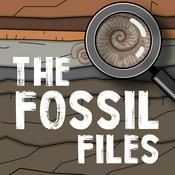
In "The Fossil Files", a pair of palaeontologists delve into the latest discoveries from the world of palaeontology and seek to bring fossils to back to life. Each episode, Susie and Rob will discuss an interesting new research paper ranging from topics of what dinosaurs ate, how plesiosaurs swam, where we came from, and the science of de-extinction. Whilst doing so, we peek under the hood of how the science of palaeontology is done and how research gets to see the light of day. It is for anybody interested in palaeontology and past life whether that is students, researchers themselves, or simply the fossil-curious - we laugh as we learn, and hope you will too. Episode guide at https://fossils.libsyn.com/
Podcast-Website

Höre The Fossil Files, Sternengeschichten und viele andere Podcasts aus aller Welt mit der radio.at-App

Hol dir die kostenlose radio.at App

  • Sender und Podcasts favorisieren
  • Streamen via Wifi oder Bluetooth
  • Unterstützt Carplay & Android Auto
  • viele weitere App Funktionen
Rechtliches
Social
v8.5.0 | © 2007-2026 radio.de GmbH
Generated: 2/13/2026 - 2:41:23 AM