

Höre diesen Podcast kostenlos in der App: Kostenlos im App Store laden
radio.at
Sleeptimer
Sender speichern
62 Episoden
Transporte Popular con Andrea San Gil-León y Fernanda Rivera
20.08.2026 | 59 Min.Yo alcancé a andar por la Carrera séptima de Bogotá cuando elúnico modo de transporte para llegar al centro era en buses colectivos. Uno alazaba el brazo donde sea que estuviera parado, y veía como la gente empacada atrás se sacudía ante el repentino freno del conductor. Si era hora pico, yo encontraba una esquinita en los escalones donde permanecía ahí medio colgada, No se si esto pasa en otras ciudades, pero tal es la nostalgia con esos tiempos que se volvió común en las tiendas de artesanías vender copias de los avisos de las rutas de los buses, o ahora, portavasos, imanes, pines y más. Elaviso de la ruta Germania cuelga en mi cuarto.
Hoy, vamos a hablar del transporte popular. Estos son servicios y sistemas de transporte local de provisión privada y servicio público que existen en casi todas las ciudades del Sur Global, incluyendo a nuestra América Latina. Todos probablemente hemos andado en alguna de sus expresiones, y para muchos residentes urbanos, sobre todo quienes viven enciudades o barrios donde el sistema transporte público no alcanza, montarse en más de un tipo de transporte popular es parte de su día a día. NO se sabe con precision – y de eso hablaremos – pero es probable que más de la mitad de losviajes en las ciudades Latinas se hagan en transporte popular, y en unas ciudades esta proporicón es mucho más alta. En otras regiones, como en ciertas regiones del Africa, esta cifra es del 99 por ciento.
Pero a pesar de que es el principal modo de transporte entantas partes del sur global, el transporte popular ha sido invisible o poco tratado en la política pública de transporte. Pero una organización - liderada por nuestras invitadas de hoy – está tratando de cambiar eso. En este episodio, con Carlos Felipe Pardo como mi cohost, entrevistamos a Andrea San Gil León y Fernanda Rivera de la Red Global de Transporte Popular.
Andrea San Gil-León es la directora ejecutiva de la Red, y unade sus fundadoras. Ha sido nombrada una de las figuras femeninas importantes de LATAM en el transporte por elBanco Interamericano de Desarrollo en 2021, y una de las voces feministas notables en el transporte en 2023 por Women Mobilize Women y la Transformative Urban Mobility Initiative.
Fernanda Rivera, también de la red, es especialista enpolíticas públicas y movilidad sustentable, con más de 12 años de experiencia en el Gobierno de la Ciudad de México. Fue Directora General de Transporte Público en SEMOVI, donde participó en proyectos de transformación del transporte público y antes en políticas de movilidad ciclista y seguridad vial.
Para mi, este episodio me abrió los ojos en muchos niveles a la vez. No solo fue un enorme aprendizaje sobre la importancia del transporte popular, pero también fue una ilustración de cómo un fenómeno social totalmente ubicuo puede ser invisible a los planificadores. Por otro lado, meustra el poder de personas como Fernanda y Andrea, y de una organización como la Red, el a mostrar la lógica y la importancia de estos sistemas de transporte popular. Ellas muestran la importancia de una transición justa, de centrar los trabajadores, operadores y usuarios en la formulación de políticas públicas, y deluchar por una planifiación justa e integral que cierre las brechas de movildiad y responda al cambio climático.
Como dicen los conductores en Ciudad de México, Súbale que hay lugares.Development and Stability: Colombia's Economic Technocracy (1948-1974) with Andrés Guiot-Isaac
30.07.2026 | 1 Std. 4 Min.In this episode, cohost Sergio Infante and I talk to AndrésM. Guiot-Isaac about his book in progress, titled Development with Stability. In it, Guiot Isaac takes the lens of the emergence of economic technocracy in Colombia between1948 and 1974 to understand how the production and circulation of economic expertise allowed states in developing countries to buildcapacities to act on the economy. As the title suggests, Andres argues that the infrastructures that allowed economists to occupy decision-making positions in governments over the decades emerged with the aspiration to reconcile economic development with stability. That these things werecompatible was not a given. We trace the tension between the tecnicos and los politicos as the central economic planning inistuttions – such as the National Planning Department – were emerging. That is, between the emerging economic technocratic class – very young, highly educated, covered by the president Lleras’ Restepo’s patronage – and the political establishment accustomed to influencing economic policy along sectoral and electoral interests. This playsout against the background of the evolution of economic planning, the rise and fall of comprehensive planning – pushed by the structuralist ECLAC, or CEPAL in Spanish – and how it gave way to what Andres calls “bottom-up” or strategic planning.
The conversation gets pretty in the weeds – and I LOVED it. Not only because of my family connection to one of the economists involved (one of them is my grandfather) , but because this is also closely linked to my own PhD research about what I callthe techno-politics of economic expertise. I think that this type of granular economic history as pointing to concerns as pervasive as any other facet of urban life, and maybe even more.
Studying this development of economic governance reveals its contingent character, and reminds us that it could be different. This episode is a beautiful example of the critical function of this type of history.
Andrés M. Guiot-Isaac is visiting professor of Economics at the Universidad de los Andes (Colombia) and will join the Department of Economic History, Institutions and Policy, and World Economy at the Universidad de Barcelona as AssistantProfessor in January 2027. He formerly held a post-doctoral fellowship in the Department of Economic History at theLondon School of Economics. Before joining the LSE, Andrés completed his PhD in the University of Oxford. His doctoral dissertation, on which Development with Stability is based, was awarded the Joseph Dorfman 2024 Prize for the Best Dissertation in the History of Economics by the History of Economics Society. His research about development economics, developing planning and the role of foreign experts in developing countries has been published in History of Political Economy, Oeconomia and Science in Context. He also translated Hirschman’s biography by Jeremy Adelman Worldly Philosopher into Spanish.
Sergio Infante is a Ph.D. candidate in Global History at Yale University. His research explores how twentieth-century social scientists and intellectuals understood poverty, employment, and economic development, all with a special focus on Latin America. He is writing a history of the “informal sector” and “informal economy” as concepts. This project reconstructs debates over the business savviness, risk-taking behavior, and vulnerabilities of the global poor. It also contextualizes contemporary anxieties over “precarity” and “gig work.” Sergio’s research touches on several themes that concern historians of the recent past, including transnational migration, urbanization, population growth, technocracy, democracy, and the Cold War.Descolonización del patrimonio en Puerto Rico con Rafael Capó García y Javier Arbona-Homar
03.07.2026 | 47 Min.Puerto Rico: Un archipiélago que, cada año, recibe a millones de turistas. Muchos de estos visitantes llegan a un lugar que, por décadas, se ha posicionado en una ruta de consumo caribeño – un lugar famoso por fantasías tropicales de ron, cigarros, café y, más recientemente, reggaetón. Si queremos ser más específicos, el Viejo San Juan, el sector colonial de la capital de Puerto Rico, está organizado en torno a satisfacer al visitante con sus restaurantes de comida criolla, coctelerías, tiendas y una proliferación de alquileres a corto plazo. Pero este modelo termina volviéndose insostenible para quienes la habitan. Detrás de las campañas publicitarias cuidadosamente diseñadas para atraer a turistas a un destino familiar y convenientemente situado “dentro” de los Estados Unidos, se oculta una historia incómoda de guerra, racismo y represión violenta.
Hay muchas personas en Puerto Rico cuestionando el espacio público y excavando las historias que existen debajo de cada monumento, de cada estatua, de cada ciudad y su infraestructura. Una de esas personas es Rafael Capó García, el fundador de Memoria (De)Colonial – un proyecto en Puerto Rico que ofrece recorridos históricos en San Juan. Los guías interrogan los legados coloniales de la herencia y el patrimonio puertorriqueño. Esto lo hacen a través de un lente decolonial y antirracista, y el proyecto tiene como misión promover perspectivas críticas en el momento de acercarnos a un monumento histórico. Pueden conocer más de su proyecto aquí:
https://memoriadecolonial.com/
Para pensar más en este acercamiento hacia los monumentos, nos sentamos también con Javier Arbona-Homar, un profesor puertorriqueño en UC Davis quien se enfoca en el diseño y en los estudios explosivos, es decir, cómo las explosiones transformaron la política espacial de los paisajes. Pueden encontrar su libro más reciente, “Explosivity Following What Remains”, aquí:
https://www.upress.umn.edu/9781517918842/explosivity/Poor People’s Movements and Climate Politics in São Paulo with Daniel Aldana Cohen
11.06.2026 | 53 Min.In the late 2000s, two movements emerged in Sao Paulo, each trying to make the city more humane and livable for its residents. On the one hand, green policy elites worked on a downtown revitalization plan that would model a moreintelligently dense, and hence lower-carbon, style of urbanism.
On the other, the city’s housing movement occupied vacant buildings to pressure state actors to build up affordable housing and democratize urban planning. These groupscould have been allies, but first, they ended up on opposite sides of a battle over the future of the city. What were the conditions for the climate and housing agenda to pull in the same direction?
There is a line of argumentation that says: “working class people don’t care about the environment or climate change; this is a privilege of the middle class or urban educated elites, that is incapable of accounting for the immediate necessities many families have”. And yet, this itself fails to recognize that many working class struggles already have a green agendaof sorts: they want good housing in central places; they want transit systems that work and access to urban amenities that the wealthy already have. In other words, what the environmentalist movement – and its critics - sometimes miss isthat some of the most important climate actors are not always the people who speak in the language of carbon emissions and bike lanes, but rather fight for the right to the city.
Talking through this today is Daniel Aldana Cohen, who is not only Assistant Professor of Sociology at UC Berkeley, but is also one of my models for public intellectual and leftist policynerds, particularly around working class politics and climate change. In this episode, we talk about Daniel’s upcoming book, titled Street Fight: Climate Change and Inequality in the 21st Century City.
We look at the case of Nova Luz, a downtown redevelopment project sold as a green and dense revitalization urbanism, but that was actually experienced by housing movements as a kind of displacement from above. But the framing that there is an intrinsic conflict between climate and social justice is a strawman – instead, we need to understand the distinction between luxury and democratic ecologies and who reaps the benefits or pays the costs of these different political projects.
There is a critique, but also hope in this! The environmental movement is doomed to alienate working class people if it shifts the costs of changes onto the people already bearing the worst brunt of climate change and inequality.But by integrating working class needs – including appropriate measures – such as protecting housing security to avoid green gentrification, or creating affordable housing in central locations – then the power of both movements can reinforce each other. This isn’t necessarily easy, and there are tensions tonavigate – but it’s the only long-term strategy that can create a deep leftist project of public affluence and climate justice.
Daniel Aldana Cohen is Assistant Professor of Sociology at the University of California, Berkeley, where he is Director of the Socio-Spatial Climate Collaborative, or (SC)2, and serves as a member of the Graduate Group of the Designated Emphasis in Political Economy. He is also Founding Co-Director of the Climate and Community Institute (CCI), a progressive climate and economy think tank. He has been a CIFAR Azrieli Global Scholar (2021-24), and Member of the Institute for Advanced Study in Princeton, NJ (2018-19). He is the co-author of A Planet to Win: Why We Need a Green New Deal (Verso 2019).El Cooperativismo en Uruguay con Lucía Anzalone
19.05.2026 | 1 Std.Entre 2024 y 2025, hice parte de un pequeño experimento habitacional y social llamado Tulpa, en el barrio Palermo en Bogotá. Ahí, tengo un apartamento con una terraza que mira hacia los cerros, en el mismo piso donde vive mi mejor amigo, Simón Fique. Junto a nuestros otros dos vecinos, David Moreno y Juan Pablo Pardo y su estudio Ensamble, diseñaron y supervisaron la construcción de ese hermoso edificio. Por las noches, iba al apartamento de Simón a tomar cerveza y ver televisión chatarra. El edificio tenía incluso un grupo musical, a quienes escuchaba practicar su repertorio de música andina los Jueves por la tarde. El dia de mi cumpleaños, mis vecinos conocieron a mis amigos cuando nos reunimos en la terraza para un asado.
En las ciudades en que vivimos, es difícil considerar una aproximación a la Vivienda diferente a la de su aprovechamiento como mercancía, cuyo valor, diseño y distribución está determinada por el mercado. Nuestra aproximación a la Vivienda social – en el caso colombiano pero también aplicable a muchos otros países – consiste en ofrecer subsidios a la compra de vivienda.
Pero otro mundo es posible! El experimento de Tulpa está inspirado, en algunos aspectos, en uno aún más ambicioso, el del cooperativismo Uruguayo. Allí, desde 1968, se ha desarrollado modelo diferente de construir y habitar en comunidad. Actualmente, más de 120,000 personas viven en cooperativas – la mayoría de bajos recursos y clase media, y muchos de ellos participaron en la misma construcción no solo de sus viviendas, sino también de sus comunidades.
Para aprender más, Simón – si, mi Vecino – y yo hablamos con Lucía Anzalone, arquitecta que ha investigado el cooperativismo de Vivienda en Uruguay, y que además presta asistencia técnica en la Federación Uruguaya de Cooperativas de Vivienda por Ayuda Mutua (FUCVAM).. Lucía es doctoranda en Arquitectura (FADU-Universidad de la República), y es Profesora Adjunta en el Centro de Vivienda y Hábitat y en el Instituto de Tecnología de FADU.
Weitere Sozialwissenschaften Podcasts









Trending Sozialwissenschaften Podcasts





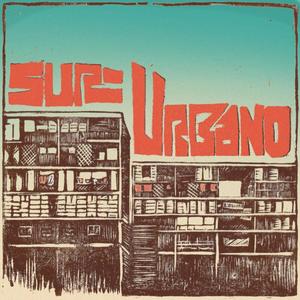
Über Sur-Urbano
“Sur-urbano” is a podcast where we talk to leading scholars, planners and activists on Latin American cities about their work, the cities they love and how to make them better.
Produced by the Latin American Cities Working Group, based at UC - Berkeley, and hosted by Isabel Peñaranda Currie. To find out more, or to cohost, reach us at @latam_cities.
Made possible thanks to UC Berkeley’s Global Metropolitan Studies and to the Center of Latin American Studies.
Music: Jaime Alejandro Angarita
Art: Rachel Meirs - https://www.instagram.com/rachel.meirs/
Production: Francesca Fenzi
Podcast-WebsiteHöre Sur-Urbano, NEU DENKEN und viele andere Podcasts aus aller Welt mit der radio.at-App
Hol dir die kostenlose radio.at App
- Sender und Podcasts favorisieren
- Streamen via Wifi oder Bluetooth
- Unterstützt Carplay & Android Auto
- viele weitere App Funktionen
Hol dir die kostenlose radio.at App
- Sender und Podcasts favorisieren
- Streamen via Wifi oder Bluetooth
- Unterstützt Carplay & Android Auto
- viele weitere App Funktionen

Sur-Urbano
Code scannen,
App laden,
loshören.
App laden,
loshören.
 Österreich